Department of Neurology and Alzheimer Center, University of Groningen, University Medical Center Groningen, Groningen, The Netherlands.
Department of Practice-Oriented Scientific Research (PWO), Alliade Care Group, Heerenveen, The Netherlands.
J Appl Res Intellect Disabil. 2021 Nov;34(6):1602-1617. doi: 10.1111/jar.12912. Epub 2021 Jul 2.
Differentiating dementia from baseline level of functioning is difficult among people with severe/profound intellectual (and multiple) disabilities. Moreover, studies on observable dementia symptoms are scarce. This study examined (a) the relevance of dementia diagnosis, (b) observable symptoms and (c) training/information needs.
Four explorative focus groups were held with care professionals and family members who have experience with people with severe/profound intellectual (and multiple) disabilities (≥40 years) and decline/dementia.
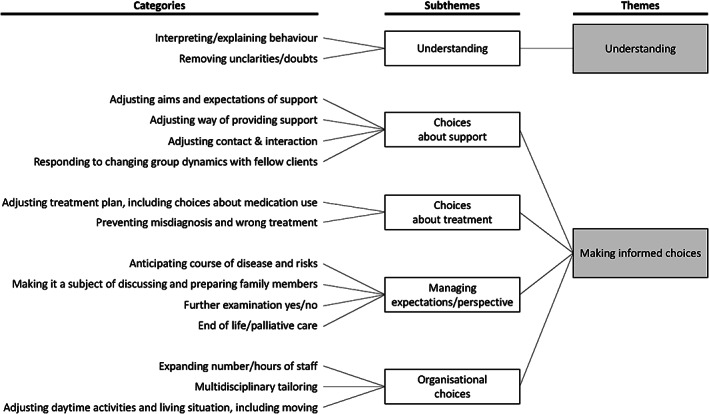
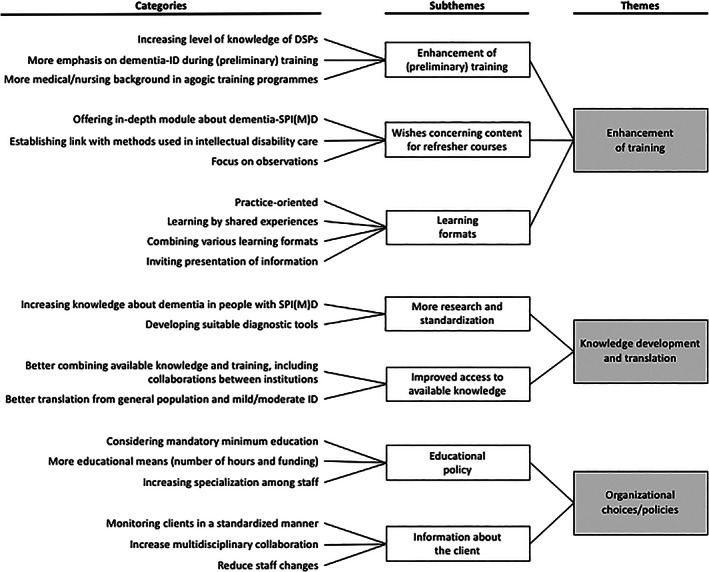
Thematic analysis showed that participants wanted to know about a dementia diagnosis for a better understanding and to be able to make informed choices (question 1). Using a categorisation matrix, cognitive and behavioural changes were shown to be most prominent (question 2). Participants indicated that they needed enhanced training, more knowledge development and translation, and supportive organisational choices/policies (question 3).
Timely identifying/diagnosing dementia allows for a timely response to changing needs. This requires a better understanding of symptoms.
在严重/极重度智力(和多重)障碍人群中,区分痴呆与基线功能水平具有一定难度。此外,针对可观察到的痴呆症状的研究也很少。本研究探讨了(a)痴呆诊断的相关性、(b)可观察到的症状以及(c)培训/信息需求。
与具有严重/极重度智力(和多重)障碍(≥40 岁)和衰退/痴呆患者相关经验的护理专业人员和家庭成员进行了 4 次探索性焦点小组讨论。
主题分析显示,参与者希望了解痴呆诊断,以便更好地理解并能够做出明智的选择(问题 1)。使用分类矩阵,认知和行为变化最为突出(问题 2)。参与者表示,他们需要增强培训、更多的知识开发和转化,以及支持性的组织选择/政策(问题 3)。
及时识别/诊断痴呆症可以对不断变化的需求做出及时响应。这需要更好地了解症状。