Department of Engineering, University of Campania Luigi Vanvitelli, Via Roma 29, 81031 Aversa, Italy.
Moresense Srl, Filarete Foundation, Viale Ortles 22/4, 20139 Milano, Italy.
Sensors (Basel). 2021 Mar 1;21(5):1681. doi: 10.3390/s21051681.
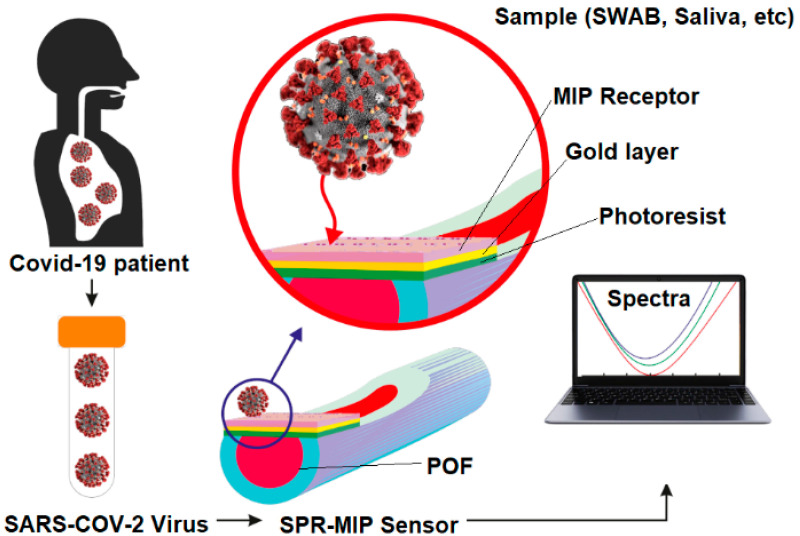
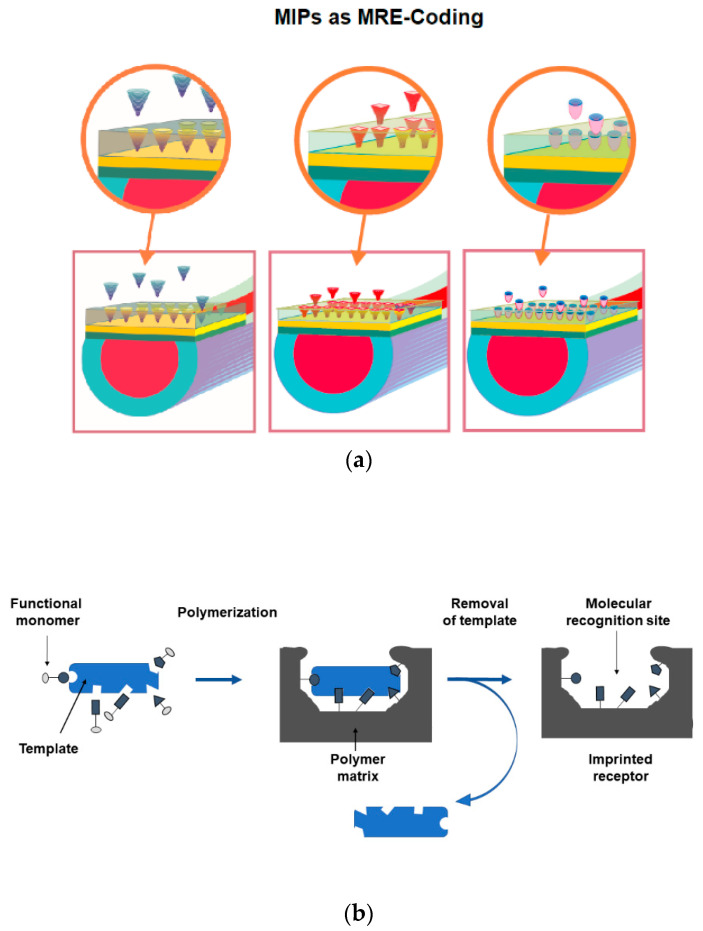
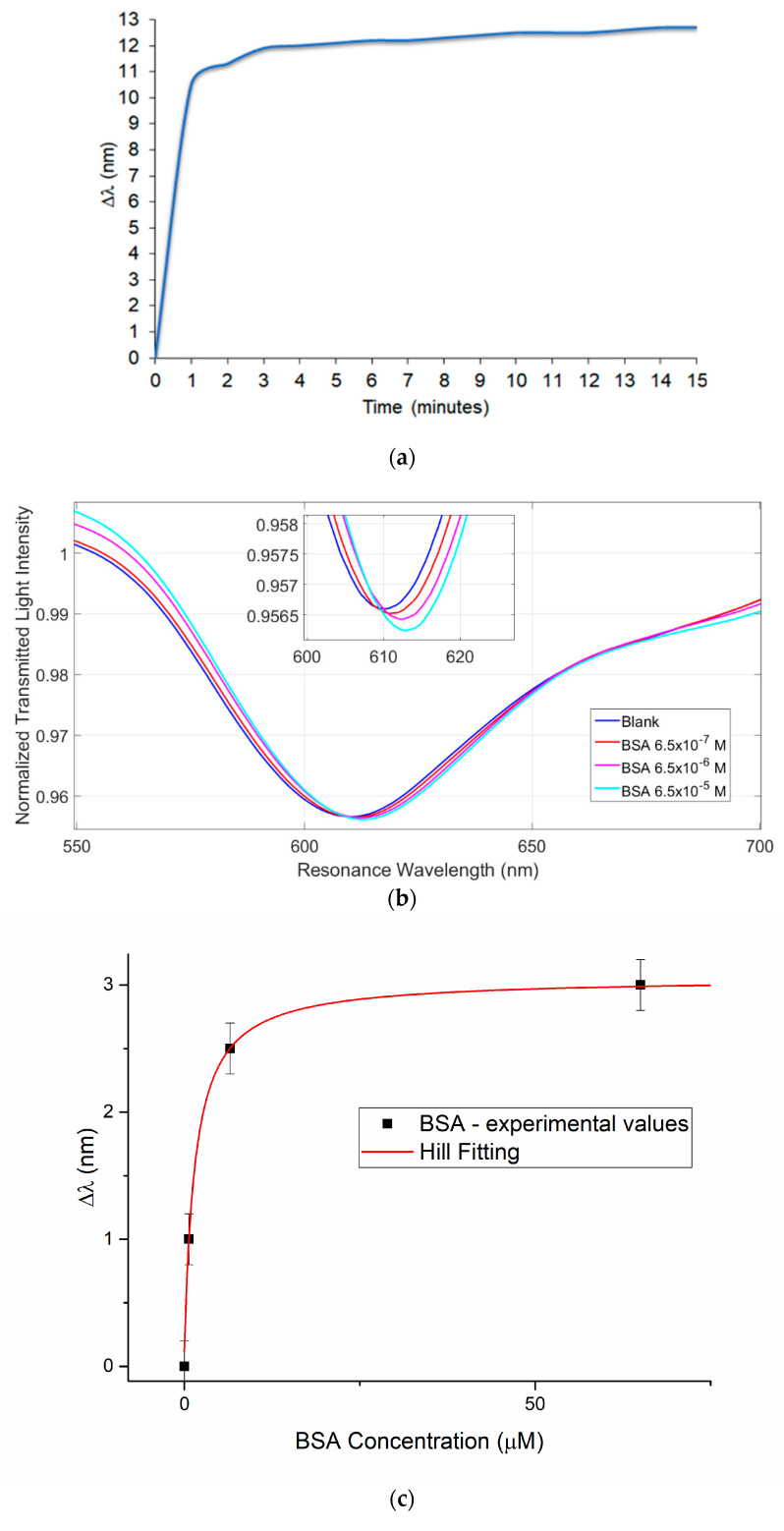
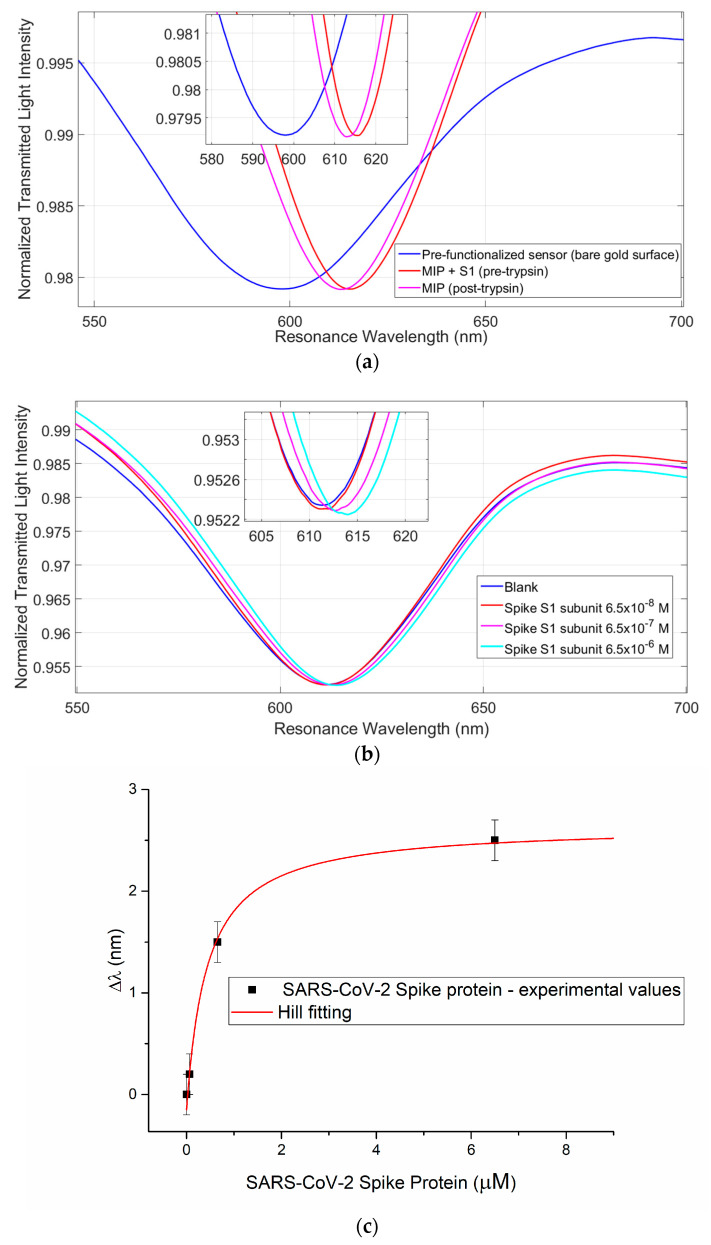
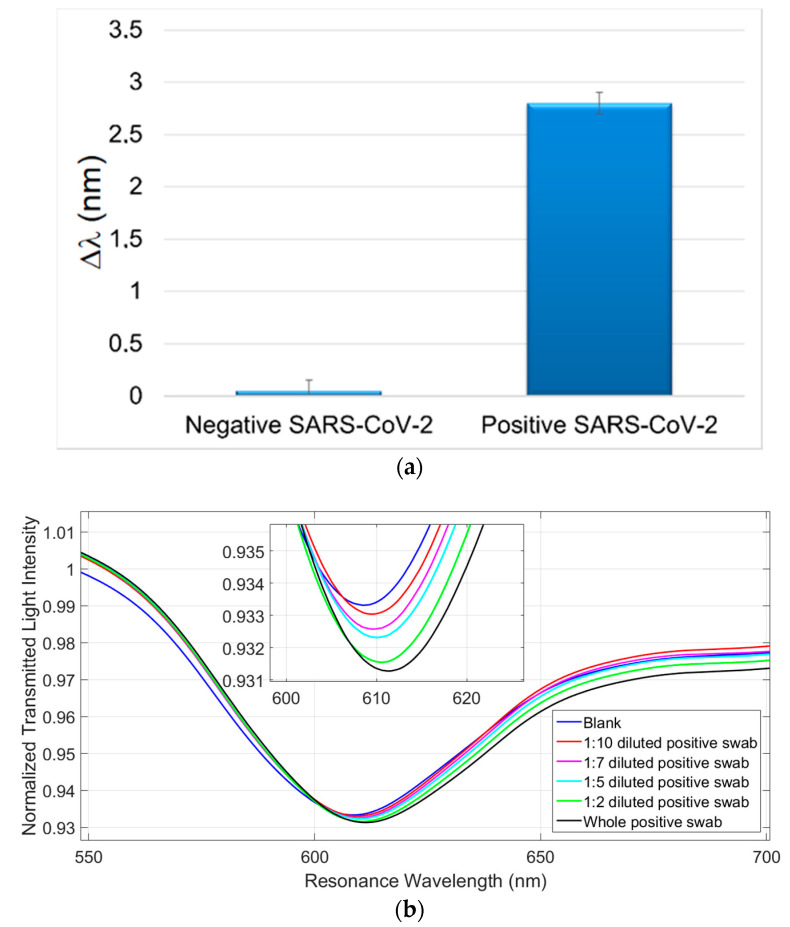
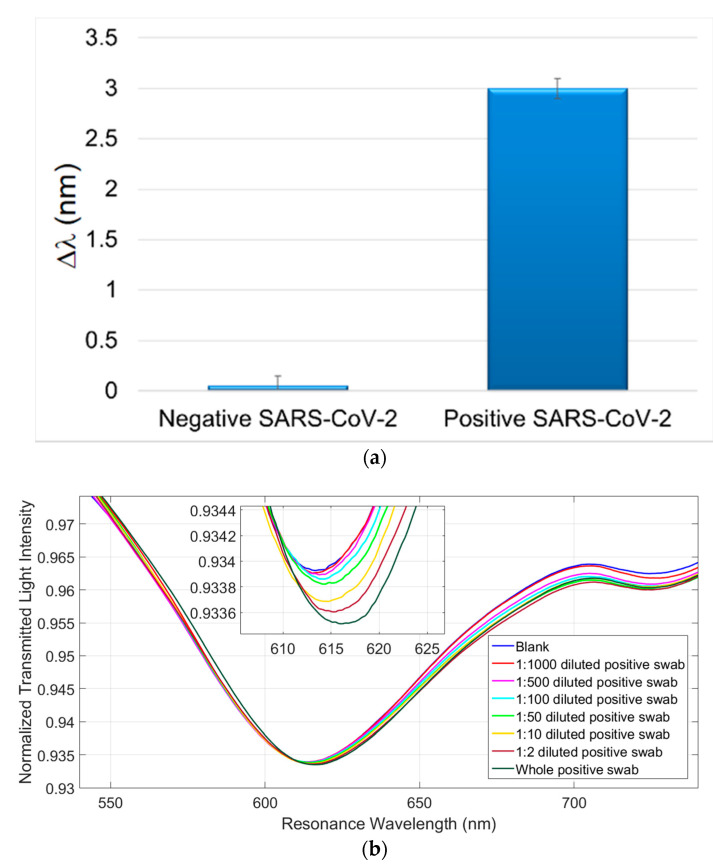
The rapid spread of the Coronavirus Disease 2019 (COVID-19) pandemic, caused by the Severe Acute Respiratory Syndrome Coronavirus 2 (SARS-CoV-2) pathogen has generated a huge international public health emergency. Currently the reference diagnostic technique for virus determination is Reverse Transcription Polymerase Chain Reaction (RT-PCR) real time analysis that requires specialized equipment, reagents and facilities and typically 3-4 h to perform. Thus, the realization of simple, low-cost, small-size, rapid and point-of-care diagnostics tests has become a global priority. In response to the current need for quick, highly sensitive and on-site detection of the SARS-CoV-2 virus in several aqueous solutions, a specific molecularly imprinted polymer (MIP) receptor has been designed, realized, and combined with an optical sensor. More specifically, the proof of concept of a SARS-CoV-2 sensor has been demonstrated by exploiting a plasmonic plastic optical fiber sensor coupled with a novel kind of synthetic MIP nano-layer, especially designed for the specific recognition of Subunit 1 of the SARS-CoV-2 Spike protein. First, we have tested the effectiveness of the developed MIP receptor to bind the Subunit 1 of the SARS-CoV-2 spike protein, then the results of preliminary tests on SARS-CoV-2 virions, performed on samples of nasopharyngeal (NP) swabs in universal transport medium (UTM) and physiological solution (0.9% NaCl), were compared with those obtained with RT-PCR. According to these preliminary results, the sensitivity of the proposed optical-chemical sensor proved to be higher than the RT-PCR one. Furthermore, a relatively fast response time (about 10 min) to the virus was obtained without the use of additional reagents.
2019 年冠状病毒病(COVID-19)大流行是由严重急性呼吸系统综合征冠状病毒 2(SARS-CoV-2)病原体引起的,它引发了一场巨大的国际公共卫生紧急事件。目前,用于病毒测定的参考诊断技术是逆转录聚合酶链反应(RT-PCR)实时分析,该技术需要专门的设备、试剂和设施,通常需要 3-4 小时才能完成。因此,实现简单、低成本、小尺寸、快速和即时诊断测试已成为全球优先事项。为了应对目前在几种水溶液中快速、高度敏感和现场检测 SARS-CoV-2 病毒的需求,设计、实现了一种特定的分子印迹聚合物(MIP)受体,并将其与光学传感器相结合。更具体地说,通过利用等离子体塑料光纤传感器与新型合成 MIP 纳米层相结合,证明了 SARS-CoV-2 传感器的概念验证,该新型合成 MIP 纳米层专门用于 SARS-CoV-2 刺突蛋白亚单位 1 的特异性识别。首先,我们测试了所开发的 MIP 受体与 SARS-CoV-2 刺突蛋白亚单位 1 结合的有效性,然后将 SARS-CoV-2 病毒粒子的初步测试结果与在通用运输介质(UTM)和生理溶液(0.9%NaCl)中的鼻咽(NP)拭子样本上进行的 RT-PCR 结果进行了比较。根据这些初步结果,所提出的光学化学传感器的灵敏度被证明高于 RT-PCR。此外,在不使用额外试剂的情况下,获得了约 10 分钟的相对较快的病毒响应时间。