Women's Health and Allied Health Professionals, Medical Unit Occupational Therapy and Physiotherapy, Karolinska University Hospital, Stockholm, Sweden; Division of Rheumatology, Department of Medicin, Solna, Karolinska Institutet, Stockholm, Sweden.
Occupational Therapy Graduate Program, University of New Mexico, Albuquerque, NM, USA.
Best Pract Res Clin Rheumatol. 2021 Sep;35(3):101695. doi: 10.1016/j.berh.2021.101695. Epub 2021 Jul 1.
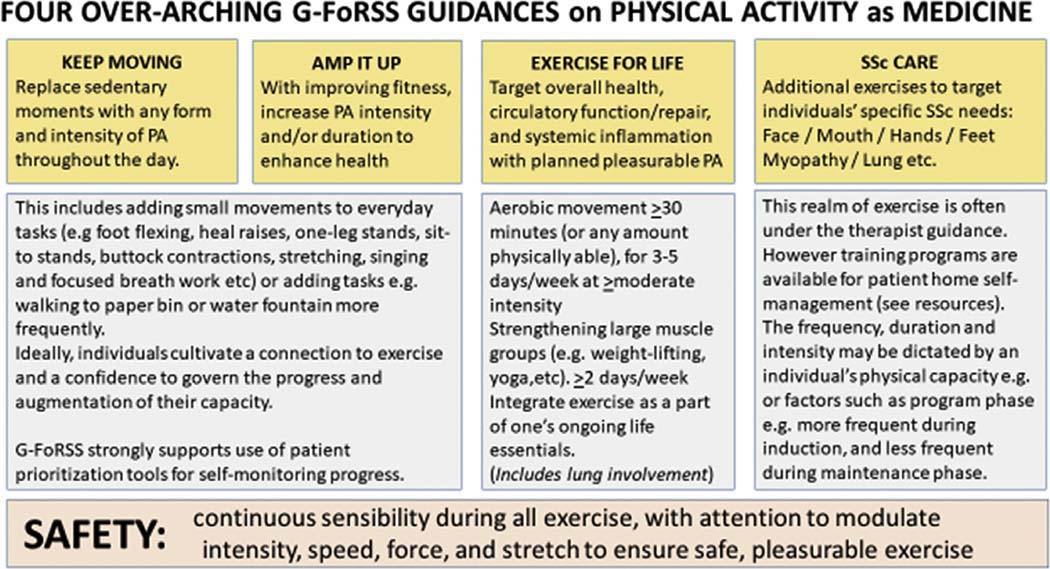
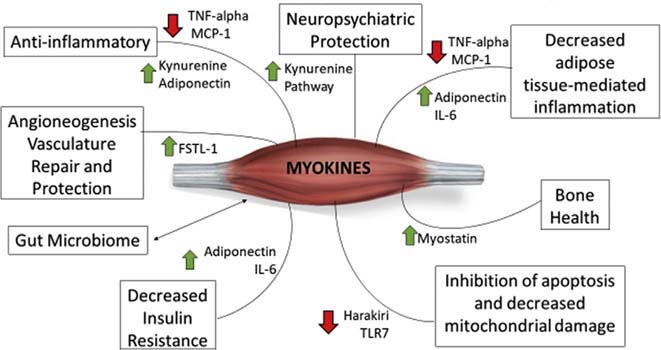
Systemic sclerosis (SSc) is a heterogeneous multisystem autoimmune disease whereby its main pathological drivers of disability and damage are vascular injury, inflammatory cell infiltration, and fibrosis. These mechanisms result in diffuse and diverse impairments arising from ischemic circulatory dysfunction leading to painful skin ulceration and calcinosis, neurovascular aberrations hindering gastrointestinal (GI) motility, progressive painful, incapacitating or immobilizing effects of inflammatory and fibrotic effects on the lungs, skin, articular and periarticular structures, and muscle. SSc-related impairments impede routine activities of daily living (ADLs) and disrupt three critical life areas: work, family, social/leisure, and also impact on psychological well-being. Physical activity and exercise are globally recommended; however, for connective tissue diseases, this guidance carries greater impact on inflammatory disease manifestations, recovery, and cardiovascular health. Exercise, through myogenic and vascular phenomena, naturally targets key pathogenic drivers by downregulating multiple inflammatory and fibrotic pathways in serum and tissue, while increasing circulation and vascular repair. G-FoRSS, The Global Fellowship on Rehabilitation and Exercise in Systemic Sclerosis recognizes the scientific basis of and advocates for education and research of exercise as a systemic and targeted SSc disease-modifying treatment. An overview of biophysiological mechanisms of physical activity and exercise are herein imparted for patients, clinicians, and researchers, and applied to SSc disease mechanisms, manifestations, and impairment. A preliminary guidance on exercise in SSc, a research agenda, and the current state of research and outcome measures are set forth.
系统性硬化症(SSc)是一种异质性多系统自身免疫性疾病,其导致残疾和损伤的主要病理驱动因素是血管损伤、炎症细胞浸润和纤维化。这些机制导致广泛而多样的损伤,起因于缺血性循环功能障碍导致疼痛性皮肤溃疡和钙化、神经血管异常阻碍胃肠道(GI)蠕动、肺部、皮肤、关节和关节周围结构以及肌肉的炎症和纤维化效应引起的进行性疼痛、致残或固定效应。SSc 相关的损伤会妨碍日常活动(ADLs),并破坏三个关键的生活领域:工作、家庭、社会/休闲,还会影响心理健康。全球范围内建议进行身体活动和锻炼;然而,对于结缔组织疾病,这种指导对炎症性疾病表现、恢复和心血管健康具有更大的影响。通过肌源性和血管现象,锻炼自然靶向血清和组织中多个炎症和纤维化途径,下调多个炎症和纤维化途径,同时增加循环和血管修复。G-FoRSS(全球系统性硬化症康复与运动研究联合会)认识到运动作为系统性和靶向性 SSc 疾病修正治疗的科学依据,并提倡对其进行教育和研究。本文为患者、临床医生和研究人员概述了身体活动和锻炼的生物物理机制,并将其应用于 SSc 的疾病机制、表现和损伤。提出了 SSc 中运动的初步指导、研究议程以及当前的研究状态和结果测量。