Key Laboratory of Tropical Translational Medicine of Ministry of Education, Hainan Key Laboratory for Research and Development of Tropical Herbs, School of Pharmacy, Hainan Medical University, Haikou, P. R. China.
Reproductive Medical Center, Hainan Women and Children's Medical Center, Haikou, China.
Pharm Biol. 2021 Dec;59(1):884-892. doi: 10.1080/13880209.2021.1944221.
Laurolitsine is an aporphine alkaloid and exhibits potent antihyperglycemic and antihyperlipidemic effects in ob/ob mice.
To investigate the pharmacokinetics, tissue distribution and excretion of laurolitsine.
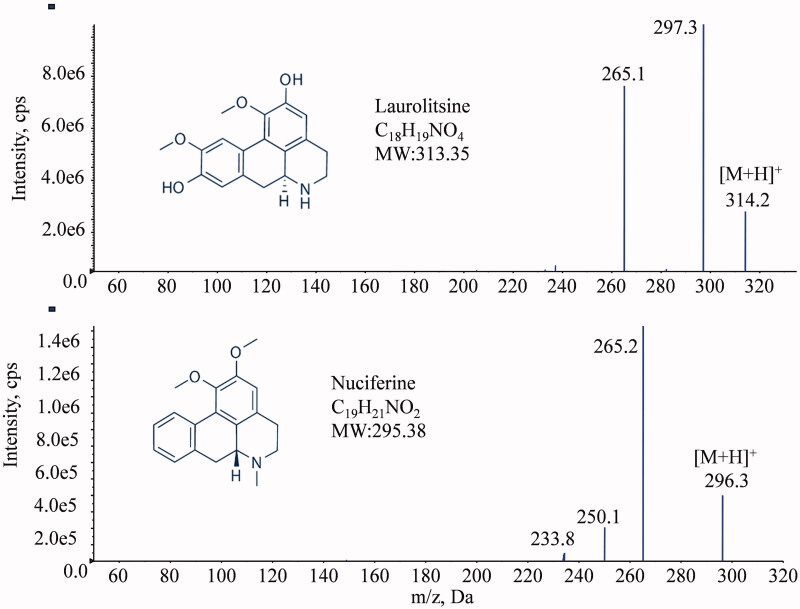
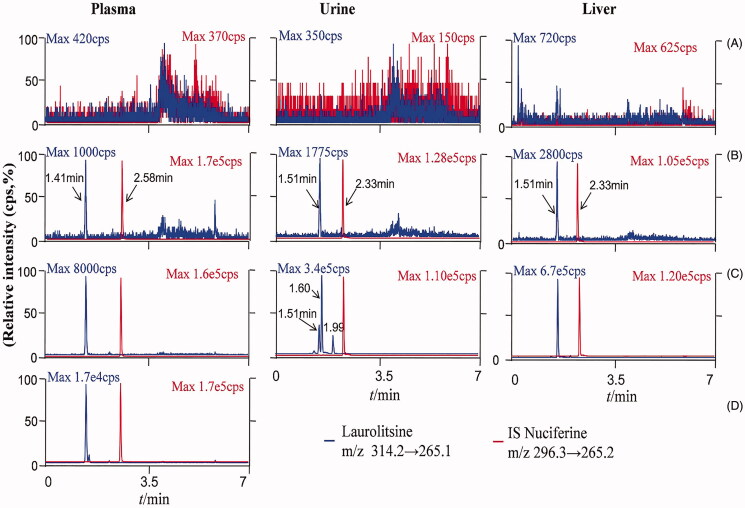
A LC-MS/MS method was established and validated to determine laurolitsine concentrations in the biological matrix of rats (plasma, tissue homogenate, urine and faeces). 10 Sprague-Dawley (SD) rats were used for plasma exposure study: 5 rats were injected with 2.0 mg/kg of laurolitsine via the tail vein, and the other 5 rats were administered laurolitsine (10.0 mg/kg) by gavage. 25 SD rats used for tissue distribution study and 5 SD rats for urine and faeces excretion study: rats administered laurolitsine (10.0 mg/kg) by gavage. After administered, serial blood, tissue, urine and faeces were collected. Analytical quantification was performed by a previous LC-MS/MS method. The pharmacokinetics, bioavailability, tissue distribution and excretion of laurolitsine were described.
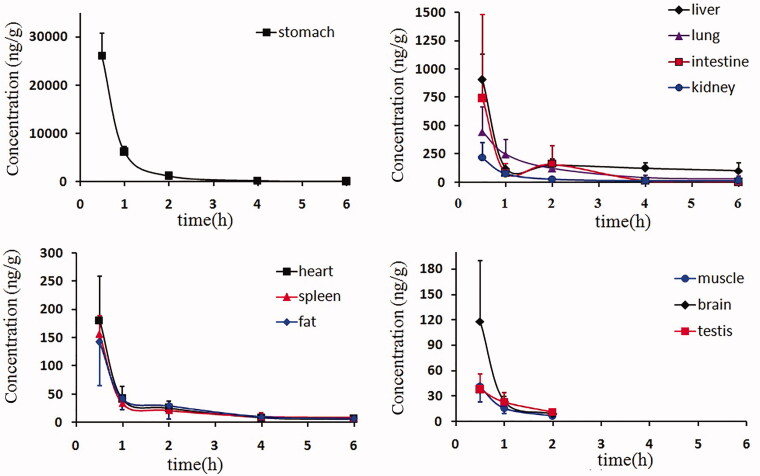
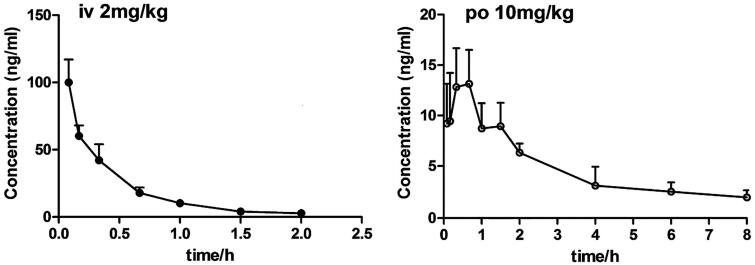
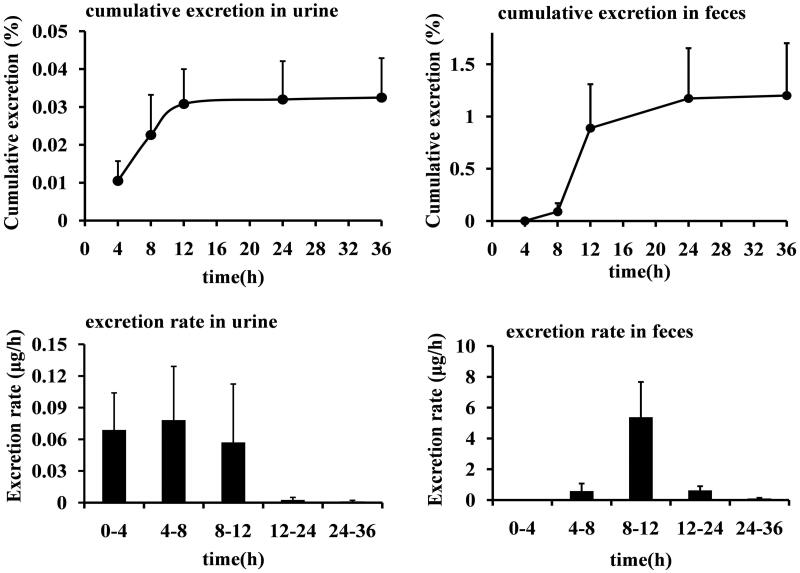
The pharmacokinetic parameters of oral and intravenous administration with were 0.47 and 0.083 h, were 3.73 and 1.67 h, respectively. Oral bioavailability was as low as 18.17%. Laurolitsine was found at a high concentration in the gastrointestinal tract, liver, lungs and kidneys (26 015.33, 905.12, 442.32 and 214.99 ng/g at 0.5 h, respectively) and low excretion to parent laurolitsine in urine and faeces (0.03 and 1.20% in 36 h, respectively).
This study established a simple, rapid and accurate LC-MS/MS method to determine laurolitsine in different rat samples and successful application in a pharmacokinetic study.
劳洛昔林是一种阿朴啡生物碱,在 ob/ob 小鼠中表现出很强的降血糖和降血脂作用。
研究劳洛昔林的药代动力学、组织分布和排泄。
建立并验证了一种 LC-MS/MS 方法,用于测定大鼠生物基质(血浆、组织匀浆、尿液和粪便)中的劳洛昔林浓度。10 只 Sprague-Dawley(SD)大鼠用于血浆暴露研究:5 只大鼠经尾静脉注射 2.0mg/kg 劳洛昔林,另 5 只大鼠灌胃给予劳洛昔林(10.0mg/kg)。25 只 SD 大鼠用于组织分布研究,5 只 SD 大鼠用于尿液和粪便排泄研究:大鼠灌胃给予劳洛昔林(10.0mg/kg)。给药后,连续采集血液、组织、尿液和粪便。通过先前的 LC-MS/MS 方法进行分析定量。描述劳洛昔林的药代动力学、生物利用度、组织分布和排泄。
口服和静脉注射劳洛昔林的药代动力学参数分别为 0.47 和 0.083h,AUC0-t 分别为 3.73 和 1.67h,口服生物利用度低至 18.17%。劳洛昔林在胃肠道、肝脏、肺和肾脏中浓度较高(0.5h 时分别为 26015.33、905.12、442.32 和 214.99ng/g),尿液和粪便中母药劳洛昔林的排泄率较低(36h 时分别为 0.03%和 1.20%)。
本研究建立了一种简单、快速、准确的 LC-MS/MS 方法,用于测定不同大鼠样本中的劳洛昔林,并成功应用于药代动力学研究。