Gomes-Leal Walace
Post-Graduation Program in Health Sciences, Institute of Collective Health, Federal University of Western Pará, Santarém, Brazil.
Post-Graduation Program in Pharmacology and Biochemistry, Institute of Biological Sciences, Federal University of Pará, Belém, Brazil.
Front Neurosci. 2021 Jun 16;15:594448. doi: 10.3389/fnins.2021.594448. eCollection 2021.
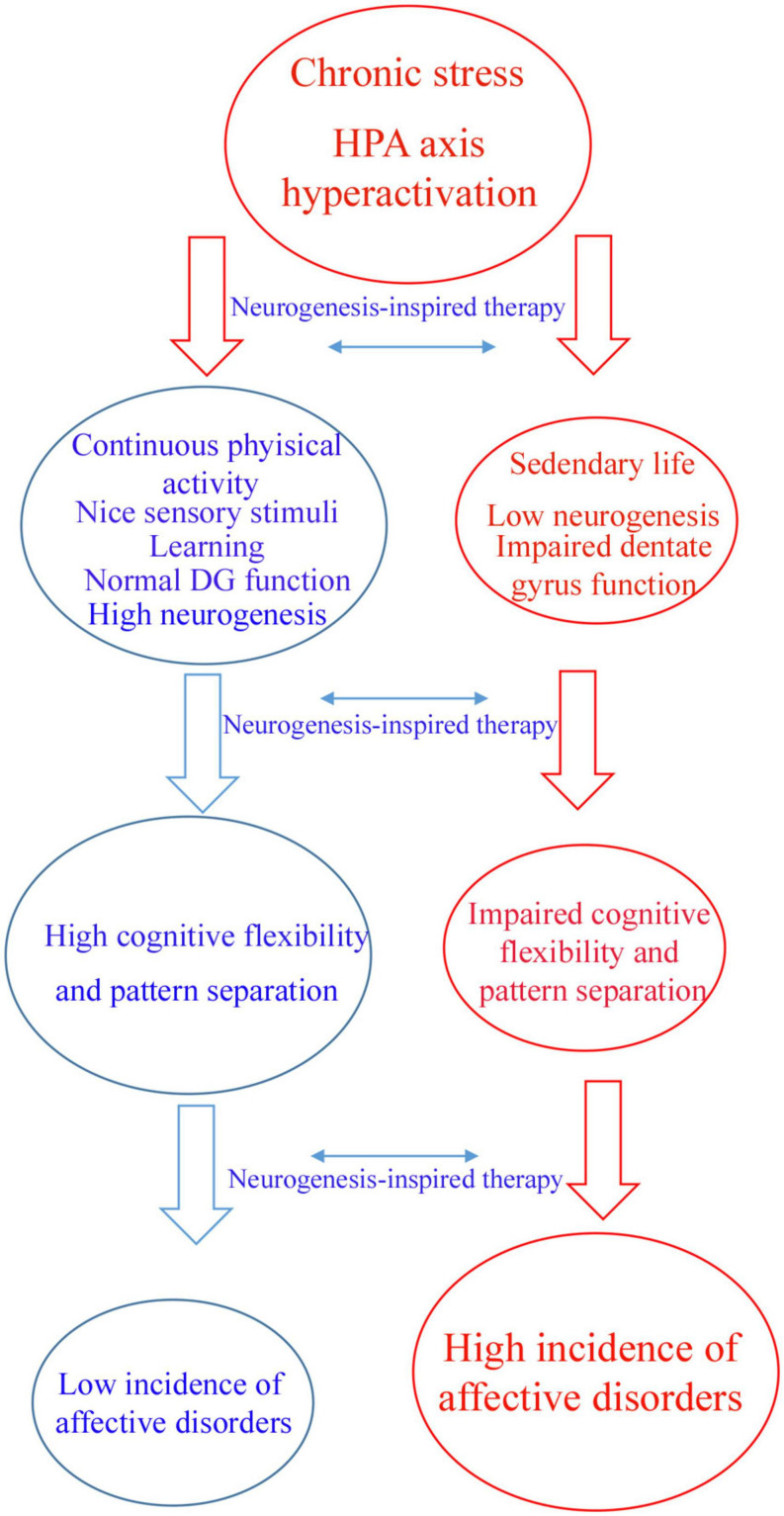
A paradigm shift in neuroscience was the discovery that new neurons are constantly produced in the adult mammalian brain of several species, including Homo sapiens. These new-born cells are formed in some main neurogenic niches, including the subventricular zone (SVZ) at the margin of the lateral ventricle and subgranular zone (SGZ) in the hippocampal dentate gyrus (DG). In the DG, neuroblasts derive from SGZ progenitors and migrate to the hippocampal granular layer becoming adult granule cells, which are integrated into functional adult circuits. It has been confirmed that adult hippocampal neurogenesis (AHN) is a long-lasting phenomenon in the human brain. The functions of hippocampal new-born cells are not fully established. Experimental studies suggest that they have unique electrophysiological properties, including hyperexcitability, which enable them to regulate adult granule cells. Their specific function depends on the anatomical hippocampal location along the hippocampal dorsal-ventral axis. Dorsal hippocampus plays a more defined role on spatial learning and contextual information, while the ventral hippocampus is more related to emotional behavior, stress resilience and social interaction. Several reports suggest a role for AHN in pattern separation, cognitive flexibility, forgetting and reversal learning. It has been proposed that deficits in AHN might impair normal DG function, including pattern separation and cognitive flexibility, which could play a role on the etiology of affective disorders, such as depression, anxiety and post-traumatic stress disorder (PTSD). In this paper, we review recent scientific evidence suggesting that impairment of AHN may underlie the pathophysiology of affective disorders even in humans and that neurogenesis-inspired therapies may be a promising approach to reduce symptoms of affective disorders in humans.
神经科学领域的一个范式转变是发现,在包括人类在内的多个物种的成年哺乳动物大脑中,新神经元在不断产生。这些新生细胞在一些主要的神经发生微环境中形成,包括侧脑室边缘的室下区(SVZ)和海马齿状回(DG)的颗粒下区(SGZ)。在DG中,神经母细胞源自SGZ祖细胞,并迁移至海马颗粒层,成为成年颗粒细胞,这些细胞会整合到功能性的成年神经回路中。现已证实,成年海马神经发生(AHN)在人类大脑中是一种长期存在的现象。海马新生细胞的功能尚未完全明确。实验研究表明,它们具有独特的电生理特性,包括兴奋性过高,这使它们能够调节成年颗粒细胞。它们的具体功能取决于海马沿背腹轴的解剖位置。背侧海马在空间学习和情境信息方面发挥着更明确的作用,而腹侧海马则与情绪行为、应激恢复力和社交互动更为相关。一些报告表明,AHN在模式分离、认知灵活性、遗忘和逆向学习中发挥作用。有人提出,AHN的缺陷可能会损害DG的正常功能,包括模式分离和认知灵活性,这可能在情感障碍(如抑郁症、焦虑症和创伤后应激障碍(PTSD))的病因学中起作用。在本文中,我们综述了最近的科学证据,这些证据表明AHN受损可能是人类情感障碍病理生理学的基础,并且神经发生启发的疗法可能是减轻人类情感障碍症状的一种有前景的方法。