Department of Anatomy, University of California, San Francisco, CA, USA.
Biomedical Sciences Graduate Program, University of California, San Francisco, CA, USA.
Science. 2020 Jul 10;369(6500):167-173. doi: 10.1126/science.aaw2622.
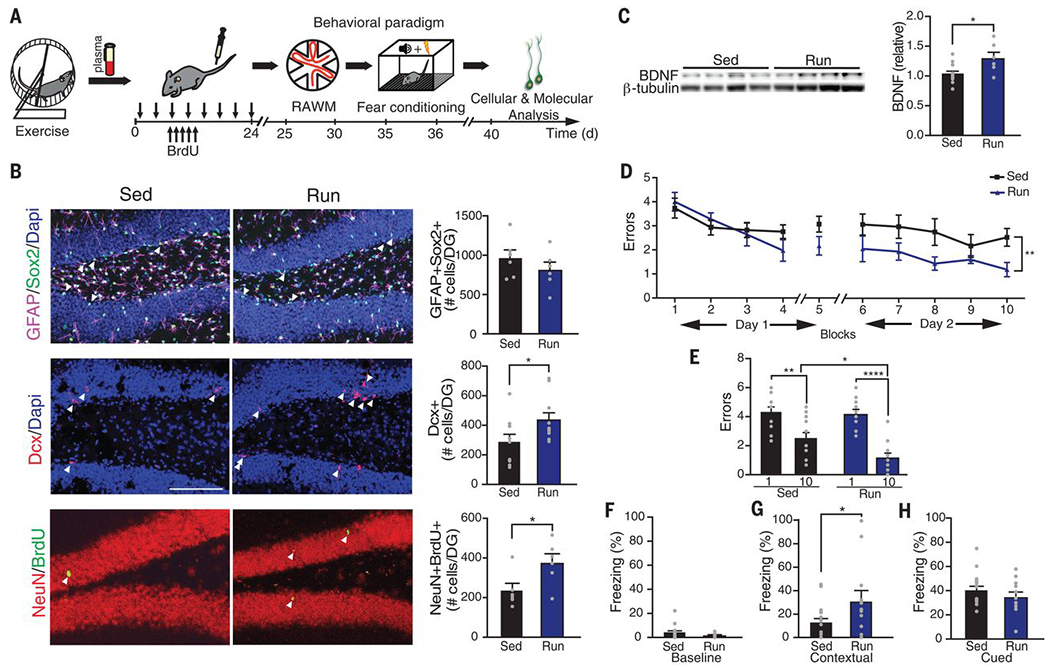
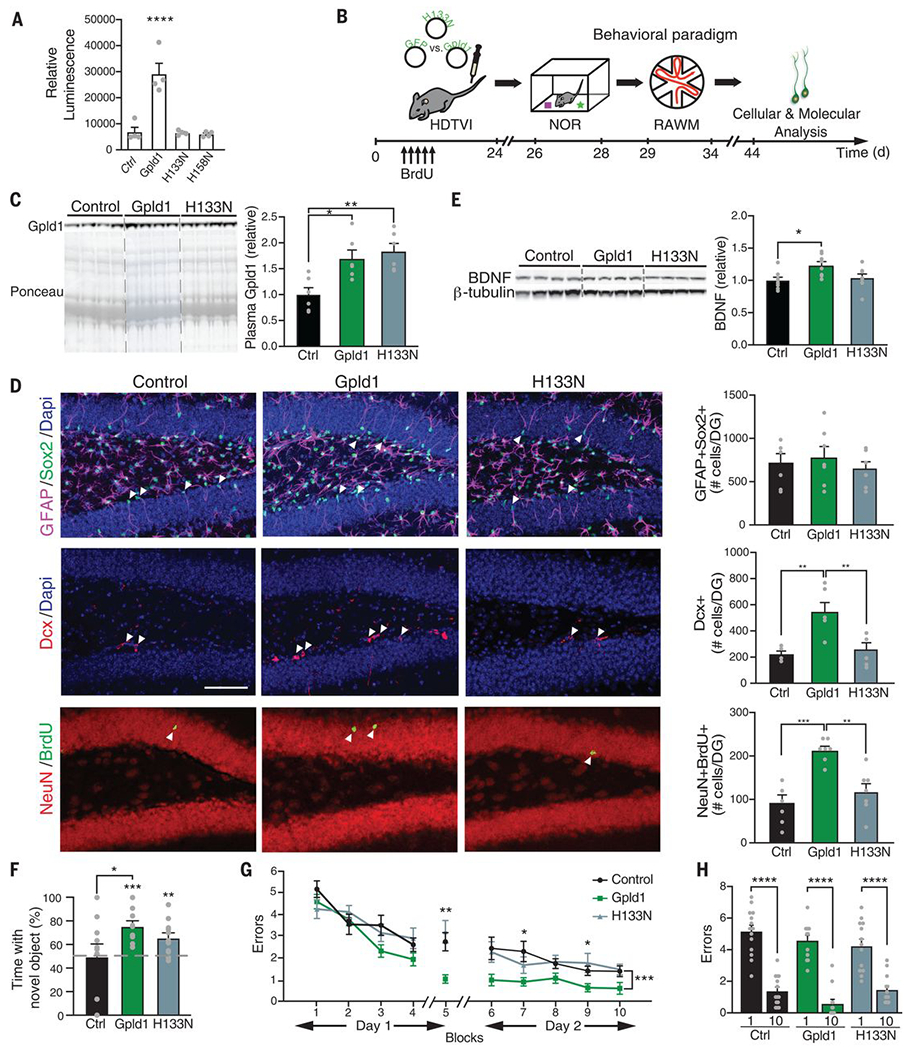
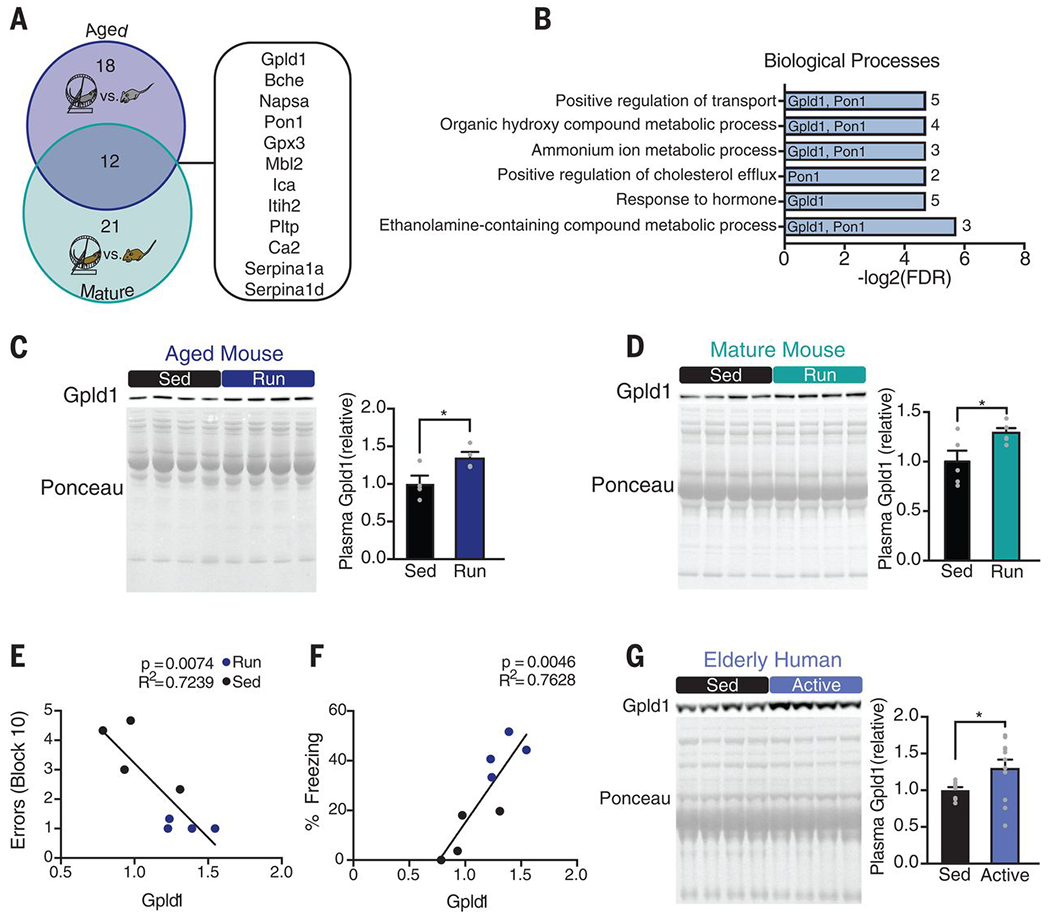
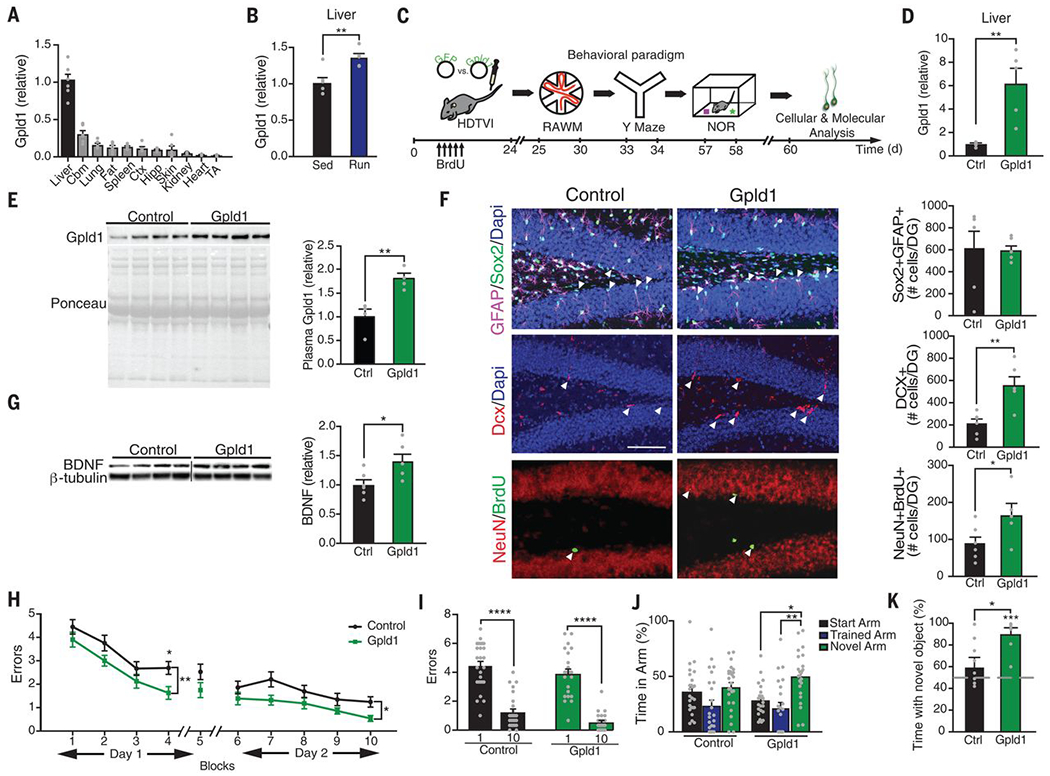
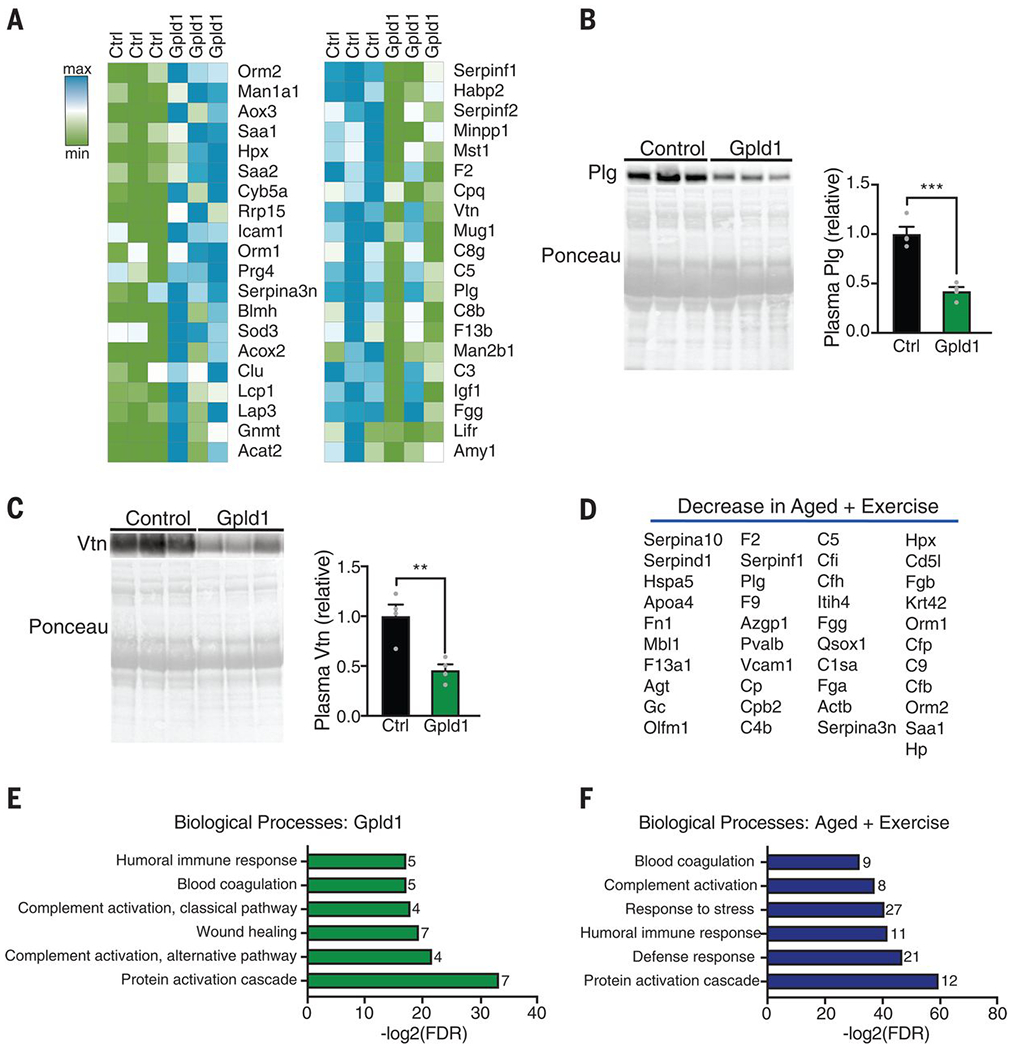
Reversing brain aging may be possible through systemic interventions such as exercise. We found that administration of circulating blood factors in plasma from exercised aged mice transferred the effects of exercise on adult neurogenesis and cognition to sedentary aged mice. Plasma concentrations of glycosylphosphatidylinositol (GPI)-specific phospholipase D1 (Gpld1), a GPI-degrading enzyme derived from liver, were found to increase after exercise and to correlate with improved cognitive function in aged mice, and concentrations of Gpld1 in blood were increased in active, healthy elderly humans. Increasing systemic concentrations of Gpld1 in aged mice ameliorated age-related regenerative and cognitive impairments by altering signaling cascades downstream of GPI-anchored substrate cleavage. We thus identify a liver-to-brain axis by which blood factors can transfer the benefits of exercise in old age.
通过系统性干预,如运动,可能逆转大脑衰老。我们发现,给衰老不运动的小鼠输注运动小鼠的循环血液因子,可将运动对成年神经发生和认知的影响传递给衰老不运动的小鼠。运动后循环血浆中糖基磷脂酰肌醇(GPI)特异性磷脂酶 D1(Gpld1)的浓度增加,Gpld1 是一种来源于肝脏的 GPI 降解酶,与衰老小鼠认知功能的改善相关,且在活跃健康的老年人群中,血液中的 Gpld1 浓度增加。增加衰老小鼠系统中的 Gpld1 浓度,通过改变 GPI 锚定底物切割下游的信号级联,改善了与年龄相关的再生和认知障碍。因此,我们鉴定出一条从肝脏到大脑的轴,通过该轴,血液因子可传递衰老机体运动的益处。