• 文献检索
  • 文档翻译
  • 深度研究
  • 学术资讯
  • Suppr Zotero 插件Zotero 插件
  • 邀请有礼
  • 套餐&价格
  • 历史记录
应用&插件
Suppr Zotero 插件Zotero 插件浏览器插件Mac 客户端Windows 客户端微信小程序
定价
高级版会员购买积分包购买API积分包
服务
文献检索文档翻译深度研究API 文档MCP 服务
关于我们
关于 Suppr公司介绍联系我们用户协议隐私条款
关注我们

Suppr 超能文献

核心技术专利:CN118964589B侵权必究
粤ICP备2023148730 号-1Suppr @ 2026

文献检索

告别复杂PubMed语法,用中文像聊天一样搜索,搜遍4000万医学文献。AI智能推荐,让科研检索更轻松。

立即免费搜索

文件翻译

保留排版,准确专业,支持PDF/Word/PPT等文件格式,支持 12+语言互译。

免费翻译文档

深度研究

AI帮你快速写综述,25分钟生成高质量综述,智能提取关键信息,辅助科研写作。

立即免费体验

视觉基因组学分析工作室作为分析多组学数据的工具。

Visual Genomics Analysis Studio as a Tool to Analyze Multiomic Data.

作者信息

Hertzman Rebecca J, Deshpande Pooja, Leary Shay, Li Yueran, Ram Ramesh, Chopra Abha, Cooper Don, Watson Mark, Palubinsky Amy M, Mallal Simon, Gibson Andrew, Phillips Elizabeth J

机构信息

Institute for Immunology and Infectious Diseases, Murdoch University, Murdoch, WA, Australia.

Department of Medicine, Vanderbilt University Medical Centre, Nashville, TN, United States.

出版信息

Front Genet. 2021 Jun 17;12:642012. doi: 10.3389/fgene.2021.642012. eCollection 2021.

DOI:10.3389/fgene.2021.642012
PMID:34220932
原文链接:https://pmc.ncbi.nlm.nih.gov/articles/PMC8247644/
Abstract

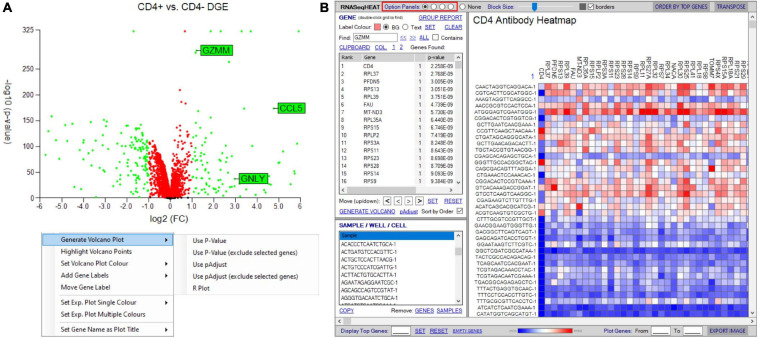
Type B adverse drug reactions (ADRs) are iatrogenic immune-mediated syndromes with mechanistic etiologies that remain incompletely understood. Some of the most severe ADRs, including delayed drug hypersensitivity reactions, are T-cell mediated, restricted by specific human leukocyte antigen risk alleles and sometimes by public or oligoclonal T-cell receptors (TCRs), central to the immunopathogenesis of tissue-damaging response. However, the specific cellular signatures of effector, regulatory, and accessory immune populations that mediate disease, define reaction phenotype, and determine severity have not been defined. Recent development of single-cell platforms bringing together advances in genomics and immunology provides the tools to simultaneously examine the full transcriptome, TCRs, and surface protein markers of highly heterogeneous immune cell populations at the site of the pathological response at a single-cell level. However, the requirement for advanced bioinformatics expertise and computational hardware and software has often limited the ability of investigators with the understanding of diseases and biological models to exploit these new approaches. Here we describe the features and use of a state-of-the-art, fully integrated application for analysis and visualization of multiomic single-cell data called Visual Genomics Analysis Studio (VGAS). This unique user-friendly, Windows-based graphical user interface is specifically designed to enable investigators to interrogate their own data. While VGAS also includes tools for sequence alignment and identification of associations with host or organism genetic polymorphisms, in this review we focus on its application for analysis of single-cell TCR-RNA-Cellular Indexing of Transcriptomes and Epitopes by Sequencing (CITE)-seq, enabling holistic cellular characterization by unbiased transcriptome and select surface proteome. Critically, VGAS does not require user-directed coding or access to high-performance computers, instead incorporating performance-optimized hidden code to provide application-based fast and intuitive tools for data analyses and production of high-resolution publication-ready graphics on standard specification laptops. Specifically, it allows analyses of comprehensive single-cell TCR sequencing (scTCR-seq) data, detailing (i) functional pairings of α-β heterodimer TCRs, (ii) one-click histograms to display entropy and gene rearrangements, and (iii) Circos and Sankey plots to visualize clonality and dominance. For unbiased single-cell RNA sequencing (scRNA-seq) analyses, users extract cell transcriptome signatures according to global structure via principal component analysis, t-distributed stochastic neighborhood embedding, or uniform manifold approximation and projection plots, with overlay of scTCR-seq enabling identification and selection of the immunodominant TCR-expressing populations. Further integration with similar sequence-based detection of surface protein markers using oligo-labeled antibodies (CITE-seq) provides comparative understanding of surface protein expression, with differential gene or protein analyses visualized using volcano plot or heatmap functions. These data can be compared to reference cell atlases or suitable controls to reveal discrete disease-specific subsets, from epithelial to tissue-resident memory T-cells, and activation status, from senescence through exhaustion, with more finite transcript expression displayed as violin and box plots. Importantly, guided tutorial videos are available, as are regular application updates based on the latest advances in bioinformatics and user feedback.

摘要

B型药物不良反应(ADR)是医源性免疫介导综合征,其发病机制尚未完全明确。一些最严重的ADR,包括迟发性药物超敏反应,是由T细胞介导的,受特定人类白细胞抗原风险等位基因限制,有时也受公共或寡克隆T细胞受体(TCR)限制,这是组织损伤反应免疫发病机制的核心。然而,介导疾病、定义反应表型并决定严重程度的效应、调节和辅助免疫群体的特定细胞特征尚未明确。单细胞平台的最新发展结合了基因组学和免疫学的进展,提供了在单细胞水平上同时检查病理反应部位高度异质免疫细胞群体的完整转录组、TCR和表面蛋白标志物的工具。然而,对先进生物信息学专业知识以及计算硬件和软件的需求常常限制了对疾病和生物学模型有理解的研究人员利用这些新方法的能力。在此,我们描述了一种最先进的、用于多组学单细胞数据的分析和可视化的完全集成应用程序——视觉基因组分析工作室(VGAS)的特点和用途。这个独特的、用户友好的、基于Windows的图形用户界面专门设计用于使研究人员能够查询自己的数据。虽然VGAS还包括序列比对以及与宿主或生物体基因多态性关联识别的工具,但在本综述中,我们重点关注其在分析单细胞TCR - RNA - 转录组和表位测序细胞索引(CITE)- seq方面的应用,通过无偏转录组和选定的表面蛋白质组实现整体细胞表征。至关重要的是,VGAS不需要用户直接编码或访问高性能计算机,而是纳入了性能优化的隐藏代码,以在标准规格笔记本电脑上提供基于应用程序的快速且直观的数据分析工具以及用于生成高分辨率可用于发表的图形。具体而言,它允许对全面的单细胞TCR测序(scTCR - seq)数据进行分析,详细说明(i)α - β异二聚体TCR的功能配对,(ii)一键式直方图以显示熵和基因重排,以及(iii)Circos图和桑基图以可视化克隆性和优势度。对于无偏单细胞RNA测序(scRNA - seq)分析,用户通过主成分分析、t分布随机邻域嵌入或均匀流形近似与投影图根据全局结构提取细胞转录组特征,并叠加scTCR - seq能够识别和选择表达免疫显性TCR的群体。使用寡核苷酸标记抗体对表面蛋白标志物进行类似基于序列的检测(CITE - seq)的进一步整合,提供了对表面蛋白表达的比较理解,使用火山图或热图功能可视化差异基因或蛋白分析。这些数据可以与参考细胞图谱或合适的对照进行比较,以揭示从上皮细胞到组织驻留记忆T细胞的离散疾病特异性亚群,以及从衰老到耗竭的激活状态,以小提琴图和箱线图显示更有限的转录表达。重要的是,有指导教程视频可用,并且会根据生物信息学的最新进展和用户反馈定期进行应用程序更新。
https://cdn.ncbi.nlm.nih.gov/pmc/blobs/fd78/8247644/b03019a07a30/fgene-12-642012-g012.jpg
https://cdn.ncbi.nlm.nih.gov/pmc/blobs/fd78/8247644/6e7b1158ec8a/fgene-12-642012-g001.jpg
https://cdn.ncbi.nlm.nih.gov/pmc/blobs/fd78/8247644/385be75c1958/fgene-12-642012-g002.jpg
https://cdn.ncbi.nlm.nih.gov/pmc/blobs/fd78/8247644/b235dd8b2abd/fgene-12-642012-g003.jpg
https://cdn.ncbi.nlm.nih.gov/pmc/blobs/fd78/8247644/be50b8a1e9b9/fgene-12-642012-g004.jpg
https://cdn.ncbi.nlm.nih.gov/pmc/blobs/fd78/8247644/f587c138c938/fgene-12-642012-g005.jpg
https://cdn.ncbi.nlm.nih.gov/pmc/blobs/fd78/8247644/8e69855e2b7f/fgene-12-642012-g006.jpg
https://cdn.ncbi.nlm.nih.gov/pmc/blobs/fd78/8247644/0d1ff1cfdb76/fgene-12-642012-g007.jpg
https://cdn.ncbi.nlm.nih.gov/pmc/blobs/fd78/8247644/7874df72d244/fgene-12-642012-g008.jpg
https://cdn.ncbi.nlm.nih.gov/pmc/blobs/fd78/8247644/21b11884a1a2/fgene-12-642012-g009.jpg
https://cdn.ncbi.nlm.nih.gov/pmc/blobs/fd78/8247644/6aa371764d05/fgene-12-642012-g010.jpg
https://cdn.ncbi.nlm.nih.gov/pmc/blobs/fd78/8247644/68542231eb67/fgene-12-642012-g011.jpg
https://cdn.ncbi.nlm.nih.gov/pmc/blobs/fd78/8247644/b03019a07a30/fgene-12-642012-g012.jpg
https://cdn.ncbi.nlm.nih.gov/pmc/blobs/fd78/8247644/6e7b1158ec8a/fgene-12-642012-g001.jpg
https://cdn.ncbi.nlm.nih.gov/pmc/blobs/fd78/8247644/385be75c1958/fgene-12-642012-g002.jpg
https://cdn.ncbi.nlm.nih.gov/pmc/blobs/fd78/8247644/b235dd8b2abd/fgene-12-642012-g003.jpg
https://cdn.ncbi.nlm.nih.gov/pmc/blobs/fd78/8247644/be50b8a1e9b9/fgene-12-642012-g004.jpg
https://cdn.ncbi.nlm.nih.gov/pmc/blobs/fd78/8247644/f587c138c938/fgene-12-642012-g005.jpg
https://cdn.ncbi.nlm.nih.gov/pmc/blobs/fd78/8247644/8e69855e2b7f/fgene-12-642012-g006.jpg
https://cdn.ncbi.nlm.nih.gov/pmc/blobs/fd78/8247644/0d1ff1cfdb76/fgene-12-642012-g007.jpg
https://cdn.ncbi.nlm.nih.gov/pmc/blobs/fd78/8247644/7874df72d244/fgene-12-642012-g008.jpg
https://cdn.ncbi.nlm.nih.gov/pmc/blobs/fd78/8247644/21b11884a1a2/fgene-12-642012-g009.jpg
https://cdn.ncbi.nlm.nih.gov/pmc/blobs/fd78/8247644/6aa371764d05/fgene-12-642012-g010.jpg
https://cdn.ncbi.nlm.nih.gov/pmc/blobs/fd78/8247644/68542231eb67/fgene-12-642012-g011.jpg
https://cdn.ncbi.nlm.nih.gov/pmc/blobs/fd78/8247644/b03019a07a30/fgene-12-642012-g012.jpg

相似文献

1
Visual Genomics Analysis Studio as a Tool to Analyze Multiomic Data.视觉基因组学分析工作室作为分析多组学数据的工具。
Front Genet. 2021 Jun 17;12:642012. doi: 10.3389/fgene.2021.642012. eCollection 2021.
2
CITEViz: interactively classify cell populations in CITE-Seq via a flow cytometry-like gating workflow using R-Shiny.CITEViz:使用 R-Shiny 通过类似于流式细胞术的门控工作流程对 CITE-Seq 中的细胞群进行交互式分类。
BMC Bioinformatics. 2024 Apr 2;25(1):142. doi: 10.1186/s12859-024-05762-1.
3
Computational solutions for spatial transcriptomics.空间转录组学的计算解决方案。
Comput Struct Biotechnol J. 2022 Sep 1;20:4870-4884. doi: 10.1016/j.csbj.2022.08.043. eCollection 2022.
4
Folic acid supplementation and malaria susceptibility and severity among people taking antifolate antimalarial drugs in endemic areas.在流行地区,服用抗叶酸抗疟药物的人群中,叶酸补充剂与疟疾易感性和严重程度的关系。
Cochrane Database Syst Rev. 2022 Feb 1;2(2022):CD014217. doi: 10.1002/14651858.CD014217.
5
T Cell Clonal Analysis Using Single-cell RNA Sequencing and Reference Maps.使用单细胞RNA测序和参考图谱进行T细胞克隆分析。
Bio Protoc. 2023 Aug 20;13(16):e4735. doi: 10.21769/BioProtoc.4735.
6
SCHNAPPs - Single Cell sHiNy APPlication(s).SCHNAPPs - 单细胞 sHiNy 应用程序。
J Immunol Methods. 2021 Dec;499:113176. doi: 10.1016/j.jim.2021.113176. Epub 2021 Nov 4.
7
Human γδ T cell identification from single-cell RNA sequencing datasets by modular TCR expression.通过模块化TCR表达从单细胞RNA测序数据集中鉴定人类γδ T细胞。
J Leukoc Biol. 2023 Nov 24;114(6):630-638. doi: 10.1093/jleuko/qiad069.
8
Probing infectious disease by single-cell RNA sequencing: Progresses and perspectives.通过单细胞RNA测序探究传染病:进展与展望
Comput Struct Biotechnol J. 2020;18:2962-2971. doi: 10.1016/j.csbj.2020.10.016. Epub 2020 Oct 21.
9
GENAVi: a shiny web application for gene expression normalization, analysis and visualization.GENAVi:一个用于基因表达归一化、分析和可视化的闪亮网络应用程序。
BMC Genomics. 2019 Oct 16;20(1):745. doi: 10.1186/s12864-019-6073-7.
10
FB5P-seq: FACS-Based 5-Prime End Single-Cell RNA-seq for Integrative Analysis of Transcriptome and Antigen Receptor Repertoire in B and T Cells.基于 FACS 的 5' 端单细胞 RNA 测序(FB5P-seq):用于 B 和 T 细胞中转录组和抗原受体库的综合分析
Front Immunol. 2020 Mar 3;11:216. doi: 10.3389/fimmu.2020.00216. eCollection 2020.

引用本文的文献

1
CD3+ T-cell: CD14+ monocyte complexes are dynamic and increased with HIV and glucose intolerance.CD3+ T细胞:CD14+单核细胞复合物是动态变化的,且在感染HIV和糖耐量异常时会增加。
J Immunol. 2025 Feb 28;214(3):516-31. doi: 10.1093/jimmun/vkae054.
2
Single-cell immunopathology of recurrent acute generalized exanthematous pustulosis associated with vancomycin.与万古霉素相关的复发性急性泛发性脓疱病的单细胞免疫病理学
J Allergy Clin Immunol Glob. 2025 Jan 21;4(2):100426. doi: 10.1016/j.jacig.2025.100426. eCollection 2025 May.
3
Multiomic single-cell sequencing defines tissue-specific responses in Stevens-Johnson syndrome and toxic epidermal necrolysis.

本文引用的文献

1
High Frequency of Shared Clonotypes in Human T Cell Receptor Repertoires.人类 T 细胞受体库中共享克隆型的高频出现
Cell Rep. 2020 Jul 14;32(2):107882. doi: 10.1016/j.celrep.2020.107882.
2
Dissecting transcriptional heterogeneity in primary gastric adenocarcinoma by single cell RNA sequencing.通过单细胞 RNA 测序解析原发性胃腺癌中的转录异质性。
Gut. 2021 Mar;70(3):464-475. doi: 10.1136/gutjnl-2019-320368. Epub 2020 Jun 12.
3
Identification and Analysis of Glioblastoma Biomarkers Based on Single Cell Sequencing.基于单细胞测序的胶质母细胞瘤生物标志物的鉴定与分析
多组学单细胞测序定义史蒂文斯-约翰逊综合征和中毒性表皮坏死松解症中的组织特异性反应。
Nat Commun. 2024 Oct 8;15(1):8722. doi: 10.1038/s41467-024-52990-3.
4
Multiomic single-cell sequencing defines tissue-specific responses in Stevens-Johnson Syndrome and Toxic epidermal necrolysis.多组学单细胞测序定义了史蒂文斯-约翰逊综合征和中毒性表皮坏死松解症中的组织特异性反应。
bioRxiv. 2024 Feb 18:2023.11.26.568771. doi: 10.1101/2023.11.26.568771.
5
Updates in SJS/TEN: collaboration, innovation, and community.中毒性表皮坏死松解症/史蒂文斯-约翰逊综合征的最新进展:合作、创新与社群。
Front Med (Lausanne). 2023 Oct 11;10:1213889. doi: 10.3389/fmed.2023.1213889. eCollection 2023.
6
CD3 T-cell: CD14monocyte complexes are dynamic and increased with HIV and glucose intolerance.CD3 T细胞:CD14单核细胞复合物具有动态变化,且在感染HIV和存在葡萄糖耐受不良的情况下会增加。
bioRxiv. 2024 Jun 20:2023.04.24.538020. doi: 10.1101/2023.04.24.538020.
7
CD4 T cells expressing CX3CR1, GPR56, with variable CD57 are associated with cardiometabolic diseases in persons with HIV.表达 CX3CR1、GPR56、CD57 可变的 CD4 T 细胞与 HIV 感染者的代谢心血管疾病相关。
Front Immunol. 2023 Feb 14;14:1099356. doi: 10.3389/fimmu.2023.1099356. eCollection 2023.
8
Association of KIR2DL5, KIR2DS5, and KIR2DS1 allelic variation and atopic dermatitis.KIR2DL5、KIR2DS5 和 KIR2DS1 等位基因变异与特应性皮炎的关联。
Sci Rep. 2023 Jan 31;13(1):1730. doi: 10.1038/s41598-023-28847-y.
9
Stabilization of Acne Vulgaris-Associated Microbial Dysbiosis with 2% Supramolecular Salicylic Acid.2%超分子水杨酸对寻常痤疮相关微生物群落失调的稳定作用
Pharmaceuticals (Basel). 2023 Jan 8;16(1):87. doi: 10.3390/ph16010087.
10
Positive Selection of Mutations in the Helicobacter pylori 5' Untranslated Region in a Mongolian Gerbil Model of Gastric Disease.幽门螺杆菌 5'非翻译区突变的正选择在蒙古沙土鼠胃部疾病模型中的作用。
Infect Immun. 2022 Jul 21;90(7):e0000422. doi: 10.1128/iai.00004-22. Epub 2022 Jun 2.
Front Bioeng Biotechnol. 2020 Mar 5;8:167. doi: 10.3389/fbioe.2020.00167. eCollection 2020.
4
Eleven grand challenges in single-cell data science.单细胞数据科学的 11 大挑战。
Genome Biol. 2020 Feb 7;21(1):31. doi: 10.1186/s13059-020-1926-6.
5
Targeted therapy guided by single-cell transcriptomic analysis in drug-induced hypersensitivity syndrome: a case report.基于单细胞转录组分析的靶向治疗在药物诱导的超敏反应综合征中的应用:一例报告。
Nat Med. 2020 Feb;26(2):236-243. doi: 10.1038/s41591-019-0733-7. Epub 2020 Jan 20.
6
Single-cell transcriptomics of human T cells reveals tissue and activation signatures in health and disease.人类 T 细胞的单细胞转录组学揭示了健康和疾病中的组织和激活特征。
Nat Commun. 2019 Oct 17;10(1):4706. doi: 10.1038/s41467-019-12464-3.
7
Single-cell transcriptomics reveal polyclonal memory T-cell responses in skin with positive abacavir patch test results.单细胞转录组学揭示了阿巴卡韦斑贴试验结果为阳性的皮肤中的多克隆记忆T细胞反应。
J Allergy Clin Immunol. 2019 Nov;144(5):1413-1416.e7. doi: 10.1016/j.jaci.2019.09.013. Epub 2019 Sep 28.
8
Single-cell transcriptional profiling reveals the heterogenicity in colorectal cancer.单细胞转录谱分析揭示了结直肠癌的异质性。
Medicine (Baltimore). 2019 Aug;98(34):e16916. doi: 10.1097/MD.0000000000016916.
9
Identification of drug-specific public TCR driving severe cutaneous adverse reactions.鉴定导致严重皮肤不良反应的药物特异性公共 TCR。
Nat Commun. 2019 Aug 8;10(1):3569. doi: 10.1038/s41467-019-11396-2.
10
Predicting bacterial infection outcomes using single cell RNA-sequencing analysis of human immune cells.利用人类免疫细胞的单细胞 RNA 测序分析预测细菌感染结局。
Nat Commun. 2019 Jul 22;10(1):3266. doi: 10.1038/s41467-019-11257-y.