Hollist Mary, Morgan Larry, Cabatbat Rainier, Au Katherine, Kirmani Maaida F, Kirmani Batool F
1Memorial Healthcare Institute for Neurosciences, Owosso, MI, USA.
2Bronson Neuroscience Center, Kalamazoo, MI, USA.
Aging Dis. 2021 Jul 1;12(4):1000-1009. doi: 10.14336/AD.2021.0311. eCollection 2021 Jul.
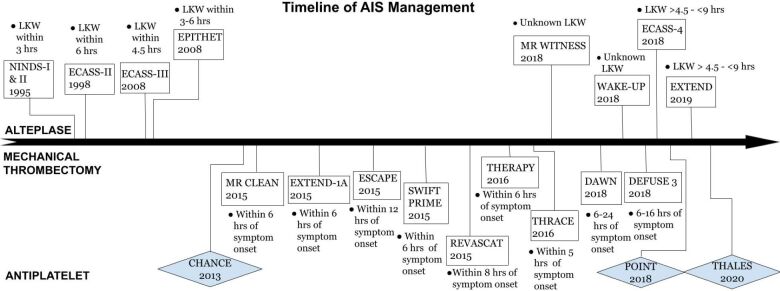
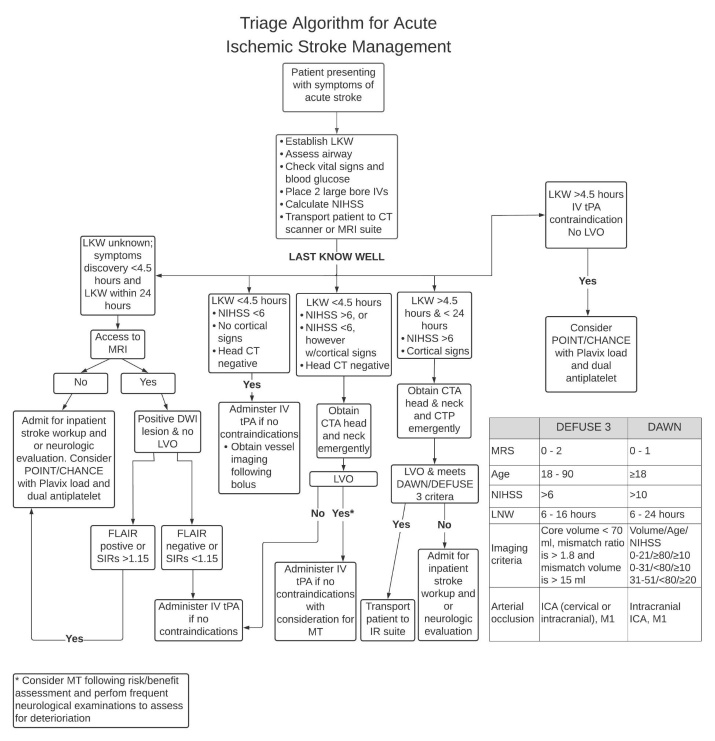
Stroke is a leading cause of morbidity and mortality in the United States. Whether hemorrhagic or ischemic, stroke leads to severe long-term disability. Prior to the mid-1990s, the treatment offered to a patient who presented with an acute stroke was mainly limited to antiplatelets. The lack of adequate treatment, in particular, one without reperfusion contributed to the disability that ensued. There have been many advances in stroke care within the past two decades, especially with the acute management of ischemic stroke. Even with these advances, it is quite alarming that only a fraction of patients receives acute stroke treatment. Numerous trials were conducted to broaden treatment eligibility in hopes that more patients can be treated acutely and safely. These trials have tested both the time window for IV tPA and endovascular therapy (EVT). Acute stroke management is moving from a universal time window approach to a concept of tissue preservation. Specifically, preserving cerebral blood flow, the penumbra, and reducing the risk of a second event. This movement is being executed through the use of multimodal CT and MRI, as well as individualizing treatment to our patients. Minimizing the initial effect of stroke changes the outcome and leads to an increased likelihood of functional independence. In this review, we discuss the recent updates of acute ischemic stroke management in regards to mechanical thrombectomy as well as thrombolytics including tenecteplase.
中风是美国发病和死亡的主要原因。无论是出血性还是缺血性中风,都会导致严重的长期残疾。在20世纪90年代中期之前,为急性中风患者提供的治疗主要局限于抗血小板治疗。缺乏充分的治疗,尤其是没有再灌注治疗,导致了随后出现的残疾。在过去二十年中,中风护理取得了许多进展,特别是在缺血性中风的急性管理方面。即使有这些进展,令人震惊的是只有一小部分患者接受急性中风治疗。进行了许多试验以扩大治疗 eligibility,希望更多患者能够得到急性和安全的治疗。这些试验测试了静脉注射组织型纤溶酶原激活剂(IV tPA)和血管内治疗(EVT)的时间窗。急性中风管理正在从普遍的时间窗方法转向组织保护的概念。具体来说,就是保持脑血流量、半暗带,并降低二次事件的风险。这一转变是通过使用多模态CT和MRI以及针对我们的患者进行个体化治疗来实现的。将中风的初始影响降至最低会改变结果,并增加功能独立的可能性。在这篇综述中,我们讨论了急性缺血性中风管理在机械取栓以及包括替奈普酶在内的溶栓治疗方面的最新进展。