Jekl Vladimír, Nováková Markéta, Jeklová Edita, Pospíšilová Petra, Křenová Jitka, Faldyna Martin, Škorič Miša, Šmajs David
Jekl and Hauptman Veterinary Clinic, Brno, Czechia.
Department of Pharmacology and Pharmacy, Faculty of Veterinary Medicine, Veterinary University Brno, Brno, Czechia.
Front Vet Sci. 2021 Jun 17;8:675631. doi: 10.3389/fvets.2021.675631. eCollection 2021.
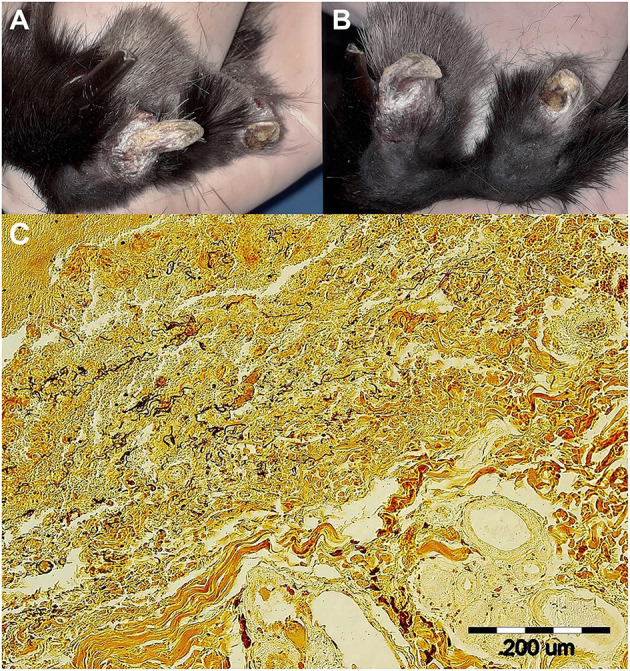
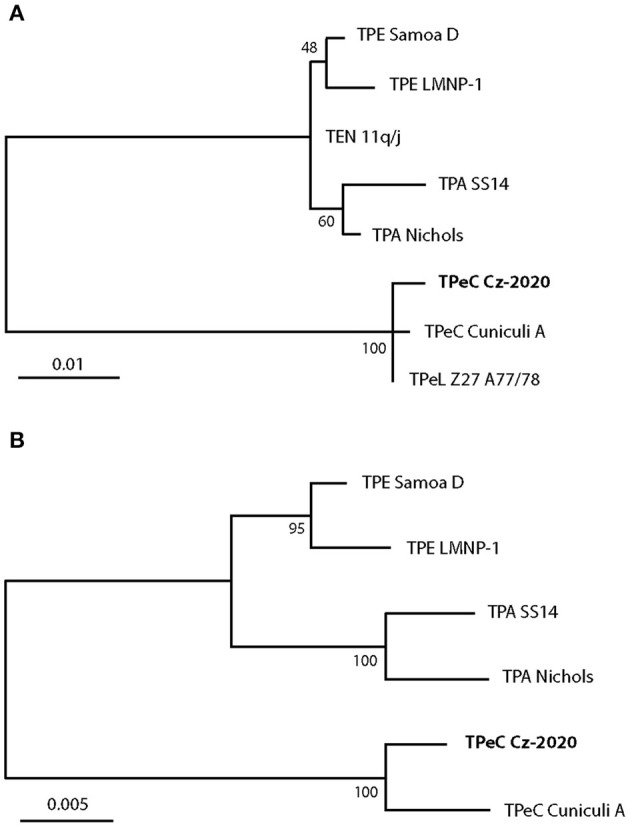
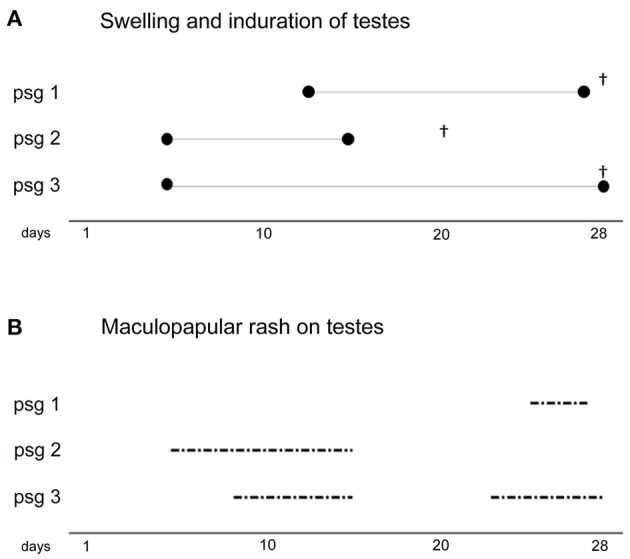
Rabbit venereal spirochetosis, a disease caused by ecovar Cuniculus (TPeC), affects both wild and pet rabbits, and is transmitted sexually and direct contact among animals. Treatment of syphilis in pet rabbits requires administration of antibiotics, including penicillin G, chloramphenicol, or fluoroquinolones. The aim of this work was to elucidate the cause of penicillin treatment failure in rabbit syphilis in a pet rabbit treated in Brno, Czech Republic, and to assess the phylogenetic relatedness of the agent to previously characterized pathogenic treponemes. Following amputation of the infected digits, the second round of penicillin treatment using the same dosage and application route resulted in the disappearance of clinical symptoms within a period of two weeks. The bacterium was successfully isolated from the claws, propagated in three experimental rabbits, and the resulting TPeC strain was designated as Cz-2020. Analysis of four genetic loci revealed that the Cz-2020 strain was similar but also clearly distinct from the only TPeC strain, which had been characterized in detail to date, i.e., the Cuniculi A strain, which was isolated in North America. The strain Cz-2020 represents the first available viable TPeC strain of European origin. DNA sequences encoding five penicillin-binding proteins of the strain Cz-2020 were compared to those of Cuniculi A, which is known to be sensitive to penicillin. The sequences differed in six nucleotides resulting in single amino acid changes in Penicillin-binding protein 1, 2, and 3. Since the second round of treatment was successful, we conclude that the penicillin treatment failure in the first round resulted from the presence of infection foci in claws where treponemes persisted.
兔性病螺旋体病是一种由兔生态变种(TPeC)引起的疾病,会影响野生和宠物兔,可通过性传播以及动物间的直接接触传播。治疗宠物兔梅毒需要使用抗生素,包括青霉素G、氯霉素或氟喹诺酮类药物。这项研究的目的是阐明在捷克布尔诺治疗的一只宠物兔中青霉素治疗兔梅毒失败的原因,并评估该病原体与先前已鉴定的致病性密螺旋体的系统发育相关性。在切除感染的脚趾后,使用相同剂量和给药途径进行的第二轮青霉素治疗在两周内使临床症状消失。该细菌成功地从爪子中分离出来,在三只实验兔中繁殖,所得的TPeC菌株被命名为Cz - 2020。对四个基因位点的分析表明,Cz - 2020菌株与迄今为止唯一已详细鉴定的TPeC菌株即北美分离的穴兔A菌株相似,但也明显不同。Cz - 2020菌株是首个可获得的源自欧洲的有活力的TPeC菌株。将编码Cz - 2020菌株五种青霉素结合蛋白的DNA序列与已知对青霉素敏感的穴兔A菌株的序列进行了比较。这些序列在六个核苷酸上存在差异,导致青霉素结合蛋白1、2和3中出现单个氨基酸变化。由于第二轮治疗成功,我们得出结论,第一轮青霉素治疗失败是由于爪子中存在密螺旋体持续存在的感染灶。