Department of Microbiology, Tumor and Cell Biology, Karolinska Institute, Stockholm, Sweden
Department of Infectious Diseases, Karolinska University Hospital, Stockholm, Sweden.
Thorax. 2022 Feb;77(2):154-163. doi: 10.1136/thoraxjnl-2021-216949. Epub 2021 Jul 5.
An understanding of differences in clinical phenotypes and outcomes COVID-19 compared with other respiratory viral infections is important to optimise the management of patients and plan healthcare. Herein we sought to investigate such differences in patients positive for SARS-CoV-2 compared with influenza, respiratory syncytial virus (RSV) and other respiratory viruses.
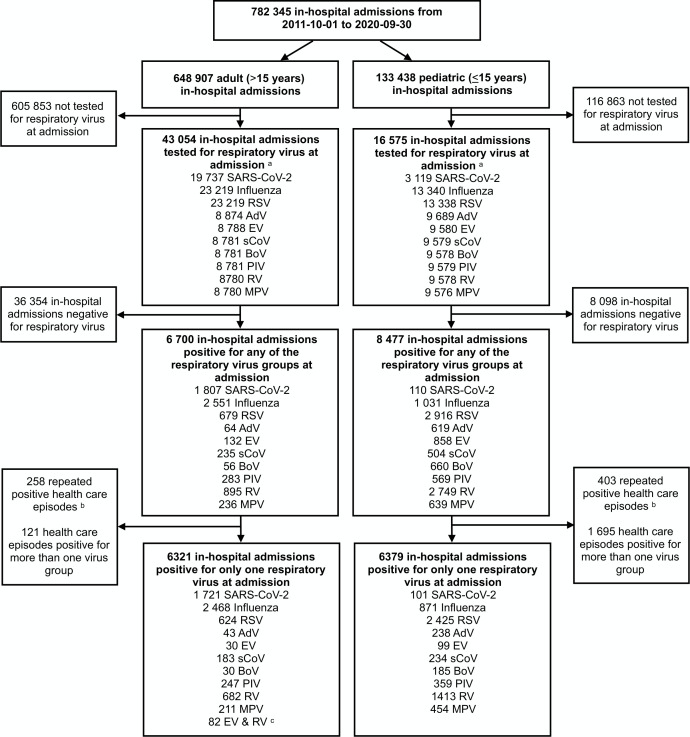
We performed a retrospective cohort study of hospitalised adults and children (≤15 years) who tested positive for SARS-CoV-2, influenza virus A/B, RSV, rhinovirus, enterovirus, parainfluenza viruses, metapneumovirus, seasonal coronaviruses, adenovirus or bocavirus in a respiratory sample at admission between 2011 and 2020.
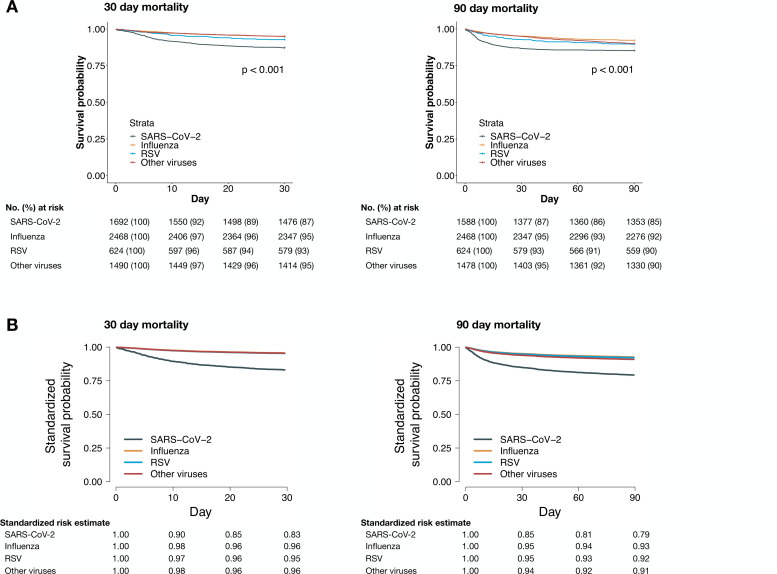
A total of 6321 adult (1721 SARS-CoV-2) and 6379 paediatric (101 SARS-CoV-2) healthcare episodes were included in the study. In adults, SARS-CoV-2 positivity was independently associated with younger age, male sex, overweight/obesity, diabetes and hypertension, tachypnoea as well as better haemodynamic measurements, white cell count, platelet count and creatinine values. Furthermore, SARS-CoV-2 was associated with higher 30-day mortality as compared with influenza (adjusted HR (aHR) 4.43, 95% CI 3.51 to 5.59), RSV (aHR 3.81, 95% CI 2.72 to 5.34) and other respiratory viruses (aHR 3.46, 95% CI 2.61 to 4.60), as well as higher 90-day mortality, ICU admission, ICU mortality and pulmonary embolism in adults. In children, patients with SARS-CoV-2 were older and had lower prevalence of chronic cardiac and respiratory diseases compared with other viruses.
SARS-CoV-2 is associated with more severe outcomes compared with other respiratory viruses, and although associated with specific patient and clinical characteristics at admission, a substantial overlap precludes discrimination based on these characteristics.
了解 COVID-19 与其他呼吸道病毒感染的临床表型和结局差异,对于优化患者管理和规划医疗保健非常重要。在此,我们旨在调查 SARS-CoV-2 阳性患者与流感、呼吸道合胞病毒(RSV)和其他呼吸道病毒之间的此类差异。
我们对 2011 年至 2020 年间在入院时呼吸道样本中检测到 SARS-CoV-2、甲型/乙型流感病毒、RSV、鼻病毒、肠道病毒、副流感病毒、副黏液病毒、季节性冠状病毒、腺病毒或博卡病毒阳性的住院成人和儿童(≤15 岁)进行了回顾性队列研究。
共纳入 6321 例成人(1721 例 SARS-CoV-2)和 6379 例儿科(101 例 SARS-CoV-2)医疗事件。在成人中,SARS-CoV-2 阳性与年龄较小、男性、超重/肥胖、糖尿病和高血压、呼吸急促以及更好的血液动力学测量值、白细胞计数、血小板计数和肌酐值独立相关。此外,与流感(调整后的 HR[aHR]4.43,95%CI3.51 至 5.59)、RSV(aHR3.81,95%CI2.72 至 5.34)和其他呼吸道病毒(aHR3.46,95%CI2.61 至 4.60)相比,SARS-CoV-2 与 30 天死亡率更高相关,与成人 ICU 入院、ICU 死亡率和肺栓塞也更高相关。在儿童中,与其他病毒相比,SARS-CoV-2 患者年龄较大,且慢性心脏和呼吸系统疾病的患病率较低。
与其他呼吸道病毒相比,SARS-CoV-2 与更严重的结局相关,尽管与入院时的特定患者和临床特征相关,但由于存在大量重叠,无法根据这些特征进行区分。