• 文献检索
  • 文档翻译
  • 深度研究
  • 学术资讯
  • Suppr Zotero 插件Zotero 插件
  • 邀请有礼
  • 套餐&价格
  • 历史记录
应用&插件
Suppr Zotero 插件Zotero 插件浏览器插件Mac 客户端Windows 客户端微信小程序
定价
高级版会员购买积分包购买API积分包
服务
文献检索文档翻译深度研究API 文档MCP 服务
关于我们
关于 Suppr公司介绍联系我们用户协议隐私条款
关注我们

Suppr 超能文献

核心技术专利:CN118964589B侵权必究
粤ICP备2023148730 号-1Suppr @ 2026

文献检索

告别复杂PubMed语法,用中文像聊天一样搜索,搜遍4000万医学文献。AI智能推荐,让科研检索更轻松。

立即免费搜索

文件翻译

保留排版,准确专业,支持PDF/Word/PPT等文件格式,支持 12+语言互译。

免费翻译文档

深度研究

AI帮你快速写综述,25分钟生成高质量综述,智能提取关键信息,辅助科研写作。

立即免费体验

[分离技术在新型冠状病毒研究、疫情防控与检测中的应用]

[Applications of separation technology in novel coronavirus research, epidemic prevention and detection].

作者信息

Li Linsen, Zhu Chao, Zhao Xinying, Qu Feng

机构信息

School of Life Science, Beijing Institute of Technology, "Molecular Medicine and Biological Diagnosis" Key Laboratory of Ministry of Industry and Information Technology, Beijing 100081, China.

Beijing Polytechnic, Beijing 100176, China.

出版信息

Se Pu. 2021 Jul 8;39(7):679-685. doi: 10.3724/SP.J.1123.2021.03022.

DOI:10.3724/SP.J.1123.2021.03022
PMID:34227364
原文链接:https://pmc.ncbi.nlm.nih.gov/articles/PMC9421565/
Abstract

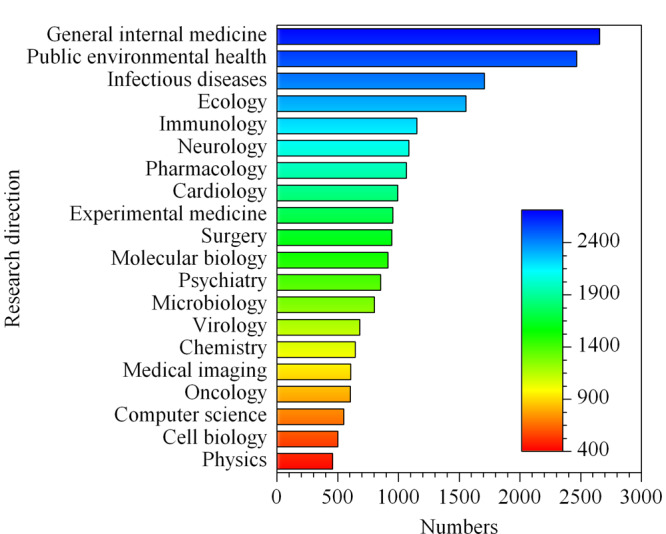
The novel coronavirus disease 2019 (COVID-19) outbreak has brought to light unprecedented challenges to global public health security. Researchers have devoted their efforts to in-depth research on severe acute respiratory syndrome coronavirus 2 (SARS-CoV-2) to bring the epidemic under control as rapidly as possible. Among the many areas of burgeoning SARS-CoV-2 related research, various analytical technologies have been applied to the advancement of virus detection, and development of vaccines and innovative therapies. Separation technologies with the merits of simple operation, high separation efficiency, and high selectivity, have become widely used and are key to progress in life science, medicine, pharmaceutical discovery and development, and other fields. Separation technologies have played an irreplaceable role in the isolation, detection, diagnosis, treatment, and prevention of this novel coronavirus. In this review, an overview of the relevant literature is presented from ISI Web of Science spanning Jan. 1st, 2020-Dec. 31, 2020, using "SARS-CoV-2" or "COVID-19" as keywords. The top 20 research directions are summarized, based on papers published in high impact international journals (e. g. , , and ). Incorporating the impact of published papers, this review summarizes the primary separation technologies applied in these coronavirus studies, and discusses contributions of the following six technologies: affinity chromatography and size exclusion chromatography, liquid chromatography, magnetic bead separation technology, centrifugal technology, micro/nano-separation technology, and electrophoresis. First, affinity chromatography and size exclusion chromatography are discussed, which are the most frequently used protein purification techniques in , , and . The SARS-CoV-2 related proteins purified by affinity chromatography and size exclusion chromatography are summarized, and their applications in coronavirus transmission, infection mechanisms, and drug screening are introduced. Subsequently, high performance liquid chromatography (HPLC) is introduced, which is mainly employed for assessing the purity of candidate drugs. Liquid chromatography-tandem mass spectrometry (LC-MS/MS) incorporates the strengths of HPLC and MS, offering both high separation efficiency and structural analysis capabilities with extended applications. LC-MS/MS has been applied to characterization of the binding of SARS-CoV-2 related proteins to potential inhibitors, and to metabolic analyses of candidate drugs. In SARS-CoV-2 nucleic acid tests, magnetic bead separation technology plays a crucial role in the separation of novel coronaviruses. In combination with other analytical techniques, magnetic bead separation technology can be applied to cytological analyses and immunological detection by functionalization of bead surfaces. Centrifugal technology is undoubtedly the most basic separation technology. It has been employed in almost all SARS-CoV-2 related researches. By controlling centrifugation speed, centrifugal technology can rapidly isolate virus particles or cultured cells from complex samples. Micro-nano separation technologies, such as microfluidics, offer advantages including small size, low sample consumption, rapid diffusion, and large surface area. In general, microfluidic technologies are often used in combination with other technologies to realize highly sensitive detection of SARS-CoV-2 related proteins. Finally, the applications of electrophoresis are introduced, which commonly engages in the analysis of polymerase chain reaction (PCR) products. In novel coronavirus studies, the application of electrophoresis has been relatively limited but has potential with further development to contribute significantly to future research. In conclusion, this review summarizes the contributions of six primary separation technologies to novel coronavirus studies, including epidemic detection and prevention, analyzes the main problems facing coronavirus detection efforts, and discusses the role of separation technologies in addressing these problems, with the aim of providing references for broader application of separation technologies.
https://cdn.ncbi.nlm.nih.gov/pmc/blobs/8912/9421565/9acc5155a1cc/cjc-39-07-679-img_1.jpg
摘要

2019年新型冠状病毒病(COVID-19)疫情给全球公共卫生安全带来了前所未有的挑战。研究人员致力于对严重急性呼吸综合征冠状病毒2(SARS-CoV-2)进行深入研究,以尽快控制疫情。在众多与SARS-CoV-2相关的新兴研究领域中,各种分析技术已被应用于病毒检测、疫苗研发和创新疗法的推进。具有操作简单、分离效率高和选择性高优点的分离技术已得到广泛应用,并且是生命科学、医学、药物发现与开发等领域取得进展的关键。分离技术在这种新型冠状病毒的分离、检测、诊断、治疗和预防中发挥了不可替代的作用。在本综述中,我们使用“SARS-CoV-2”或“COVID-19”作为关键词,从Web of Science数据库中呈现了2020年1月1日至2020年12月31日期间的相关文献综述。基于在高影响力国际期刊(如《》《》和《》)上发表的论文,总结了前20个研究方向。结合已发表论文的影响力,本综述总结了这些冠状病毒研究中应用的主要分离技术,并讨论了以下六种技术的贡献:亲和色谱和尺寸排阻色谱、液相色谱、磁珠分离技术、离心技术、微/纳米分离技术和电泳。首先讨论亲和色谱和尺寸排阻色谱,它们是《》《》和《》中最常用的蛋白质纯化技术。总结了通过亲和色谱和尺寸排阻色谱纯化的与SARS-CoV-2相关的蛋白质,并介绍了它们在冠状病毒传播、感染机制和药物筛选中的应用。随后介绍了高效液相色谱(HPLC),它主要用于评估候选药物的纯度。液相色谱 - 串联质谱(LC-MS/MS)结合了HPLC和MS的优势,具有高分离效率和结构分析能力,应用范围广泛。LC-MS/MS已应用于表征SARS-CoV-2相关蛋白质与潜在抑制剂的结合,以及候选药物的代谢分析。在SARS-CoV-2核酸检测中,磁珠分离技术在新型冠状病毒的分离中起着关键作用。通过对磁珠表面进行功能化,磁珠分离技术与其他分析技术相结合,可应用于细胞学分析和免疫检测。离心技术无疑是最基本的分离技术。它几乎被用于所有与SARS-CoV-2相关的研究中。通过控制离心速度,离心技术可以从复杂样品中快速分离病毒颗粒或培养细胞。微纳分离技术,如微流控技术,具有体积小、样品消耗低、扩散快和表面积大等优点。一般来说,微流控技术通常与其他技术结合使用,以实现对SARS-CoV-2相关蛋白质的高灵敏度检测。最后介绍了电泳的应用,它通常用于聚合酶链反应(PCR)产物的分析。在新型冠状病毒研究中,电泳的应用相对有限,但随着进一步发展具有潜力,可为未来研究做出重大贡献。总之,本综述总结了六种主要分离技术对新型冠状病毒研究(包括疫情检测和预防)的贡献,分析了冠状病毒检测工作面临的主要问题,并讨论了分离技术在解决这些问题中的作用,旨在为分离技术的更广泛应用提供参考。

相似文献

1
[Applications of separation technology in novel coronavirus research, epidemic prevention and detection].[分离技术在新型冠状病毒研究、疫情防控与检测中的应用]
Se Pu. 2021 Jul 8;39(7):679-685. doi: 10.3724/SP.J.1123.2021.03022.
2
[Applications of high performance liquid chromatography-mass spectrometry in proteomics].[高效液相色谱-质谱联用技术在蛋白质组学中的应用]
Se Pu. 2024 Jul;42(7):601-612. doi: 10.3724/SP.J.1123.2023.11006.
3
A Novel Strategy for the Detection of SARS-CoV-2 Variants Based on Multiplex PCR-Mass Spectrometry Minisequencing Technology.一种基于多重 PCR-质谱微测序技术的 SARS-CoV-2 变体检测新策略。
Microbiol Spectr. 2021 Dec 22;9(3):e0126721. doi: 10.1128/Spectrum.01267-21. Epub 2021 Nov 17.
4
Lab-on-a-Disc for Point-of-Care Infection Diagnostics.基于光盘的即时感染诊断实验室。
Acc Chem Res. 2021 Oct 5;54(19):3643-3655. doi: 10.1021/acs.accounts.1c00367. Epub 2021 Sep 13.
5
[Research progress in the application of external field separation technology and microfluidic technology in the separation of micro/nanoscales].外场分离技术与微流控技术在微纳尺度分离中的应用研究进展
Se Pu. 2021 Nov;39(11):1157-1170. doi: 10.3724/SP.J.1123.2020.12032.
6
Advances in laboratory detection methods and technology application of SARS-CoV-2.SARS-CoV-2 实验室检测方法和技术应用的进展。
J Med Virol. 2022 Apr;94(4):1357-1365. doi: 10.1002/jmv.27494. Epub 2021 Dec 10.
7
Simultaneous monitoring of eight human respiratory viruses including SARS-CoV-2 using liquid chromatography-tandem mass spectrometry.采用液相色谱-串联质谱法同时监测包括 SARS-CoV-2 在内的八种人类呼吸道病毒。
Sci Rep. 2022 Aug 4;12(1):13392. doi: 10.1038/s41598-022-16250-y.
8
Rapid and sensitive detection of SARS-CoV-2 infection using quantitative peptide enrichment LC-MS analysis.采用定量肽富集 LC-MS 分析快速灵敏检测 SARS-CoV-2 感染。
Elife. 2021 Nov 8;10:e70843. doi: 10.7554/eLife.70843.
9
[Applications of chromatography in glycomics].[色谱法在糖组学中的应用]
Se Pu. 2024 Jul;42(7):646-657. doi: 10.3724/SP.J.1123.2023.12003.
10
Role of biological Data Mining and Machine Learning Techniques in Detecting and Diagnosing the Novel Coronavirus (COVID-19): A Systematic Review.生物数据挖掘和机器学习技术在检测和诊断新型冠状病毒 (COVID-19) 中的作用:系统评价。
J Med Syst. 2020 May 25;44(7):122. doi: 10.1007/s10916-020-01582-x.

引用本文的文献

1
Current status and trends in small nucleic acid drug development: Leading the future.小核酸药物研发的现状与趋势:引领未来
Acta Pharm Sin B. 2024 Sep;14(9):3802-3817. doi: 10.1016/j.apsb.2024.05.008. Epub 2024 May 15.

本文引用的文献

1
[Application, development, and challenges of capillary electrophoresis in disease prevention and control].[毛细管电泳在疾病预防与控制中的应用、发展及挑战]
Se Pu. 2020 Sep 8;38(9):999-1012. doi: 10.3724/SP.J.1123.2020.02029.
2
Magnetic beads combined with carbon black-based screen-printed electrodes for COVID-19: A reliable and miniaturized electrochemical immunosensor for SARS-CoV-2 detection in saliva.磁珠结合基于碳黑的丝网印刷电极用于 COVID-19:一种可靠且微型化的用于唾液中 SARS-CoV-2 检测的电化学免疫传感器。
Biosens Bioelectron. 2021 Jan 1;171:112686. doi: 10.1016/j.bios.2020.112686. Epub 2020 Oct 3.
3
Rapid Differential Diagnosis of Seven Human Respiratory Coronaviruses Based on Centrifugal Microfluidic Nucleic Acid Assay.
基于离心式微流控核酸分析的七种人呼吸道冠状病毒快速鉴别诊断。
Anal Chem. 2020 Nov 3;92(21):14297-14302. doi: 10.1021/acs.analchem.0c03364. Epub 2020 Oct 19.
4
Epidemiological surveillance of common respiratory viruses in patients with suspected COVID-19 in Southwest China.中国西南地区疑似 COVID-19 患者常见呼吸道病毒的流行病学监测。
BMC Infect Dis. 2020 Sep 21;20(1):688. doi: 10.1186/s12879-020-05392-x.
5
Rapid and quantitative detection of SARS-CoV-2 specific IgG for convalescent serum evaluation.快速定量检测 SARS-CoV-2 特异性 IgG 用于评估恢复期血清。
Biosens Bioelectron. 2020 Dec 1;169:112572. doi: 10.1016/j.bios.2020.112572. Epub 2020 Sep 3.
6
Detection of antibodies against SARS-CoV-2 spike protein by gold nanospikes in an opto-microfluidic chip.金纳米刺在光微流控芯片中检测针对 SARS-CoV-2 刺突蛋白的抗体。
Biosens Bioelectron. 2020 Dec 1;169:112578. doi: 10.1016/j.bios.2020.112578. Epub 2020 Sep 3.
7
Design of a Microfluidic Bleeding Chip to Evaluate Antithrombotic Agents for Use in COVID-19 Patients.用于评估 COVID-19 患者抗血栓形成药物的微流控出血芯片设计
Cell Mol Bioeng. 2020 Aug 6;13(4):331-339. doi: 10.1007/s12195-020-00644-x. eCollection 2020 Aug.
8
One-step nested RT-PCR for COVID-19 detection: A flexible, locally developed test for SARS-CoV2 nucleic acid detection.用于新冠病毒检测的一步法巢式逆转录聚合酶链反应:一种灵活的、本地开发的严重急性呼吸综合征冠状病毒2核酸检测方法。
J Infect Dev Ctries. 2020 Jul 31;14(7):679-684. doi: 10.3855/jidc.12726.
9
Discovery of SARS-CoV-2 antiviral drugs through large-scale compound repurposing.通过大规模化合物重新利用发现抗 SARS-CoV-2 病毒药物。
Nature. 2020 Oct;586(7827):113-119. doi: 10.1038/s41586-020-2577-1. Epub 2020 Jul 24.
10
Hydroxychloroquine use against SARS-CoV-2 infection in non-human primates.羟氯喹在非人类灵长类动物中对抗 SARS-CoV-2 感染的应用。
Nature. 2020 Sep;585(7826):584-587. doi: 10.1038/s41586-020-2558-4. Epub 2020 Jul 22.