Ma Zhanshan Sam
Computational Biology and Medical Ecology Lab, State Key Laboratory of Genetic Resources and Evolution, Kunming Institute of Zoology, Chinese Academy of Sciences, Kunming, China.
Center for Excellence in Animal Evolution and Genetics, Chinese Academy of Sciences, Kunming, China.
mSystems. 2021 Aug 31;6(4):e0063321. doi: 10.1128/mSystems.00633-21. Epub 2021 Jul 6.
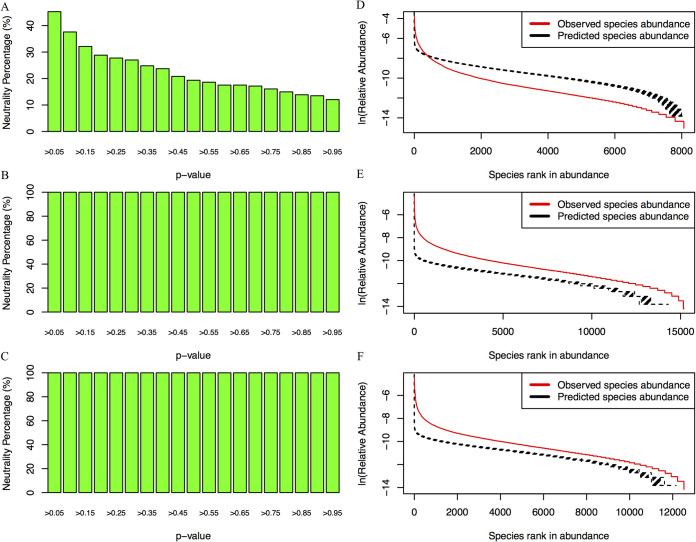
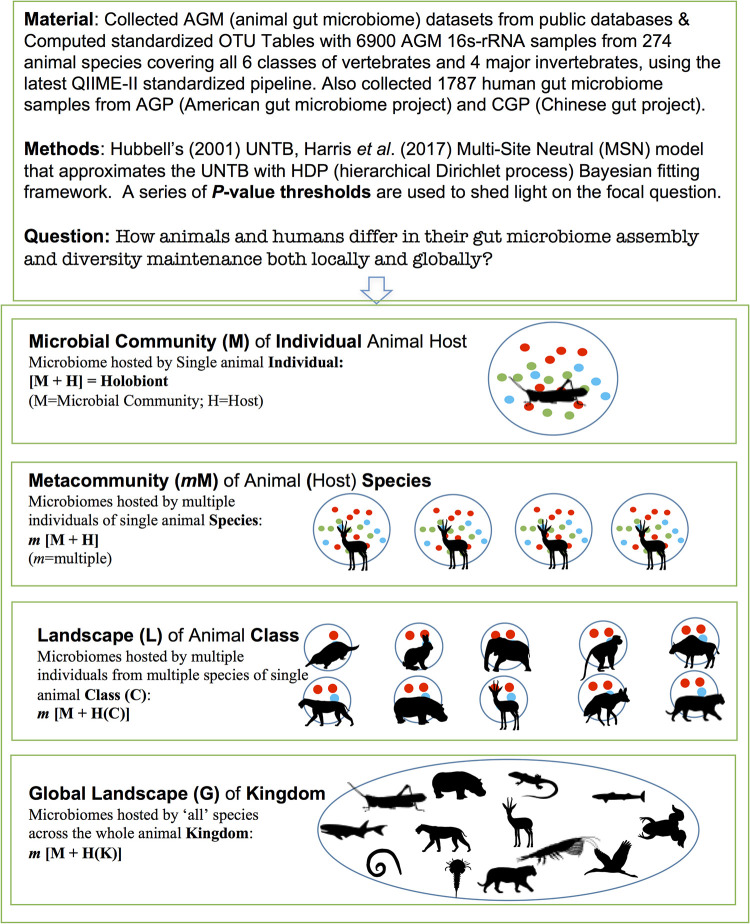
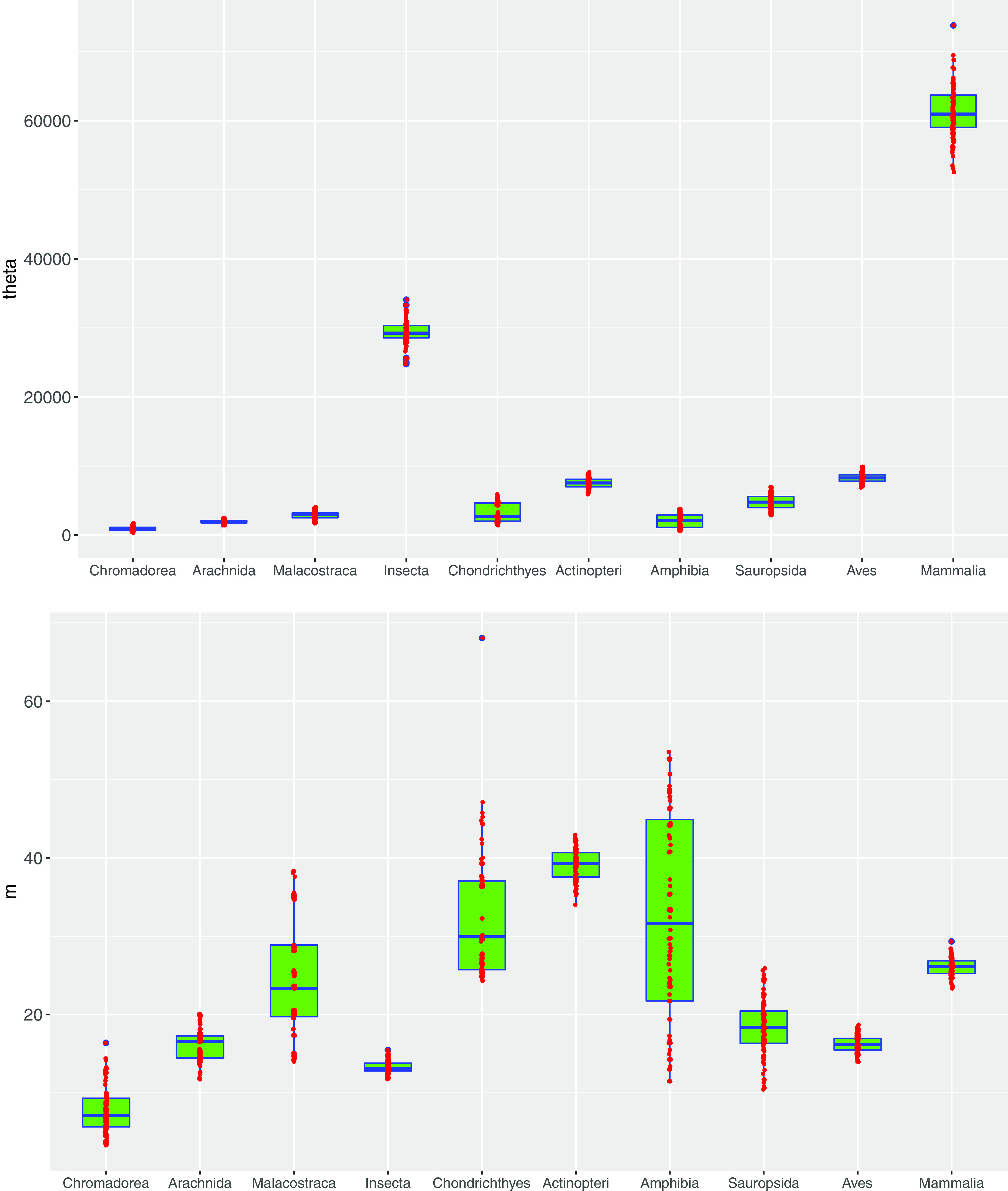
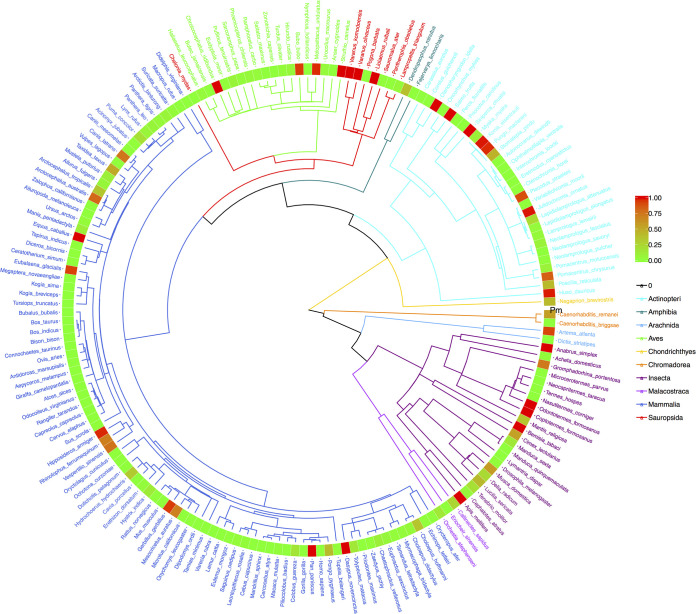
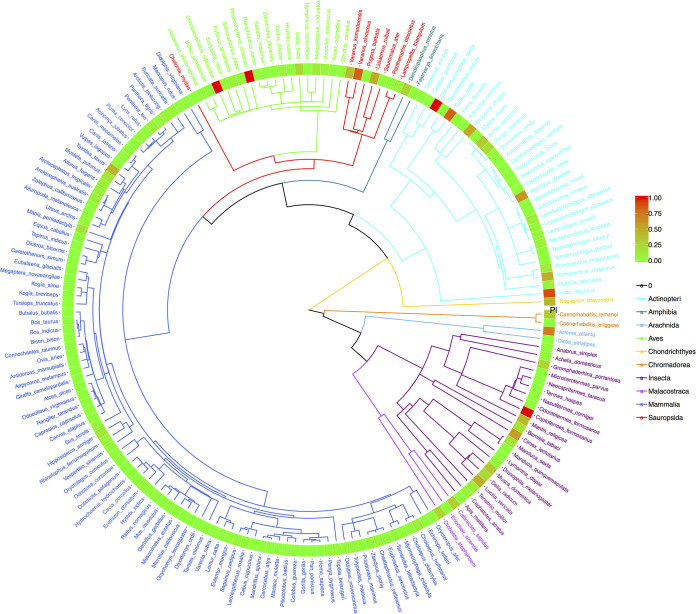
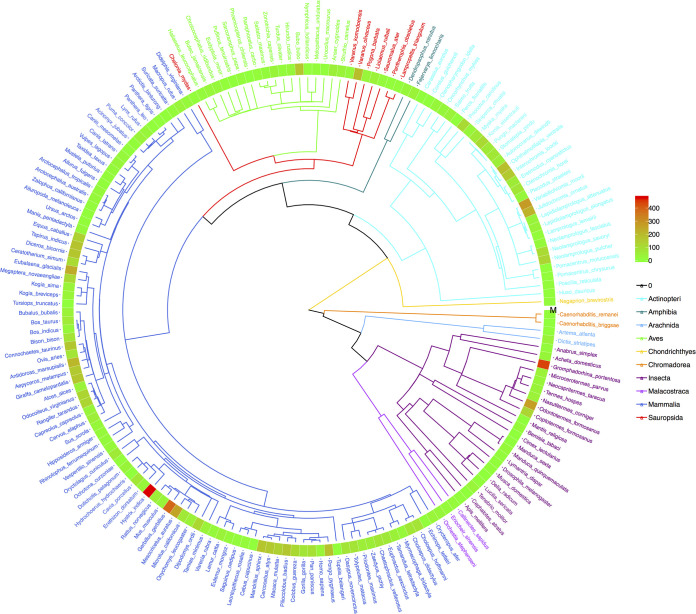
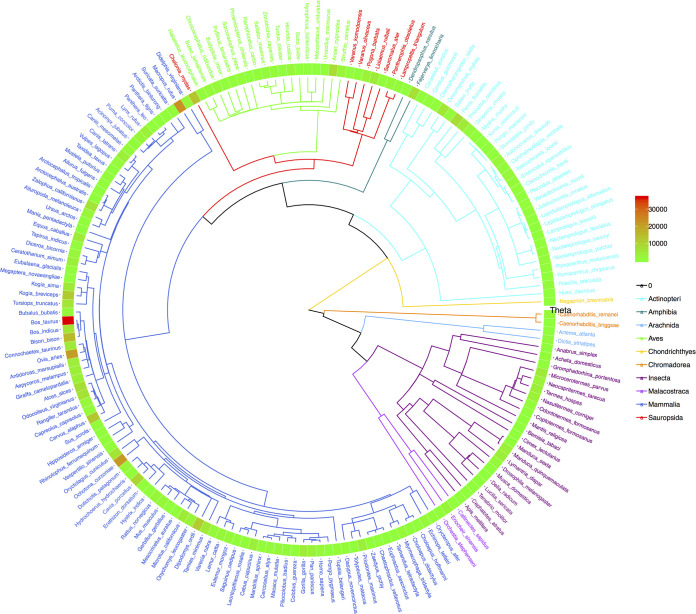
Animal (human) gut microbiomes have been coevolving with their hosts for many millions of years. Understanding how the coevolution shapes the processes of microbiome assembly and diversity maintenance is important but rather challenging. An effort may start with the understanding of how and why animals and humans may differ in their microbiome neutrality (stochasticity) levels. Here, we attempted to perform layered comparative stochasticity analyses across animal species (including humans), class, and kingdom scales, corresponding to microbial metacommunity, landscape, and global-landscape scales. By analyzing 4,903 microbiome samples from 274 animal species covering 4 major invertebrate classes and all 6 vertebrate classes and including 1,787 human gut microbiome samples, we discovered the following: (i) at the microbial metacommunity (animal species) scale, although the general trend of stochasticity (measured in the relationships between fundamental biodiversity/dispersal numbers of Hubbell's neutral theory and host species phylogenetic timeline) seems continuous, there seems to be a turning point from animals to humans in the passing rate of neutrality tests (12% to 45% versus 100%). We postulate that it should be the human experiences from agricultural/industrial activities (e.g., diet effects) and frequent social/familial contacts that are responsible for the dramatically rising stochastic neutrality in human gut microbiomes. (ii) At the microbial landscape (animal class) and global landscape (animal kingdom) scales, neutrality is not detectable, suggesting that the landscape is niche differentiated-animal species may possess "home niches" for their coadapted microbiomes. We further analyze the reliabilities of our findings by using variable value thresholds (type I error) and performing power analysis (type II error) of neutrality tests. Understanding how the coevolution (evolutionary time scale) and/or the interactions (ecological time scale) between animal (human) gut microbiomes and their hosts shape the processes of the microbiome assembly and diversity maintenance is important but rather challenging. An effort may start with the understanding of how and why animals and humans may differ in their microbiome neutrality (stochasticity) levels. Here, we attempted to perform layered comparative stochasticity analyses across animal species (including humans), class, and kingdom scales, corresponding to microbial metacommunity, landscape, and global-landscape scales by analyzing 4,903 microbiome samples from 274 animal species covering 4 major invertebrate classes and all 6 vertebrate classes, and including 1,787 human gut microbiome samples. The analyses were implemented by fitting the multisite neutral model and further augmented by checking false-positive and false-negative errors, respectively. It appears that there is a turning (tipping) point in the neutrality level from animal to human microbiomes.
动物(人类)肠道微生物群已经与它们的宿主共同进化了数百万年。了解这种共同进化如何塑造微生物群组装和多样性维持的过程很重要,但颇具挑战性。可以从了解动物和人类在微生物群中性(随机性)水平上的差异方式和原因入手。在这里,我们试图在动物物种(包括人类)、纲和界的尺度上进行分层比较随机性分析,分别对应微生物元群落、景观和全球景观尺度。通过分析来自274种动物的4903个微生物群样本,这些动物涵盖4个主要无脊椎动物纲和所有6个脊椎动物纲,还包括1787个人类肠道微生物群样本,我们发现了以下几点:(i)在微生物元群落(动物物种)尺度上,尽管随机性的总体趋势(以哈贝尔中性理论的基本生物多样性/扩散数与宿主物种系统发育时间线之间的关系来衡量)似乎是连续的,但在中性检验的通过率方面,从动物到人类似乎存在一个转折点(分别为12%至45%与100%)。我们推测,应该是人类从农业/工业活动中获得的经历(如饮食影响)以及频繁的社会/家庭接触导致了人类肠道微生物群中随机中性的急剧上升。(ii)在微生物景观(动物纲)和全球景观(动物界)尺度上,无法检测到中性,这表明景观存在生态位分化——动物物种可能为其共同适应的微生物群拥有“专属生态位”。我们通过使用可变值阈值(I型错误)并对中性检验进行功效分析(II型错误)来进一步分析我们研究结果的可靠性。了解动物(人类)肠道微生物群与其宿主之间的共同进化(进化时间尺度)和/或相互作用(生态时间尺度)如何塑造微生物群组装和多样性维持的过程很重要,但颇具挑战性。可以从了解动物和人类在微生物群中性(随机性)水平上的差异方式和原因入手。在这里,我们试图通过分析来自274种动物的4903个微生物群样本,在动物物种(包括人类)、纲和界的尺度上进行分层比较随机性分析,这些动物涵盖4个主要无脊椎动物纲和所有6个脊椎动物纲,还包括1787个人类肠道微生物群样本,分别对应微生物元群落、景观和全球景观尺度。这些分析是通过拟合多地点中性模型来实施的,并分别通过检查假阳性和假阴性错误来进一步加强。似乎在从动物微生物群到人类微生物群的中性水平上存在一个转折点。