Laboratory of Immunopharmacology, Oswaldo Cruz Institute, Oswaldo Cruz Foundation, Fiocruz, Av. Brasil, 4365, Pavilhão 108, sala 45, Manguinhos, Rio de Janeiro, RJ, 21040-360, Brazil.
Anesthesia and Intensive Care, San Martino Policlinico Hospital, IRCCS for Oncology and Neuroscience, Genoa, Italy.
Crit Care. 2021 Jul 6;25(1):236. doi: 10.1186/s13054-021-03659-6.
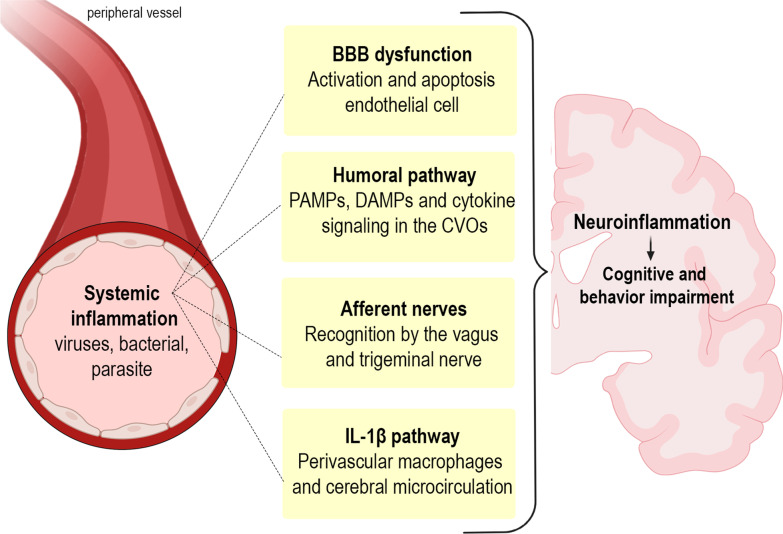
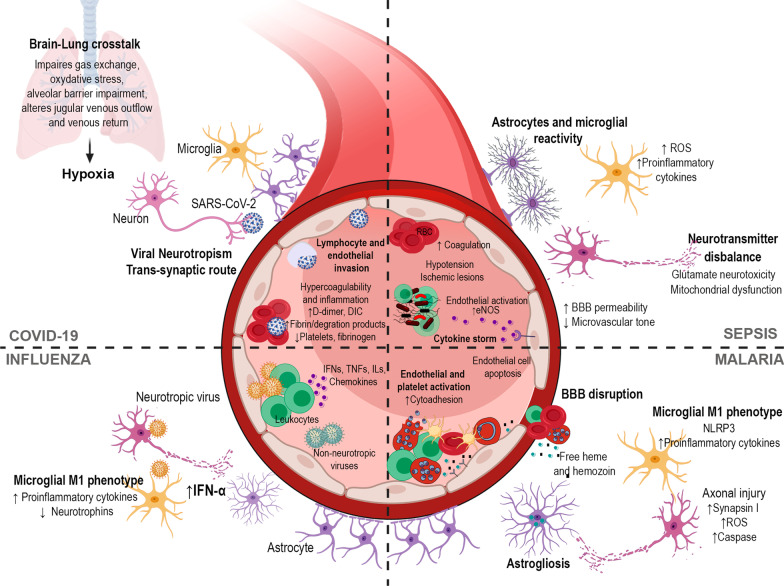
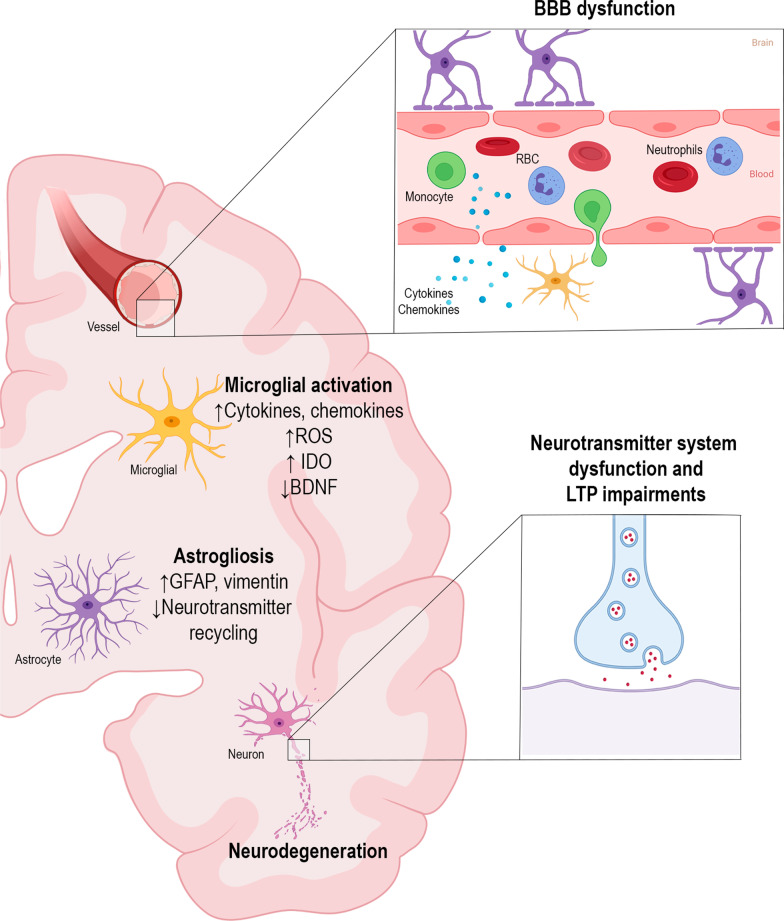
Infectious diseases may affect brain function and cause encephalopathy even when the pathogen does not directly infect the central nervous system, known as infectious disease-associated encephalopathy. The systemic inflammatory process may result in neuroinflammation, with glial cell activation and increased levels of cytokines, reduced neurotrophic factors, blood-brain barrier dysfunction, neurotransmitter metabolism imbalances, and neurotoxicity, and behavioral and cognitive impairments often occur in the late course. Even though infectious disease-associated encephalopathies may cause devastating neurologic and cognitive deficits, the concept of infectious disease-associated encephalopathies is still under-investigated; knowledge of the underlying mechanisms, which may be distinct from those of encephalopathies of non-infectious cause, is still limited. In this review, we focus on the pathophysiology of encephalopathies associated with peripheral (sepsis, malaria, influenza, and COVID-19), emerging therapeutic strategies, and the role of neuroinflammation.
传染病可能会影响大脑功能并导致脑病,即使病原体没有直接感染中枢神经系统,这种情况被称为感染相关脑病。全身炎症过程可能导致神经炎症,胶质细胞激活和细胞因子水平升高,神经营养因子减少,血脑屏障功能障碍,神经递质代谢失衡以及神经毒性,并且在病程后期经常会出现行为和认知障碍。尽管感染相关脑病可能导致严重的神经和认知缺陷,但感染相关脑病的概念仍未得到充分研究;对于潜在机制的了解仍然有限,这些机制可能与非感染性病因所致脑病的机制不同。在这篇综述中,我们重点介绍了与外周(败血症、疟疾、流感和 COVID-19)相关的脑病的病理生理学、新兴的治疗策略以及神经炎症的作用。