Aghayari Sheikh Neshin Saeideh, Shahjouei Shima, Koza Eric, Friedenberg Isabel, Khodadadi Faezeh, Sabra Mirna, Kobeissy Firas, Ansari Saeed, Tsivgoulis Georgios, Li Jiang, Abedi Vida, Wolk Donna M, Zand Ramin
Neuroscience Research Center, Guilan University of Medical Sciences, Rasht, Iran.
Neurology Department, Neuroscience Institute, Geisinger Health System, Danville, PA, United States.
Front Cardiovasc Med. 2021 Mar 29;8:649922. doi: 10.3389/fcvm.2021.649922. eCollection 2021.
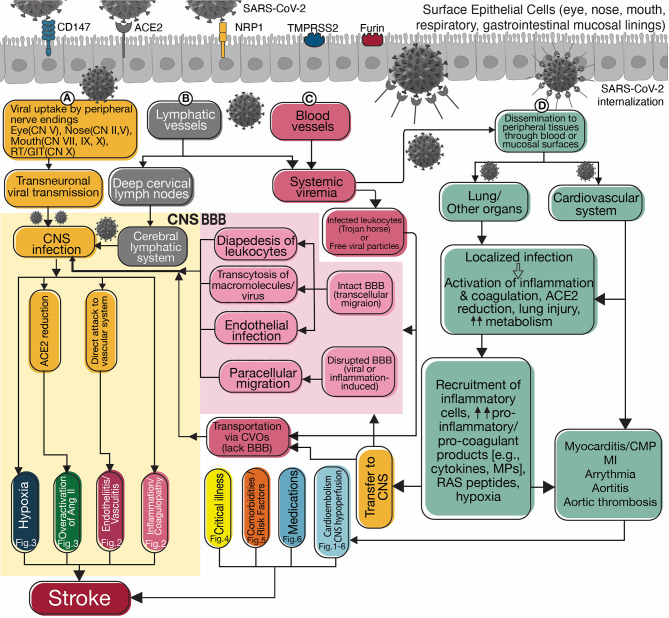
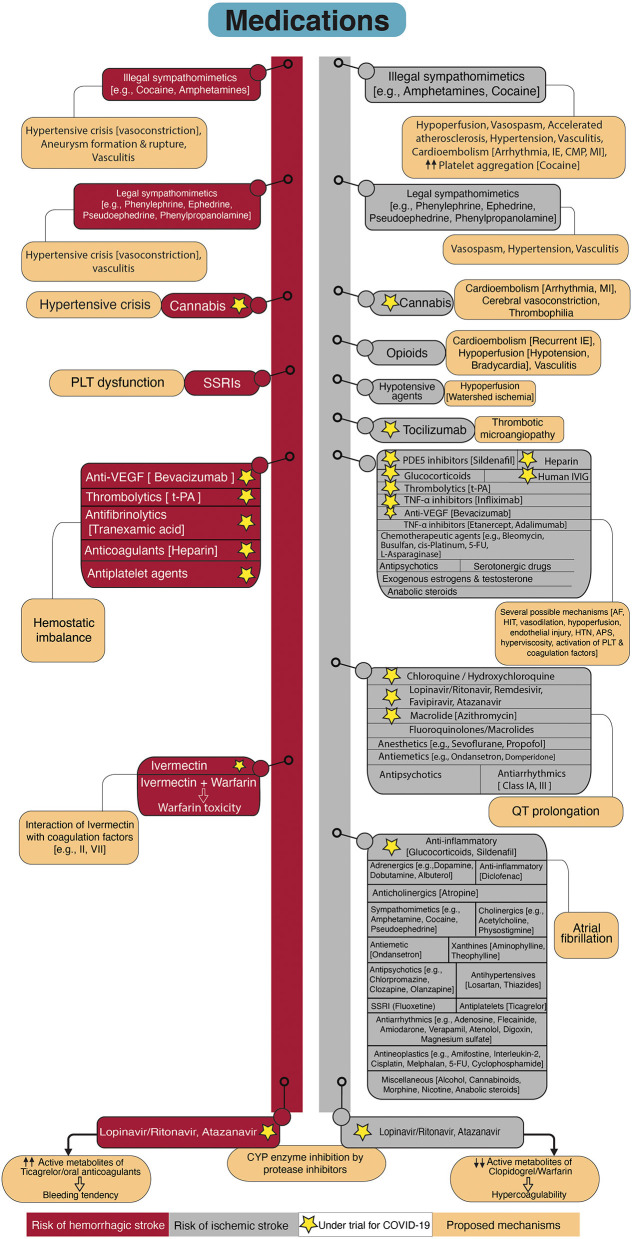
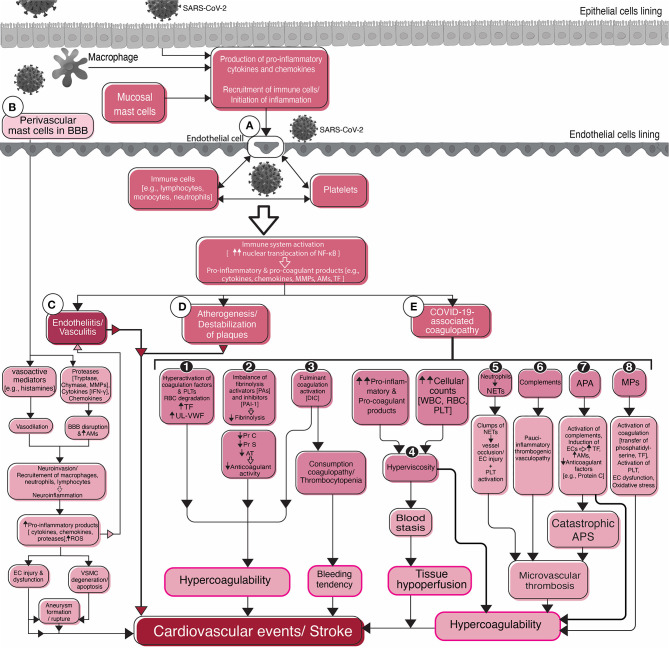
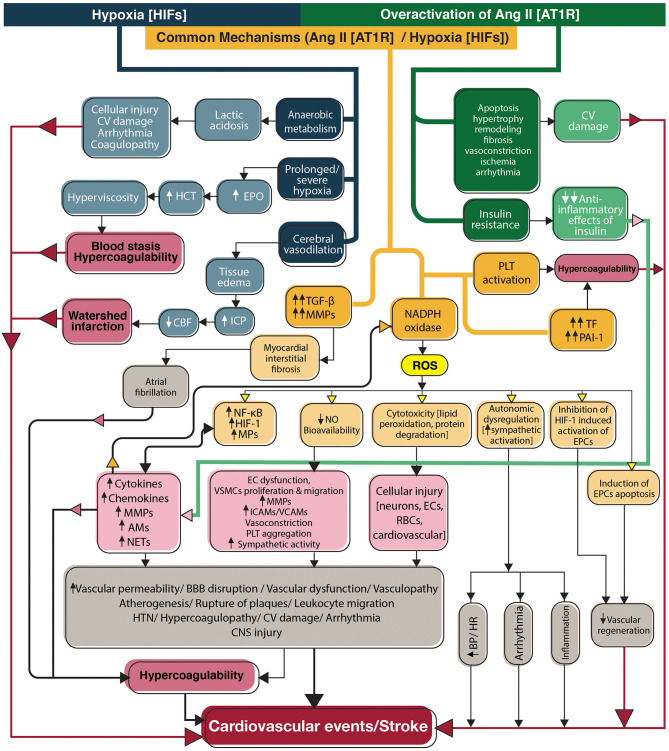
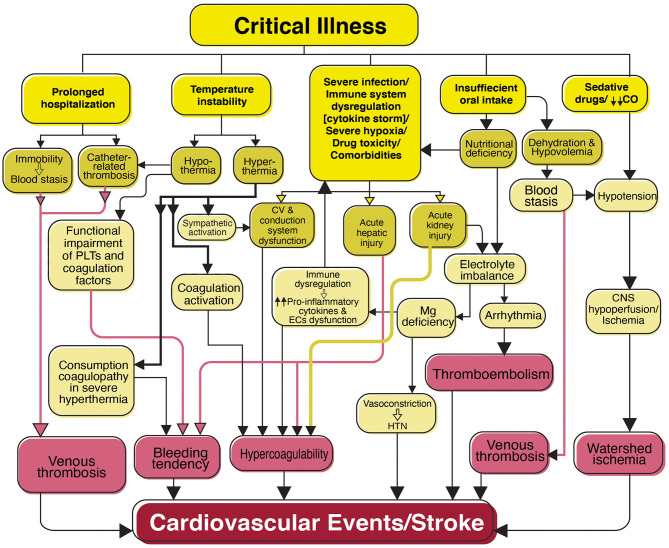
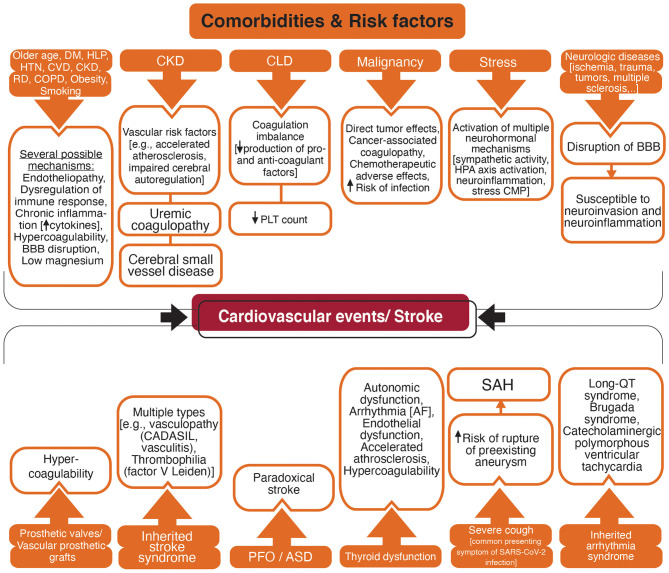
Since the early days of the pandemic, there have been several reports of cerebrovascular complications during the severe acute respiratory syndrome coronavirus 2 (SARS-CoV-2) infection. Numerous studies proposed a role for SARS-CoV-2 in igniting stroke. In this review, we focused on the pathoetiology of stroke among the infected patients. We pictured the results of the SARS-CoV-2 invasion to the central nervous system (CNS) via neuronal and hematogenous routes, in addition to viral infection in peripheral tissues with extensive crosstalk with the CNS. SARS-CoV-2 infection results in pro-inflammatory cytokine and chemokine release and activation of the immune system, COVID-19-associated coagulopathy, endotheliitis and vasculitis, hypoxia, imbalance in the renin-angiotensin system, and cardiovascular complications that all may lead to the incidence of stroke. Critically ill patients, those with pre-existing comorbidities and patients taking certain medications, such as drugs with elevated risk for arrhythmia or thrombophilia, are more susceptible to a stroke after SARS-CoV-2 infection. By providing a pictorial narrative review, we illustrated these associations in detail to broaden the scope of our understanding of stroke in SARS-CoV-2-infected patients. We also discussed the role of antiplatelets and anticoagulants for stroke prevention and the need for a personalized approach among patients with SARS-CoV-2 infection.
自大流行初期以来,已有数份关于严重急性呼吸综合征冠状病毒2(SARS-CoV-2)感染期间脑血管并发症的报告。众多研究提出SARS-CoV-2在引发中风中起作用。在本综述中,我们重点关注了感染患者中风的病理病因。我们描绘了SARS-CoV-2通过神经元和血行途径侵入中枢神经系统(CNS)的结果,此外还包括外周组织中的病毒感染以及与CNS的广泛相互作用。SARS-CoV-2感染导致促炎细胞因子和趋化因子释放以及免疫系统激活、COVID-19相关凝血病、内皮炎和血管炎、缺氧、肾素-血管紧张素系统失衡以及心血管并发症,所有这些都可能导致中风的发生。重症患者、患有基础合并症的患者以及服用某些药物的患者,如具有心律失常或血栓形成高风险的药物,在感染SARS-CoV-2后更容易发生中风。通过提供图片叙述性综述,我们详细阐述了这些关联,以拓宽我们对SARS-CoV-2感染患者中风的理解范围。我们还讨论了抗血小板药物和抗凝药物在预防中风中的作用以及SARS-CoV-2感染患者采取个性化方法的必要性。