Laboratory of Applied Virology, Department of Microbiology, Immunology and Parasitology, Federal University of Santa Catarina, Florianópolis, SC, 88040-900, Brazil.
Institute of Exact and Biological Sciences (ICEB), Federal University of Ouro Preto, Ouro Preto, Brazil.
Food Environ Virol. 2022 Dec;14(4):417-420. doi: 10.1007/s12560-021-09487-9. Epub 2021 Jul 8.
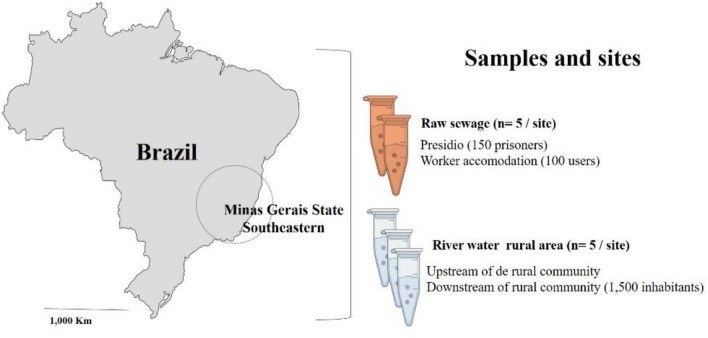
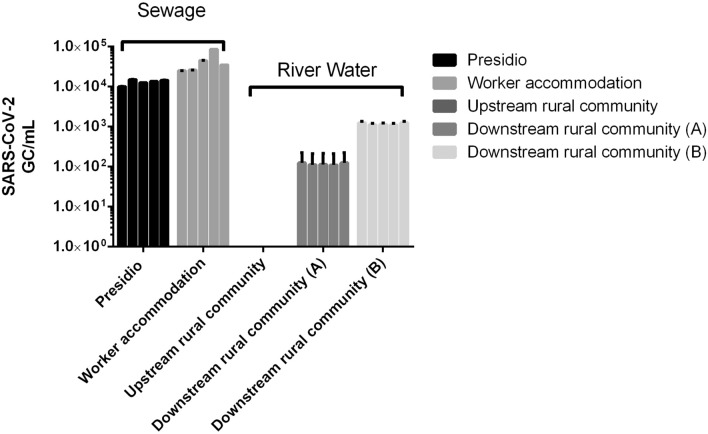
In the present study, the severe acute respiratory syndrome coronavirus 2 (SARS-CoV-2) was monitored in environmental samples from rural and vulnerable areas (a presidio, worker accommodation units, and river waters upstream and downstream of a rural community) from Minas Gerais State region, Southern Brazil, in August 2020. The sampling was performed prior to official declaration of the coronavirus disease (COVID-19) cases in those sites. SARS-CoV-2 RNA was detected in the presidio and workers accommodation units (3.0 × 10 virus genome copies (GC)/mL and 4.3 × 10 GC/mL of sewage, respectively). While SARS-CoV-2 was not detected in the river water upstream of the rural community, SARS-CoV-2 RNA was detected in downstream river waters (1.1 × 10 SARS-CoV-2 GC/mL). The results obtained in this study highlight the utility of SARS-CoV-2 monitoring in wastewater and human sewage as a non-invasive early warning tool to support health surveillance in vulnerable and remote areas, particularly in development countries.
在本研究中,于 2020 年 8 月对巴西南部米纳斯吉拉斯州农村和脆弱地区(一个军营、工人住宿区以及一个农村社区上下游的河水)的环境样本中进行了严重急性呼吸综合征冠状病毒 2(SARS-CoV-2)监测。这些地点在官方宣布出现冠状病毒病(COVID-19)病例之前进行了采样。在军营和工人住宿区均检测到 SARS-CoV-2 RNA(污水中分别为 3.0×10 病毒基因组拷贝(GC)/mL 和 4.3×10 GC/mL)。然而,在农村社区上游的河水中并未检测到 SARS-CoV-2,却在下游河水中检测到了 SARS-CoV-2 RNA(1.1×10 SARS-CoV-2 GC/mL)。本研究结果强调了监测废水和人类污水中 SARS-CoV-2 的效用,将其作为一种非侵入性的早期预警工具,以支持脆弱和偏远地区,特别是发展中国家的卫生监测。