Protein-Protein Interaction Laboratory, The Francis Crick Institute, London, NW1 1AT, UK.
Department of Chemistry, Molecular Sciences Research Hub, Imperial College London, London, W12 0BZ, UK.
ChemMedChem. 2021 Oct 15;16(20):3185-3188. doi: 10.1002/cmdc.202100315. Epub 2021 Jul 28.
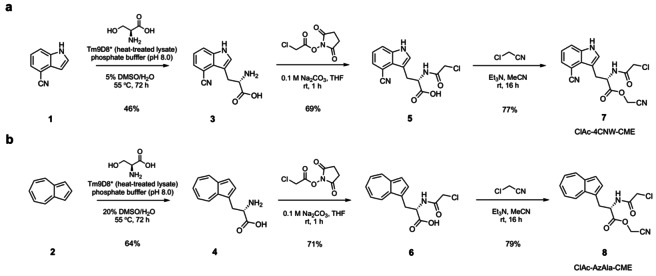
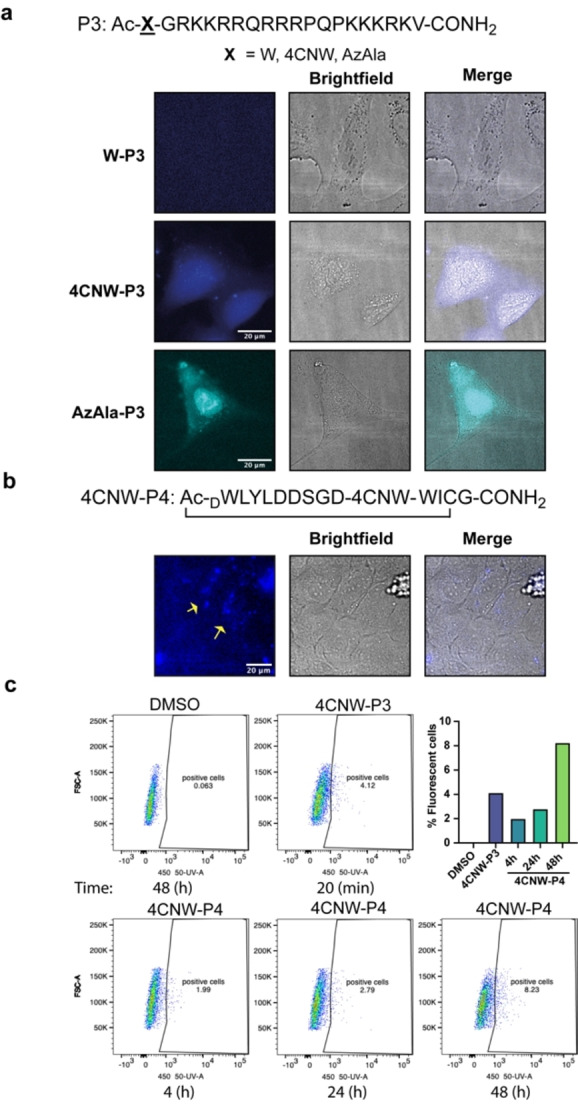
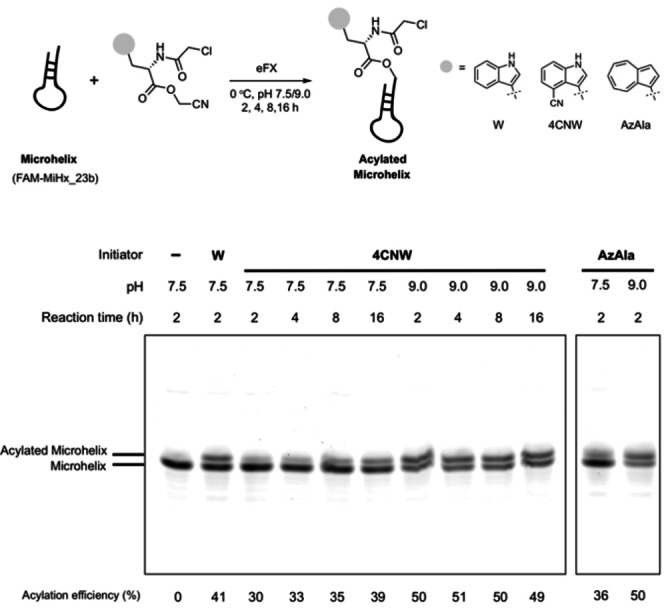
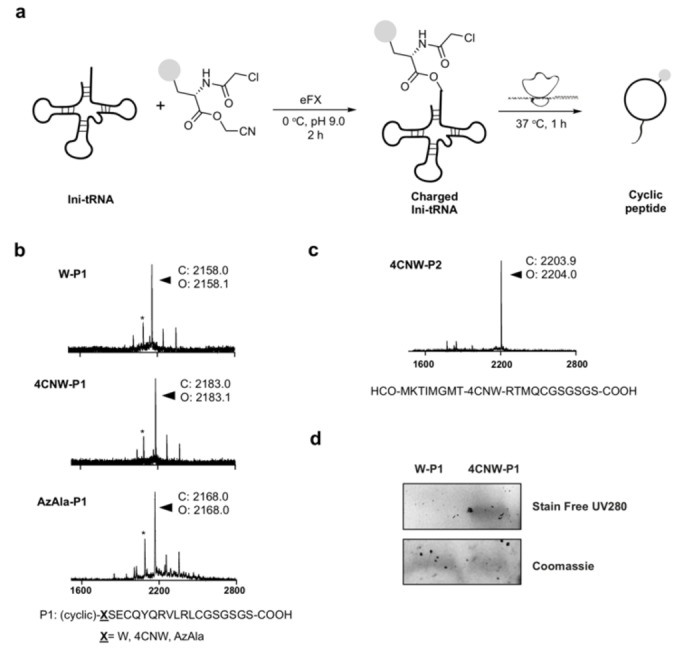
The major obstacle in applying peptides to intracellular targets is their low inherent cell permeability. Standard approaches to attach a fluorophore (e. g. FITC, TAMRA) can change the physicochemical properties of the parent peptide and influence their ability to penetrate and localize in cells. We report a label-free strategy for evaluating the cell permeability of cyclic peptide leads. Fluorescent tryptophan analogues 4-cyanotryptophan (4CNW) and β-(1-azulenyl)-L-alanine (AzAla) were incorporated into in vitro translated macrocyclic peptides by initiator reprogramming. We then demonstrate these efficient blue fluorescent emitters are good tools for monitoring peptide penetration into cells.
将肽应用于细胞内靶标存在的主要障碍是其内在的低细胞通透性。将荧光团(例如 FITC、TAMRA)连接到肽上的标准方法可以改变母体肽的物理化学性质,并影响其穿透和定位于细胞的能力。我们报告了一种用于评估环状肽先导物细胞通透性的无标记策略。荧光色氨酸类似物 4-氰基色氨酸(4CNW)和β-(1-薁基)-L-丙氨酸(AzAla)通过起始子重编程被掺入体外翻译的大环肽中。然后,我们证明这些高效的蓝色荧光发射体是监测肽穿透细胞的良好工具。