Department of General and Endocrine Surgery, Medical University of Bialystok, 24a M. Sklodowskiej-Curie Street, 15-276 Bialystok, Poland.
Department of Dermatology and Venereology, Medical University of Bialystok, 14 Żurawia Street, 15-540 Bialystok, Poland.
Oxid Med Cell Longev. 2021 Jun 22;2021:5543531. doi: 10.1155/2021/5543531. eCollection 2021.
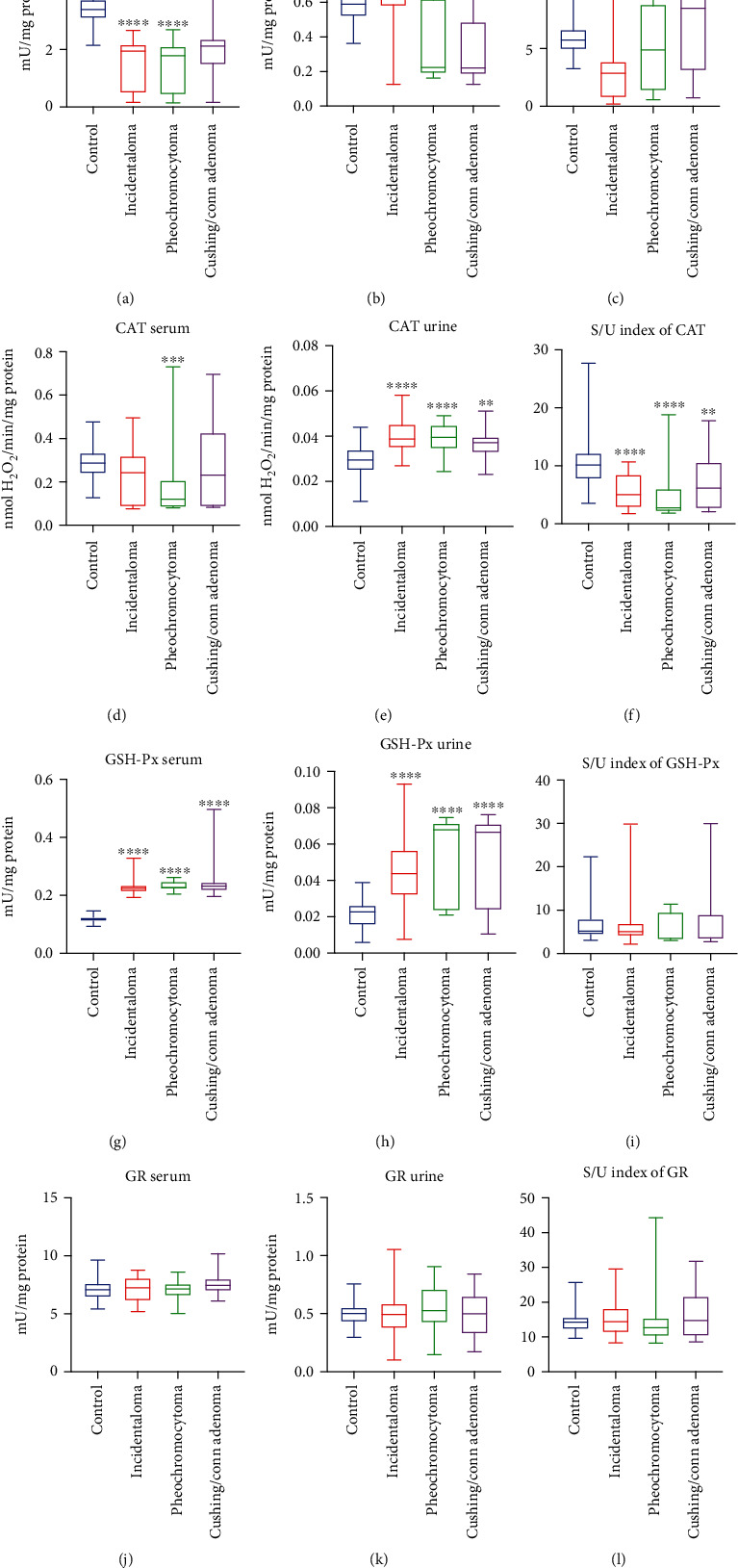
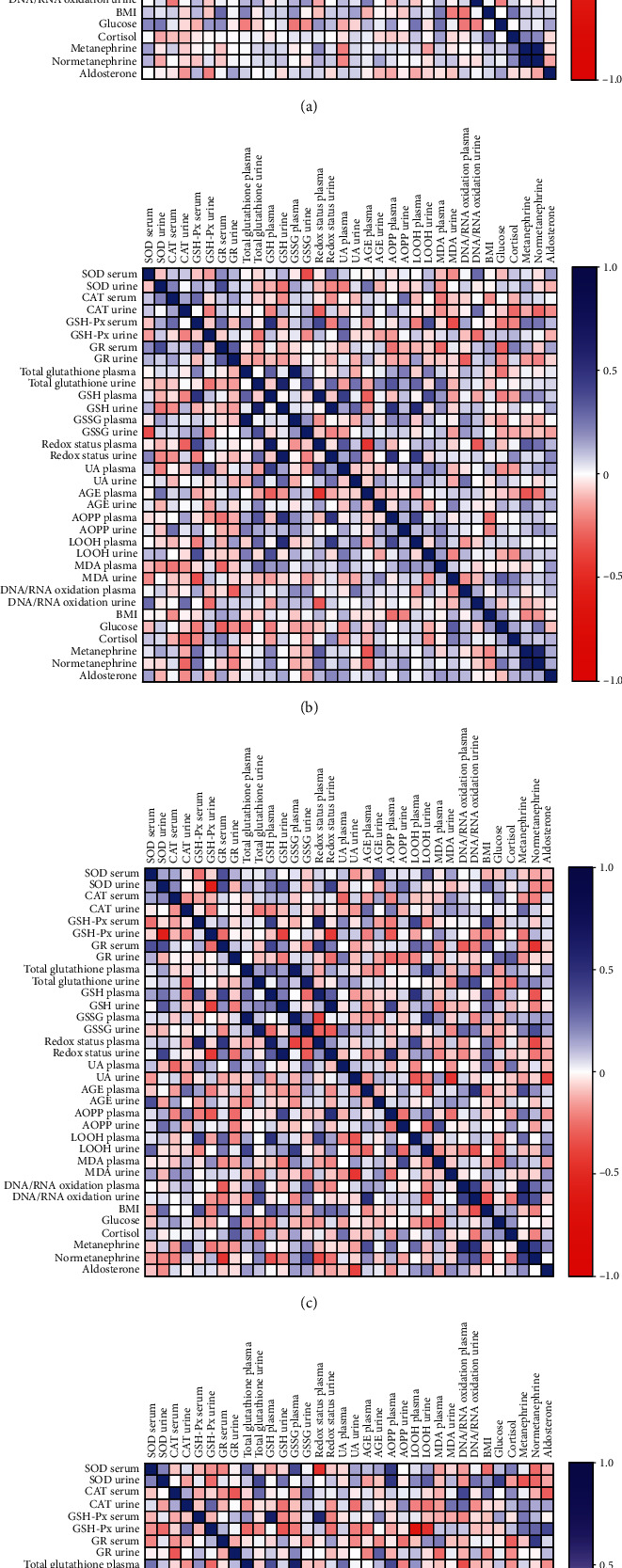
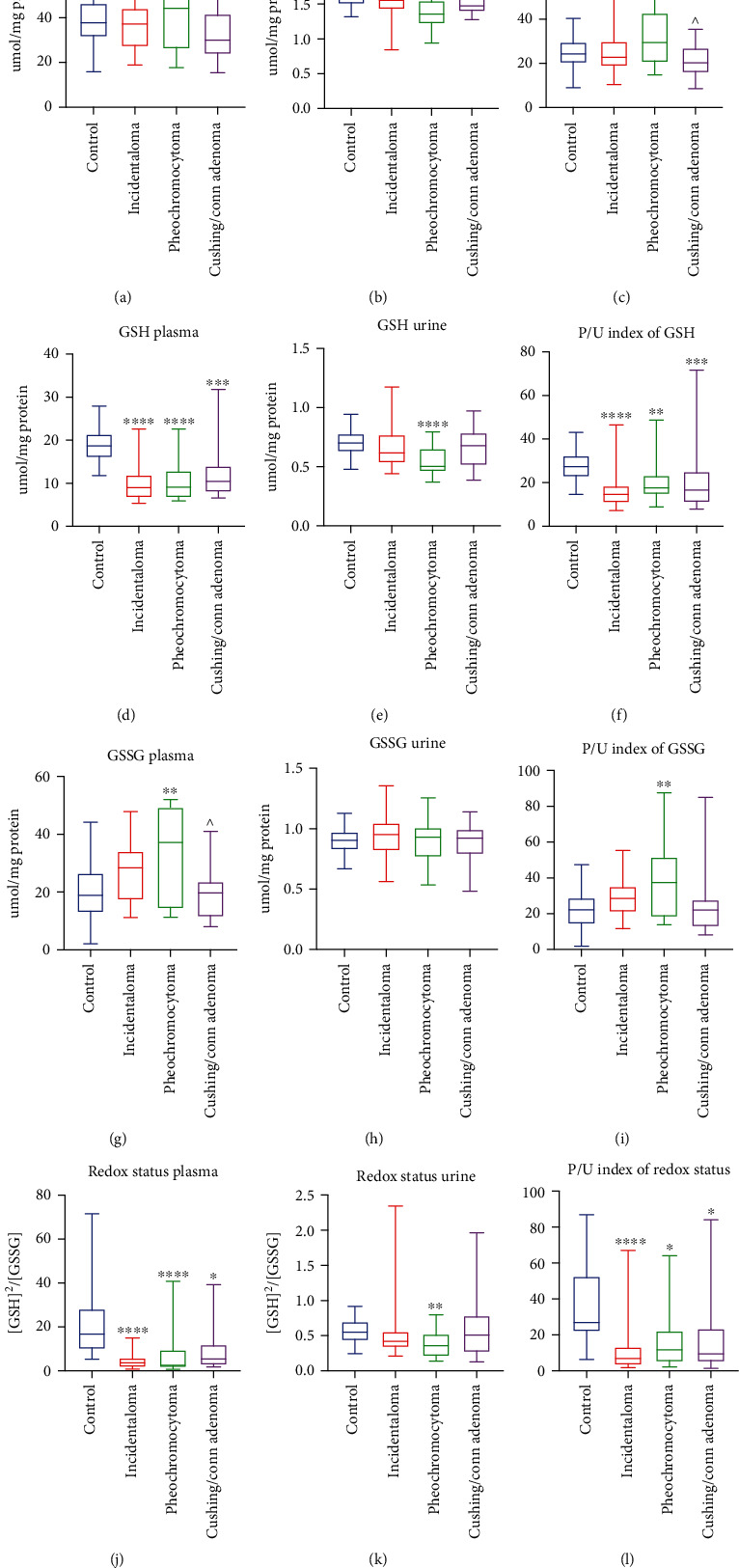
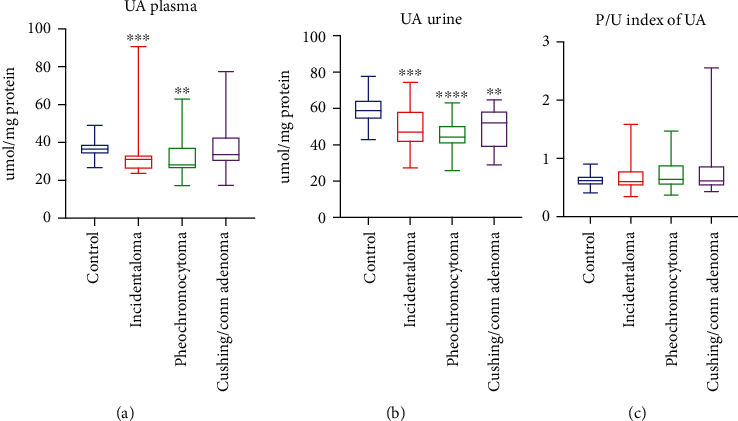
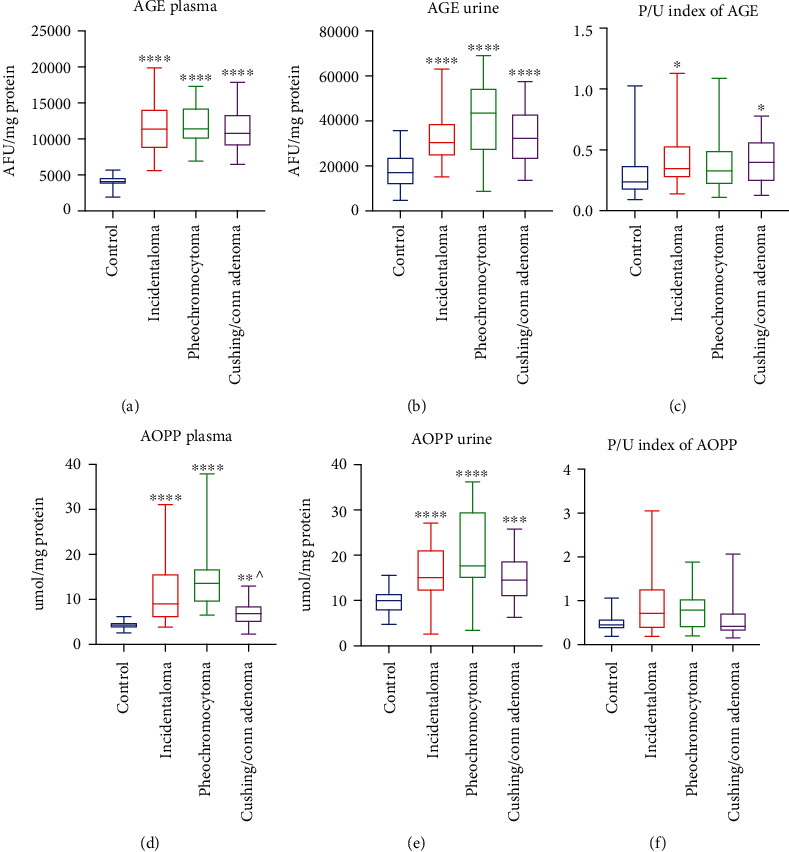
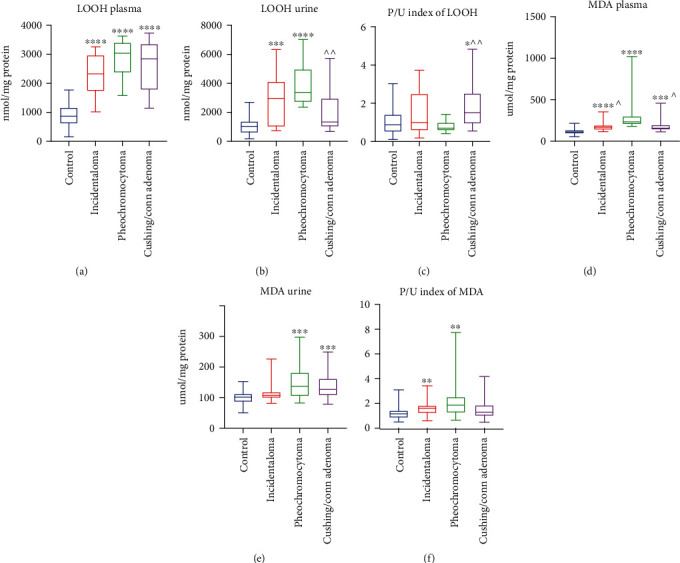
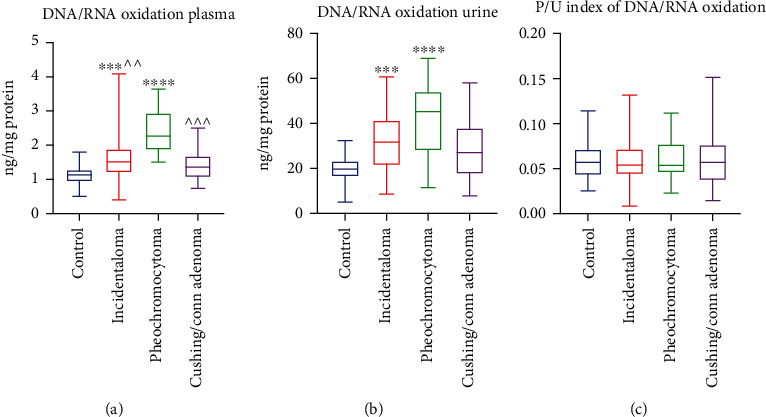
This study is the first to assess redox balance, glutathione metabolism, and oxidative damage to RNA/DNA, proteins, and lipids in the plasma/serum and urine of patients with adrenal masses. The study included 70 patients with adrenal tumors divided into three subgroups: incidentaloma ( = 30), pheochromocytoma ( = 20), and Cushing's/Conn's adenoma ( = 20), as well as 60 healthy controls. Blood and urine samples were collected before elective endoscopic adrenalectomy. Antioxidant defense capacity was significantly decreased (serum/plasma: superoxide dismutase (SOD), catalase (CAT) and reduced glutathione (GSH), uric acid (UA); urine: SOD, GSH, UA) in patients with adrenal masses. The oxidative damage to proteins (advanced glycation end products (AGE), advanced oxidation protein products (AOPP)) and lipids (lipid hydroperoxides (LOOH), and malondialdehyde (MDA)) was higher in the plasma and urine of these patients. Plasma MDA and DNA/RNA oxidation products, with high sensitivity and specificity, can help to diagnose pheochromocytoma. This biomarker differentiates patients with pheochromocytoma from Cushing's/Conn's adenoma as well as from heathy controls. Plasma RNA/DNA oxidation was also positively correlated with urine metanephrine. Oxidative stress can play a crucial role in adrenal tumors. However, further studies are required to clarify the role of redox signaling in adrenal masses.
本研究首次评估了肾上腺肿块患者血浆/血清和尿液中的氧化还原平衡、谷胱甘肽代谢以及 RNA/DNA、蛋白质和脂质的氧化损伤。该研究纳入了 70 名肾上腺肿瘤患者,分为三组:偶发瘤(=30)、嗜铬细胞瘤(=20)和库欣/康恩氏腺瘤(=20),以及 60 名健康对照者。在选择性内镜肾上腺切除术之前采集了血液和尿液样本。抗氧化防御能力显著降低(血清/血浆:超氧化物歧化酶(SOD)、过氧化氢酶(CAT)和还原型谷胱甘肽(GSH)、尿酸(UA);尿液:SOD、GSH、UA)在患有肾上腺肿块的患者中。这些患者的血浆和尿液中的蛋白质(晚期糖基化终产物(AGE)、晚期氧化蛋白产物(AOPP))和脂质(脂质过氧化物(LOOH)和丙二醛(MDA))的氧化损伤更高。血浆 MDA 和 DNA/RNA 氧化产物具有高灵敏度和特异性,有助于诊断嗜铬细胞瘤。该生物标志物可区分嗜铬细胞瘤患者与库欣/康恩氏腺瘤患者以及健康对照者。血浆 RNA/DNA 氧化也与尿液间甲肾上腺素呈正相关。氧化应激可能在肾上腺肿瘤中发挥关键作用。然而,需要进一步的研究来阐明氧化还原信号在肾上腺肿块中的作用。