Center for Mind/Brain Sciences (CIMeC), University of Trento, Corso Bettini 31, 38068, Rovereto, Italy.
Brain Struct Funct. 2021 Sep;226(7):2321-2337. doi: 10.1007/s00429-021-02332-6. Epub 2021 Jul 10.
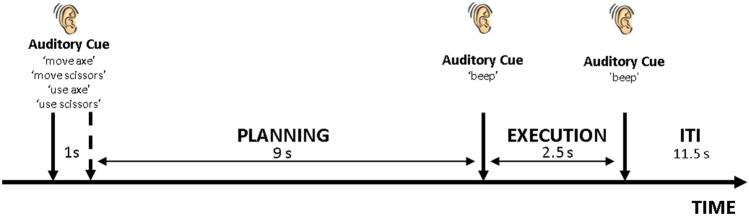
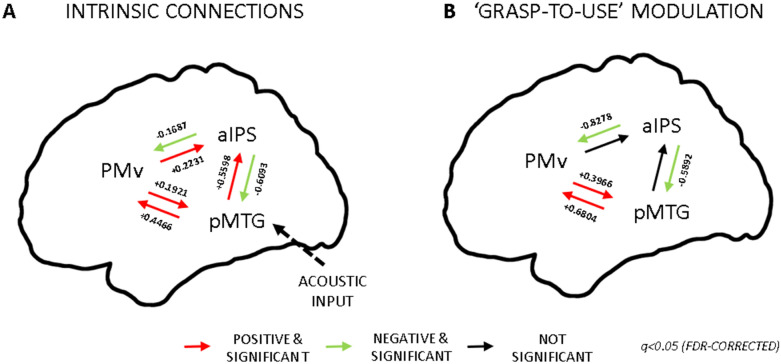
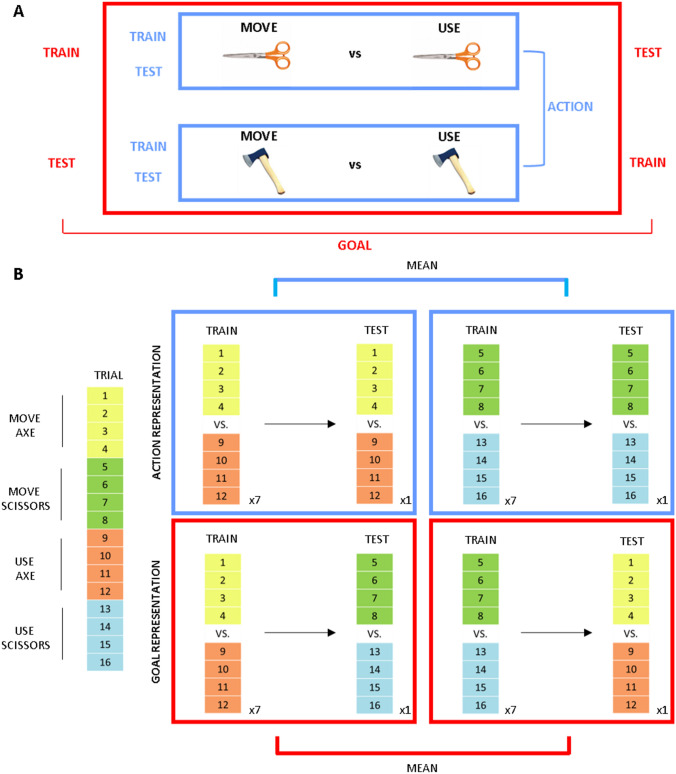
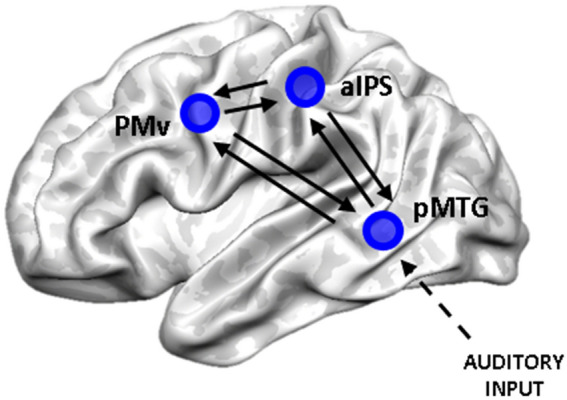
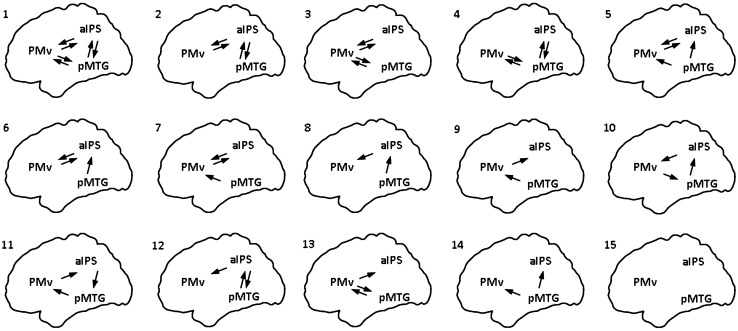
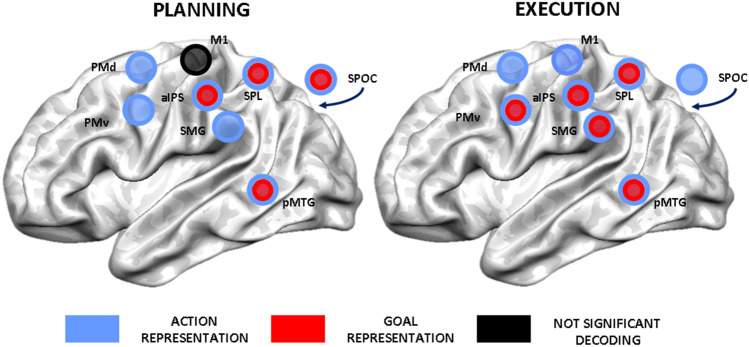
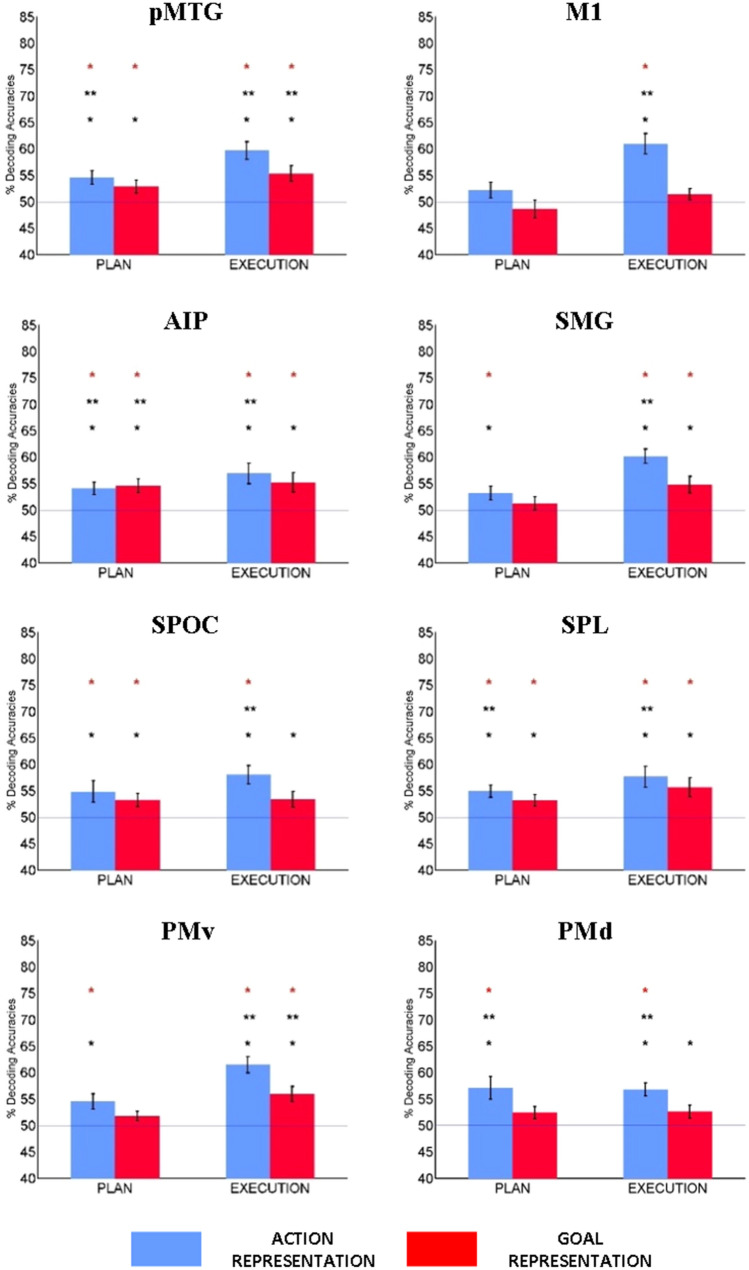
Pantomimes are a unique movement category which can convey complex information about our intentions in the absence of any interaction with real objects. Indeed, we can pretend to use the same tool to perform different actions or to achieve the same goal adopting different tools. Nevertheless, how our brain implements pantomimed movements is still poorly understood. In our study, we explored the neural encoding and functional interactions underlying pantomimes adopting multivariate pattern analysis (MVPA) and connectivity analysis of fMRI data. Participants performed pantomimed movements, either grasp-to-move or grasp-to-use, as if they were interacting with two different tools (scissors or axe). These tools share the possibility to achieve the same goal. We adopted MVPA to investigate two levels of representation during the planning and execution of pantomimes: (1) distinguishing different actions performed with the same tool, (2) representing the same final goal irrespective of the adopted tool. We described widespread encoding of action information within regions of the so-called "tool" network. Several nodes of the network-comprising regions within the ventral and the dorsal stream-also represented goal information. The spatial distribution of goal information changed from planning-comprising posterior regions (i.e. parietal and temporal)-to execution-including also anterior regions (i.e. premotor cortex). Moreover, connectivity analysis provided evidence for task-specific bidirectional coupling between the ventral stream and parieto-frontal motor networks. Overall, we showed that pantomimes were characterized by specific patterns of action and goal encoding and by task-dependent cortical interactions.
哑剧是一种独特的运动类别,它可以在没有与真实物体交互的情况下传达关于我们意图的复杂信息。事实上,我们可以假装使用相同的工具来执行不同的动作,或者采用不同的工具来达到相同的目标。然而,我们的大脑如何实现哑剧动作仍然知之甚少。在我们的研究中,我们使用功能磁共振成像(fMRI)数据的多变量模式分析(MVPA)和连接分析来探索哑剧的神经编码和功能相互作用。参与者执行哑剧动作,无论是抓握移动还是抓握使用,就好像他们在与两种不同的工具(剪刀或斧头)交互一样。这些工具都有实现相同目标的可能性。我们采用 MVPA 来研究哑剧规划和执行过程中的两种表示水平:(1)区分使用相同工具执行的不同动作,(2)表示相同的最终目标,而不考虑采用的工具。我们描述了在所谓的“工具”网络区域内对动作信息的广泛编码。网络中的几个节点——包括腹侧和背侧流内的区域——也表示目标信息。目标信息的空间分布从规划时包含的后部区域(即顶叶和颞叶)到执行时包括的前部区域(即运动前皮质)发生了变化。此外,连接分析为腹侧流和顶叶-额叶运动网络之间的特定任务双向耦合提供了证据。总的来说,我们表明哑剧的特点是特定的动作和目标编码模式,以及依赖任务的皮质相互作用。