González-Garduño R, Arece-García J, Torres-Hernández G
Universidad Autónoma Chapingo. Unidad Regional Universitaria Sursureste. Teapa, Tabasco. México.
Estación Experimental de Pastos y Forrajes "Indio Hatuey". Universidad de Matanzas. Matanzas. Cuba.
Helminthologia. 2021 Jun 8;58(2):134-151. doi: 10.2478/helm-2021-0020. eCollection 2021 Jun.
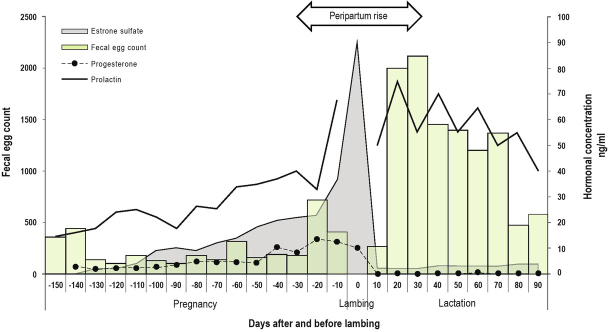
Parasitic diseases of sheep involving gastrointestinal nematodes (GIN) are one of the main problems that affect fl ock productivity, especially during the peripartum period. Around lambing, the ewes are immunosuppressed and the nematode faecal egg count (FEC) increases at four weeks before lambing, reaching a peak between the fourth and sixth week postpartum and subsequently decreasing towards weaning. Prolactin has been credited with a suppressive effect on immune system, along with other hormones that intervene in metabolism, such as leptin, which has an important role in the activation of other hormones. Cortisol has also been included; this is stimulated by any stressful event and inhibits the proliferation of T-cells and alters the function of immunoglobulins. Another related hormone is pepsinogen, which is considered a marker of the integrity of the abomasum mucosa, as well as the albumin concentration that increases in the presence of a GIN infection. The humoral and cellular immune response, as well as inflammatory reactions, are the main mechanisms of action against GIN. Lymphocytes direct the effector mechanisms in a Th2 cell response, including interleukins (IL-4, IL-5, IL-9, IL-10) and transforming growth factor beta (TGF-β) together with immunoglobulins (IgA, IgG, IgM and IgE), which prevent the invasion of pathogens. Eosinophils with a cytotoxic effect are indicators of a parasitic infection, with importance in the immune protection of infected individuals. The genetic selection of resistant individuals measured by FEC is dependent on the heritability (h), which is moderately inheritable and highly repeatable. Effects that influence the resistance or susceptibility of sheep to GIN infections in the peripartum period are determined by the interaction of various factors, such as genotype or breed, nutrition, age, type of birth, season and production system, etc., which are studied in this review.
绵羊的寄生虫病,尤其是涉及胃肠道线虫(GIN)的疾病,是影响羊群生产力的主要问题之一,在围产期尤为突出。产羔前后,母羊的免疫系统受到抑制,线虫粪便虫卵计数(FEC)在产羔前四周开始增加,在产后第四至六周达到峰值,随后在断奶前下降。催乳素被认为对免疫系统有抑制作用,其他参与新陈代谢的激素如瘦素也有此作用,瘦素在其他激素的激活中起重要作用。皮质醇也被提及,它会因任何应激事件而被刺激,抑制T细胞的增殖并改变免疫球蛋白的功能。另一种相关激素是胃蛋白酶原,它被认为是皱胃黏膜完整性的标志物,同时在GIN感染时白蛋白浓度会升高。体液免疫和细胞免疫反应以及炎症反应是对抗GIN的主要作用机制。淋巴细胞在Th2细胞反应中指导效应机制,包括白细胞介素(IL-4、IL-5、IL-9、IL-10)和转化生长因子β(TGF-β)以及免疫球蛋白(IgA、IgG、IgM和IgE),它们可防止病原体的入侵。具有细胞毒性作用的嗜酸性粒细胞是寄生虫感染的指标,对受感染个体的免疫保护很重要。通过FEC测量的抗性个体的遗传选择取决于遗传力(h),它具有中等遗传性和高度重复性。本文综述了影响围产期绵羊对GIN感染抗性或易感性的各种因素之间的相互作用,如基因型或品种、营养、年龄、出生类型、季节和生产系统等。