Karami Behnam, Koushki Roxana, Arabgol Fariba, Rahmani Maryam, Vahabie Abdol-Hossein
School of Cognitive Sciences, Institute for Research in Fundamental Sciences (IPM), Tehran, Iran.
Cognitive Neuroscience Laboratory, German Primate Center, Goettingen, Germany.
Front Psychiatry. 2021 Jun 23;12:665326. doi: 10.3389/fpsyt.2021.665326. eCollection 2021.
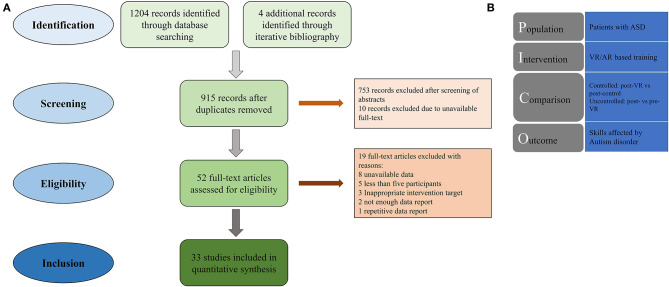
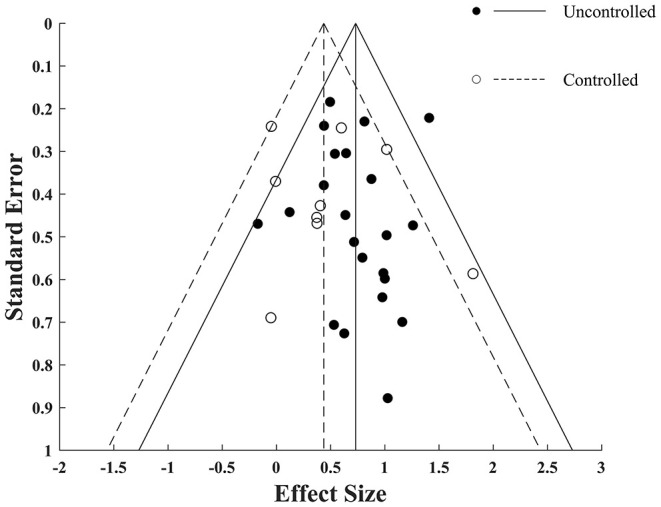
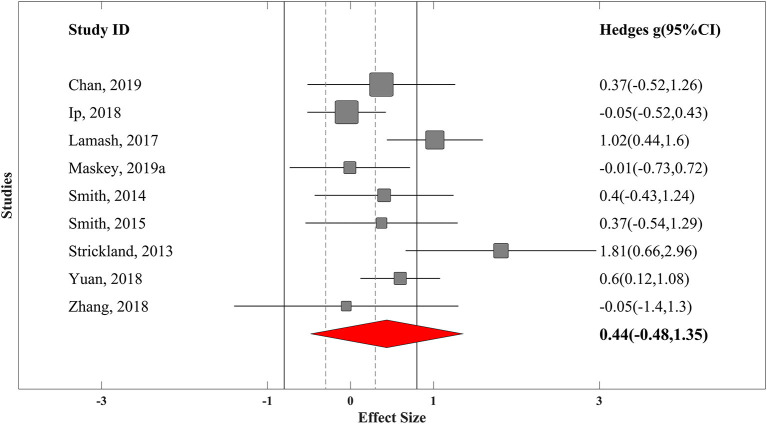
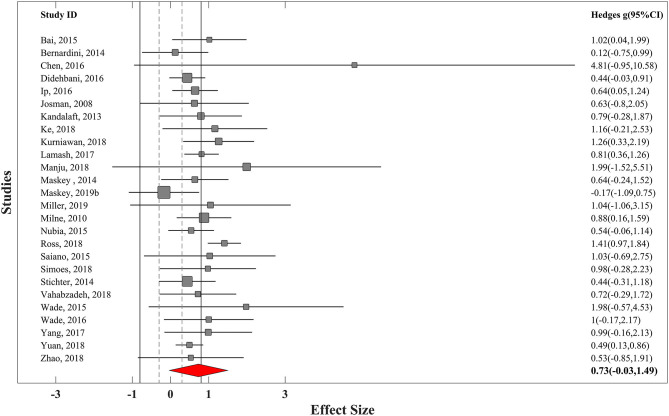
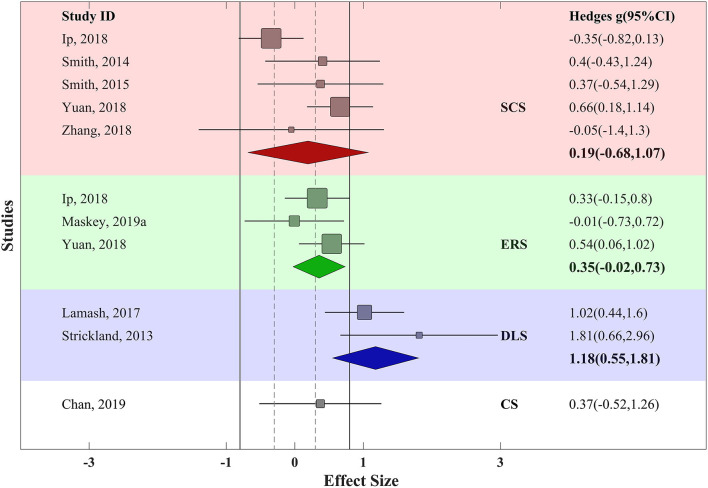
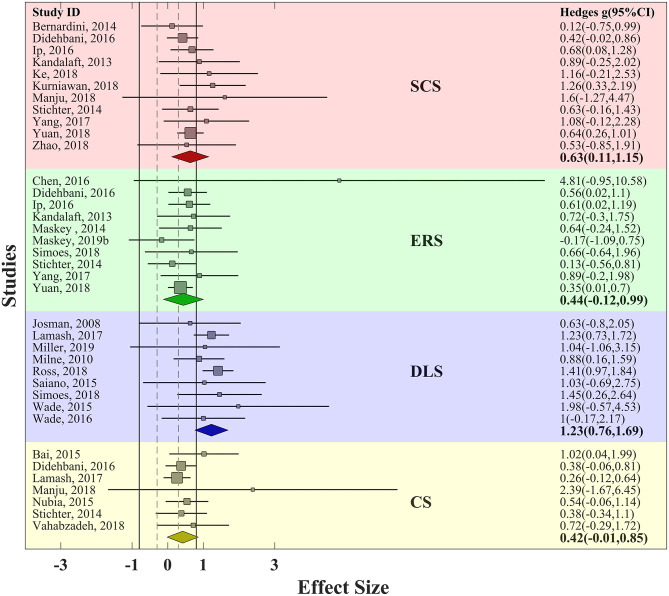
In recent years, the application of virtual reality (VR) for therapeutic purposes has escalated dramatically. Favorable properties of VR for engaging patients with autism, in particular, have motivated an enormous body of investigations targeting autism-related disabilities with this technology. This study aims to provide a comprehensive meta-analysis for evaluating the effectiveness of VR on the rehabilitation and training of individuals diagnosed with an autism spectrum disorder. Accordingly, we conducted a systematic search of related databases and, after screening for inclusion criteria, reviewed 33 studies for more detailed analysis. Results revealed that individuals undergoing VR training have remarkable improvements with a relatively large effect size with Hedges of 0.74. Furthermore, the results of the analysis of different skills indicated diverse effectiveness. The strongest effect was observed for daily living skills ( = 1.15). This effect was moderate for other skills: = 0.45 for cognitive skills, = 0.46 for emotion regulation and recognition skills, and = 0.69 for social and communication skills. Moreover, five studies that had used augmented reality also showed promising efficacy ( = 0.92) that calls for more research on this tool. In conclusion, the application of VR-based settings in clinical practice is highly encouraged, although their standardization and customization need more research.
近年来,虚拟现实(VR)在治疗领域的应用急剧增加。尤其是VR在吸引自闭症患者方面的有利特性,促使大量研究针对自闭症相关残疾运用这项技术展开。本研究旨在进行全面的荟萃分析,以评估VR对被诊断为自闭症谱系障碍个体的康复和训练效果。因此,我们对相关数据库进行了系统检索,并在筛选纳入标准后,对33项研究进行了更详细的审查。结果显示,接受VR训练的个体有显著改善,Hedges效应量相对较大,为0.74。此外,对不同技能的分析结果表明效果各异。日常生活技能的效果最为显著( = 1.15)。其他技能的效果为中等:认知技能为 = 0.45,情绪调节和识别技能为 = 0.46,社交和沟通技能为 = 0.69。此外,五项使用增强现实的研究也显示出有前景的疗效( = 0.92),这需要对该工具进行更多研究。总之,尽管VR设置的标准化和定制化需要更多研究,但强烈鼓励在临床实践中应用基于VR的环境。