Vahabzadeh Arshya, Keshav Neha U, Salisbury Joseph P, Sahin Ned T
Brain Power, Cambridge, MA, United States.
Massachusetts General Hospital Psychiatry Academy, Boston, MA, United States.
JMIR Ment Health. 2018 Mar 24;5(2):e25. doi: 10.2196/mental.9631.
People with autism spectrum disorder (ASD) commonly experience symptoms related to attention-deficit/hyperactivity disorder (ADHD), including hyperactivity, inattention, and impulsivity. One-third of ASD cases may be complicated by the presence of ADHD. Individuals with dual diagnoses face greater barriers to accessing treatment for ADHD and respond less positively to primary pharmacologic interventions. Nonpharmacologic technology-aided tools for hyperactivity and inattention in people with ASD are being developed, although research into their efficacy and safety remains limited.
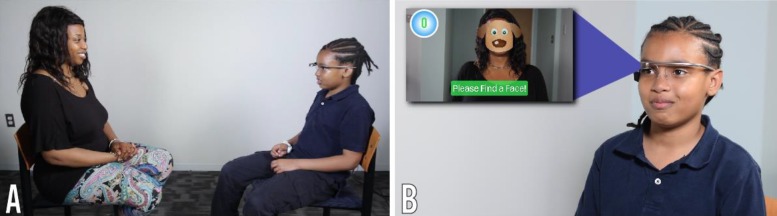
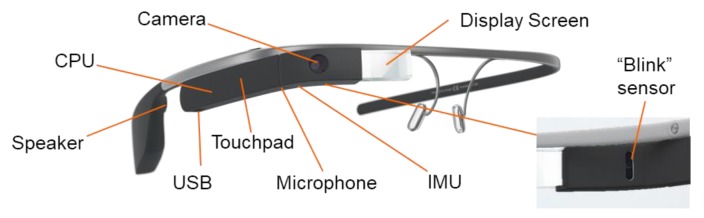
The objective of this preliminary study was to describe the changes in ADHD-related symptoms in children, adolescents, and young adults with ASD immediately after use of the Empowered Brain system, a behavioral and social communication aid for ASD running on augmented reality smartglasses.
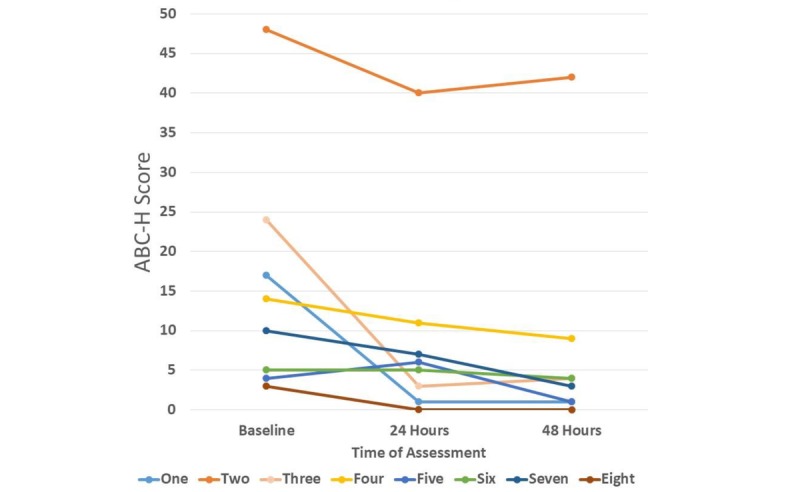
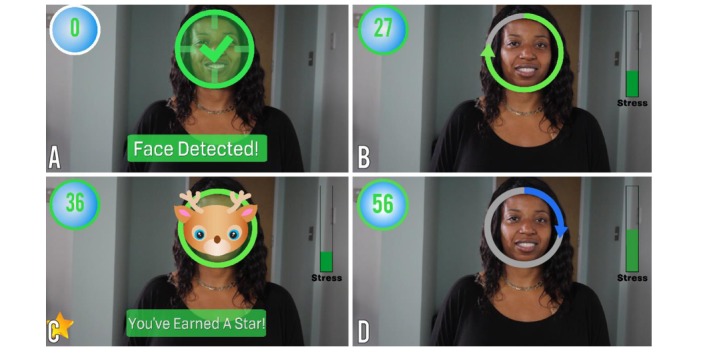
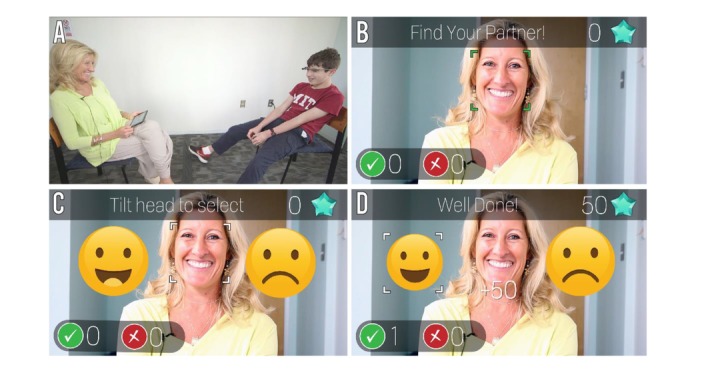
We recruited 8 children, adolescents, and young adults with ASD (male to female ratio of 7:1, mean age 15 years, range 11.7-20.5 years) through a Web-based research signup form. The baseline score on the hyperactivity subscale of the Aberrant Behavioral Checklist (ABC-H), a measure of hyperactivity, inattention, and impulsivity, determined their classification into a high ADHD-related symptom group (n=4, ABC-H≥13) and a low ADHD-related symptom group (n=4, ABC-H<13). All participants received an intervention with Empowered Brain, where they used smartglasses-based social communication and behavioral modules while interacting with their caregiver. We then calculated caregiver-reported ABC-H scores at 24 and 48 hours after the session.
All 8 participants were able to complete the intervention session. Postintervention ABC-H scores were lower for most participants at 24 hours (n=6, 75%) and for all participants at 48 hours (n=8, 100%). At 24 hours after the session, average participant ABC-H scores decreased by 54.9% in the high ADHD symptom group and by 20% in the low ADHD symptom group. At 48 hours after the session, ABC-H scores compared with baseline decreased by 56.4% in the high ADHD symptom group and by 66.3% in the low ADHD symptom group.
This study provides initial evidence for the possible potential of the Empowered Brain system to reduce ADHD-related symptoms, such as hyperactivity, inattention, and impulsivity, in school-aged children, adolescents, and young adults with ASD. This digital smartglasses intervention can potentially be targeted at a broader array of mental health conditions that exhibit transdiagnostic attentional and social communication deficits, including schizophrenia and bipolar disorder. Further research is required to understand the clinical importance of these observed changes and to conduct longitudinal studies on this intervention with control groups and larger sample sizes.
自闭症谱系障碍(ASD)患者通常会出现与注意力缺陷多动障碍(ADHD)相关的症状,包括多动、注意力不集中和冲动。三分之一的ASD病例可能并发ADHD。双重诊断的个体在获得ADHD治疗方面面临更大障碍,对主要药物干预的反应也不太积极。尽管对其疗效和安全性的研究仍然有限,但针对ASD患者多动和注意力不集中的非药物技术辅助工具正在开发中。
这项初步研究的目的是描述使用Empowered Brain系统(一种运行在增强现实智能眼镜上的ASD行为和社交沟通辅助工具)后,患有ASD的儿童、青少年和年轻人中与ADHD相关症状的变化。
我们通过基于网络的研究报名表格招募了8名患有ASD的儿童、青少年和年轻人(男女性别比为7:1,平均年龄15岁,范围11.7 - 20.5岁)。异常行为检查表(ABC - H)多动分量表的基线分数用于衡量多动、注意力不集中和冲动,据此将他们分为高ADHD相关症状组(n = 4,ABC - H≥13)和低ADHD相关症状组(n = 4,ABC - H<13)。所有参与者都接受了Empowered Brain的干预,他们在与照顾者互动时使用基于智能眼镜的社交沟通和行为模块。然后我们计算了干预后24小时和48小时照顾者报告的ABC - H分数。
所有8名参与者都能够完成干预课程。干预后,大多数参与者在24小时时ABC - H分数较低(n = 6,75%),所有参与者在48小时时ABC - H分数都较低(n = 8,100%)。在课程结束后24小时,高ADHD症状组参与者的平均ABC - H分数下降了54.9%,低ADHD症状组下降了20%。在课程结束后48小时,与基线相比,高ADHD症状组的ABC - H分数下降了56.4%,低ADHD症状组下降了66.3%。
本研究为Empowered Brain系统可能具有减少患有ASD的学龄儿童、青少年和年轻人中与ADHD相关症状(如多动、注意力不集中和冲动)的潜力提供了初步证据。这种数字智能眼镜干预可能潜在地针对更广泛的一系列表现出跨诊断性注意力和社交沟通缺陷的心理健康状况,包括精神分裂症和双相情感障碍。需要进一步研究以了解这些观察到的变化的临床重要性,并对该干预措施进行有对照组和更大样本量的纵向研究。