Gupta Chirag, Ramegowda Venkategowda, Basu Supratim, Pereira Andy
Department of Crop, Soil, and Environmental Sciences, University of Arkansas, Fayetteville, AR, United States.
Front Genet. 2021 Jun 24;12:652189. doi: 10.3389/fgene.2021.652189. eCollection 2021.
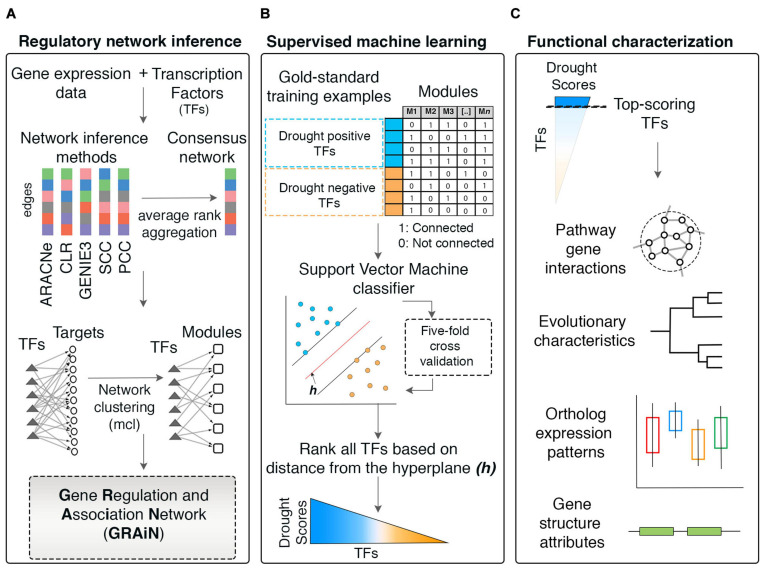
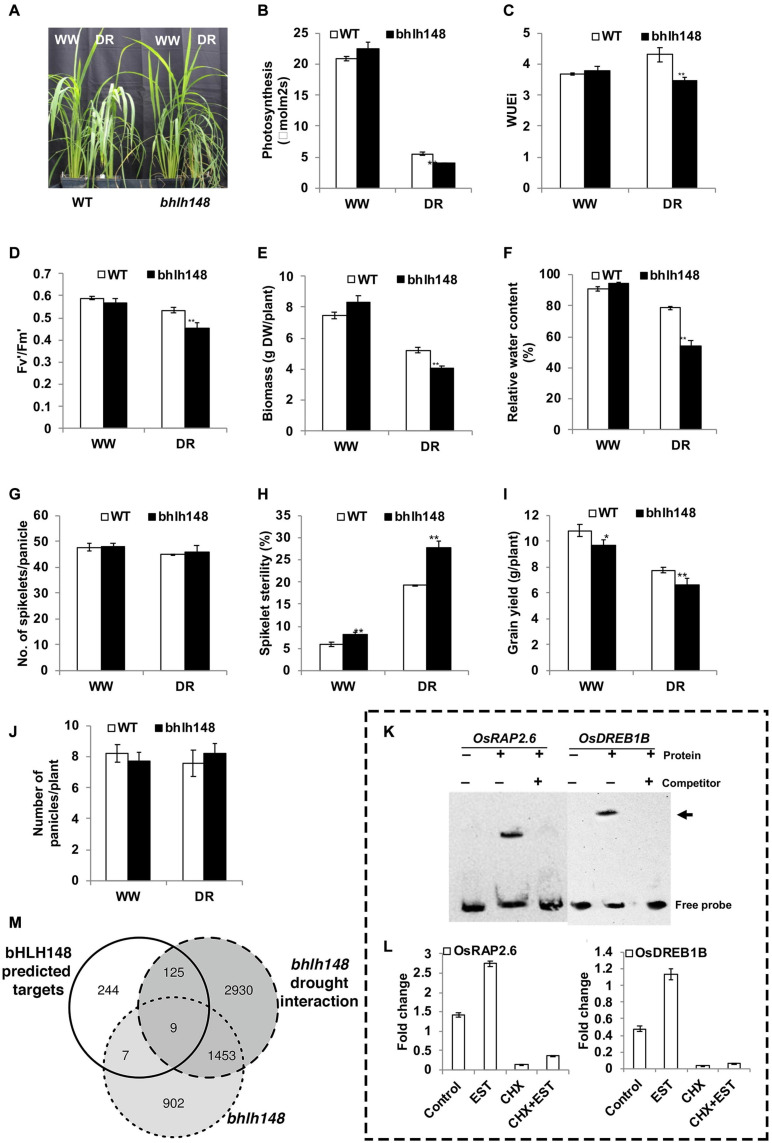
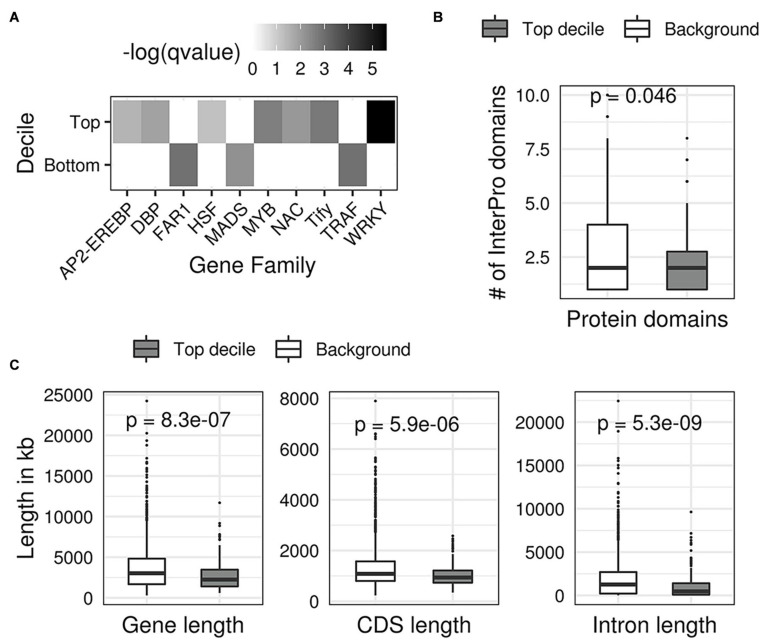
Gene regulatory networks underpin stress response pathways in plants. However, parsing these networks to prioritize key genes underlying a particular trait is challenging. Here, we have built the Gene Regulation and Association Network (GRAiN) of rice (). GRAiN is an interactive query-based web-platform that allows users to study functional relationships between transcription factors (TFs) and genetic modules underlying abiotic-stress responses. We built GRAiN by applying a combination of different network inference algorithms to publicly available gene expression data. We propose a supervised machine learning framework that complements GRAiN in prioritizing genes that regulate stress signal transduction and modulate gene expression under drought conditions. Our framework converts intricate network connectivity patterns of 2160 TFs into a single drought score. We observed that TFs with the highest drought scores define the functional, structural, and evolutionary characteristics of drought resistance in rice. Our approach accurately predicted the function of OsbHLH148 TF, which we validated using protein-DNA binding assays and mRNA sequencing loss-of-function mutants grown under control and drought stress conditions. Our network and the complementary machine learning strategy lends itself to predicting key regulatory genes underlying other agricultural traits and will assist in the genetic engineering of desirable rice varieties.
基因调控网络支撑着植物的应激反应途径。然而,解析这些网络以确定特定性状背后的关键基因具有挑战性。在此,我们构建了水稻的基因调控与关联网络(GRAiN)。GRAiN是一个基于交互式查询的网络平台,允许用户研究转录因子(TFs)与非生物胁迫反应潜在的遗传模块之间的功能关系。我们通过将不同的网络推理算法应用于公开可用的基因表达数据来构建GRAiN。我们提出了一个监督机器学习框架,该框架在确定调控干旱条件下胁迫信号转导和调节基因表达的基因优先级方面对GRAiN起到补充作用。我们的框架将2160个TFs复杂的网络连接模式转化为一个单一的干旱评分。我们观察到干旱评分最高的TFs定义了水稻抗旱性的功能、结构和进化特征。我们的方法准确预测了OsbHLH148 TF的功能,我们使用蛋白质-DNA结合试验和在对照和干旱胁迫条件下生长的mRNA测序功能丧失突变体对其进行了验证。我们的网络和互补的机器学习策略有助于预测其他农业性状背后的关键调控基因,并将有助于理想水稻品种的基因工程。