Wang Jian-Yun, Nie Ya-Xing, Dong Bing-Zheng, Cai Zhi-Chen, Zeng Xuan-Kai, Du Lei, Zhu Xia, Yin Xiao-Xing
Jiangsu Key Laboratory of New Drug Research and Clinical Pharmacy, Xuzhou Medical University, Xuzhou 221002, Jiangsu, PR China.
Department of Urology, Xuzhou Central Hospital, The Affiliated School of Clinical Medicine of Xuzhou Medical University, Xuzhou 221009, Jiangsu, PR China.
Iran J Basic Med Sci. 2021 May;24(5):629-635. doi: 10.22038/ijbms.2021.52005.11792.
Sirt3 may regulate ROS production and might be involved in β-cell apoptosis, which plays an important role in the progression of type 2 diabetes mellitus (T2DM). Quercetin is a potent anti-oxidative bioflavonoid, but its effects on T2DM remain to be explored. This study aimed to investigate the effects of quercetin on β-cell apoptosis and explore its mechanisms.
The effects of quercetin were conducted on db/db mice and INS1 cells. Fasting blood glucose was determined by the colorimetric method, serum insulin was measured by enzyme-linked immunosorbent assay (ELISA). Meanwhile, Sirt3 in INS1 cells was knocked down by plasmid transfection. The antioxidant proteins (SOD2 and CAT), apoptosis proteins (cleaved Caspase-3, Bax, and BCL-2), and Sirt3 protein in pancreases and INS1 cells were determined by western blotting.
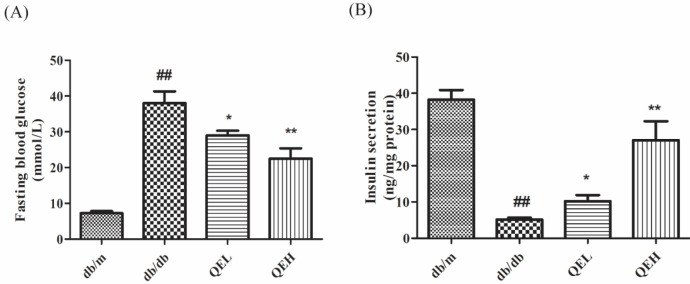
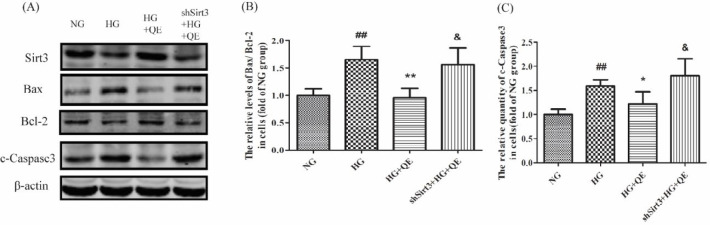
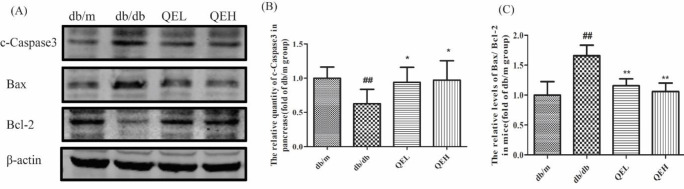
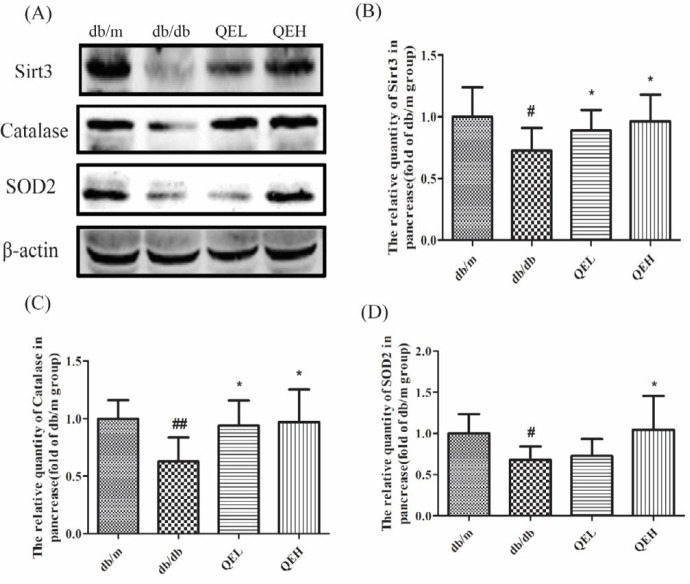
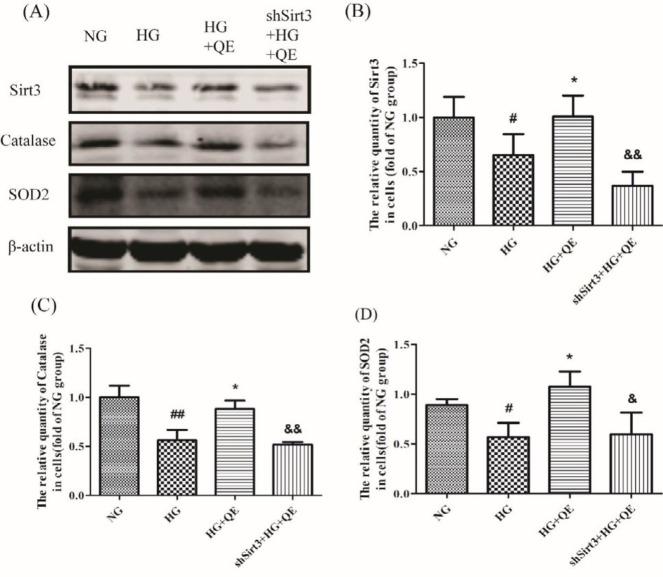
When INS1 cells and diabetic mice were treated with quercetin, the levels of SOD2, CAT, and Sirt3 proteins were increased, the levels of cleaved Caspase-3 and the ratio of Bax to BCL-2 were decreased at different degrees, along with reduced blood glucose levels and elevated insulin levels in diabetic mice. When Sirt3 was knocked down in INS1 cells, increase of two antioxidants and decrease of cell apoptosis generated by quercetin could not occur.
Quercetin protected islet β-cells from oxidation-induced apoptosis via Sirt3 in T2DM, which would be beneficial to develop new strategies for preventing β-cell failure in T2DM.
Sirt3可能调节活性氧(ROS)的产生,并可能参与β细胞凋亡,这在2型糖尿病(T2DM)的进展中起重要作用。槲皮素是一种有效的抗氧化生物类黄酮,但其对T2DM的影响仍有待探索。本研究旨在探讨槲皮素对β细胞凋亡的影响并探索其机制。
在db/db小鼠和INS1细胞上研究槲皮素的作用。采用比色法测定空腹血糖,用酶联免疫吸附测定法(ELISA)检测血清胰岛素。同时,通过质粒转染敲低INS1细胞中的Sirt3。采用蛋白质免疫印迹法检测胰腺和INS1细胞中的抗氧化蛋白(SOD2和CAT)、凋亡蛋白(裂解的Caspase-3、Bax和BCL-2)以及Sirt3蛋白。
用槲皮素处理INS1细胞和糖尿病小鼠后,SOD2、CAT和Sirt3蛋白水平升高,裂解的Caspase-3水平以及Bax与BCL-2的比值不同程度降低,糖尿病小鼠的血糖水平降低,胰岛素水平升高。当在INS1细胞中敲低Sirt3时,槲皮素所产生的两种抗氧化剂增加和细胞凋亡减少的情况不会发生。
在T2DM中,槲皮素通过Sirt3保护胰岛β细胞免受氧化诱导的凋亡,这将有助于开发预防T2DM中β细胞功能衰竭的新策略。