Choi KeunOh, Sim Seunghye, Choi Junyeong, Park Choa, Uhm Yoonhee, Lim Eunkyung, Kim Augustine Yonghwi, Yoo Seong Joon, Lee YoungJoo
Department of Integrated Bioscience and Biotechnology, College of Life Science, Sejong University, Kwangjingu, Kunjadong, Seoul, 05006 Korea.
Korea National Council of Consumer Organizations, SEOUL YWCA Bld. #701, 20, Myungdong11gil, Jung-Gu, Seoul, Korea.
Environ Sci Eur. 2021;33(1):79. doi: 10.1186/s12302-021-00517-8. Epub 2021 Jul 3.
The World Health Organization declared COVID-19, the disease caused by severe acute respiratory syndrome coronavirus-2 (SARS-CoV-2), a global pandemic on March 11, 2020. Non-pharmaceutical interventions such as social distancing, handwashing, using hand sanitizer, and wearing facial masks are recommended as the first line of protection against COVID-19. Encouraging hand hygiene may be one of the most cost-effective means of reducing the global burden of disease.
This study uses a web-based questionnaire to evaluate the usage patterns and consumer perceptions of the effectiveness and health safety of bar soap, liquid hand soap, and hand sanitizer products before and after the spread of COVID-19.
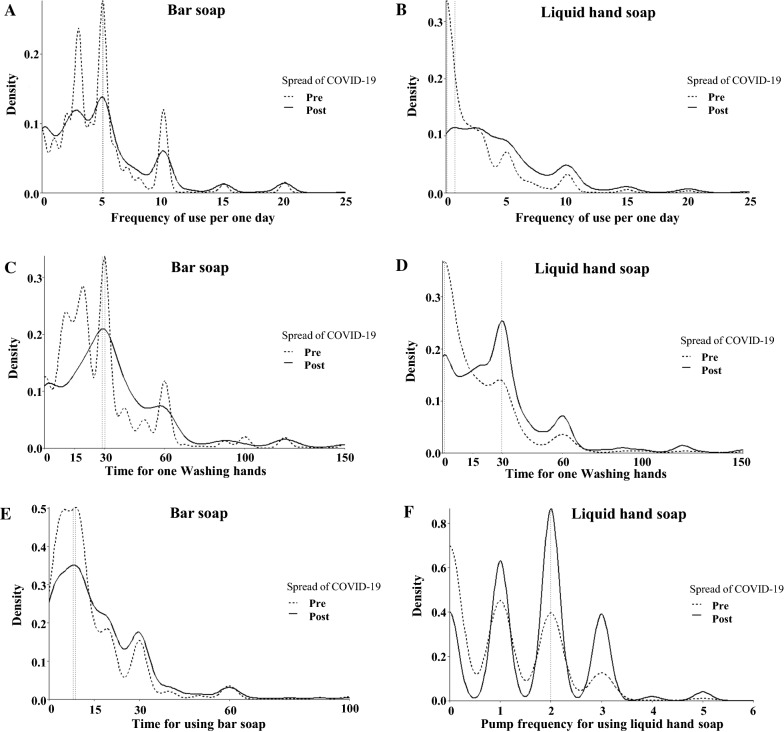
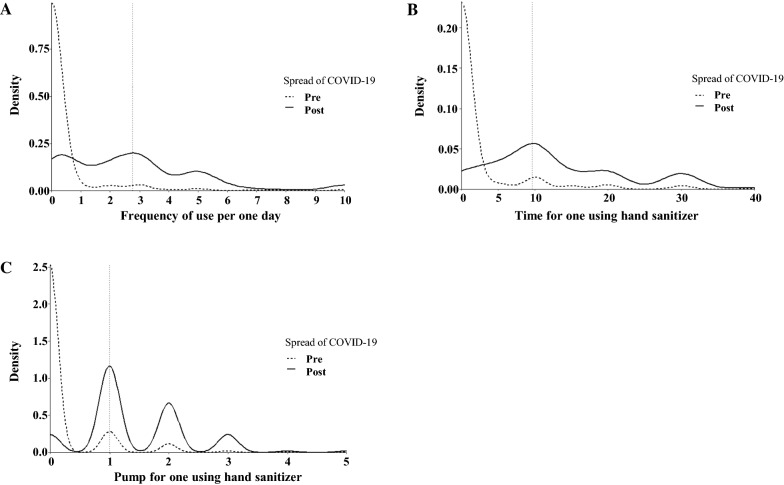
The results show that since the outbreak of COVID-19, the number of consumers who primarily use bar soap has decreased from 71.8 to 51.4%, the number of those who primarily use liquid hand soap has increased from 23.5 to 41.3%, and the number of those who use and carry hand sanitizer has increased. The frequency of use, duration of use, and amount used of all three products have increased significantly since the COVID-19 outbreak. Finally, consumer perception of the products' preventive effect against COVID-19 is higher for liquid hand soap and hand sanitizer than it is for bar soap.
Because use of hand sanitizers has increased, public health guidelines must address the potential risks associated them. Our data also show that the public is abiding by the recommendations of the regulatory authorities. As handwashing has become important in preventing COVID-19 infections, the results of our study will support the development of better handwashing guidelines and a public health campaign.
The online version contains supplementary material available at 10.1186/s12302-021-00517-8.
2020年3月11日,世界卫生组织宣布由严重急性呼吸综合征冠状病毒2(SARS-CoV-2)引起的疾病COVID-19为全球大流行病。建议采取诸如保持社交距离、洗手、使用洗手液和佩戴口罩等非药物干预措施作为预防COVID-19的第一道防线。鼓励手部卫生可能是减轻全球疾病负担最具成本效益的手段之一。
本研究使用基于网络的问卷来评估COVID-19传播前后,香皂、洗手液和洗手液产品的使用模式以及消费者对其有效性和健康安全性的认知。
结果显示,自COVID-19爆发以来,主要使用香皂的消费者数量从71.8%降至51.4%,主要使用洗手液的消费者数量从23.5%增至41.3%,且使用和携带洗手液的人数有所增加。自COVID-19爆发以来,这三种产品的使用频率、使用时长和使用量均显著增加。最后,消费者认为洗手液和洗手液对COVID-19的预防效果高于香皂。
由于洗手液的使用增加,公共卫生指南必须应对与之相关的潜在风险。我们的数据还表明公众遵守了监管机构的建议。由于洗手在预防COVID-19感染方面变得至关重要,我们的研究结果将有助于制定更好的洗手指南和开展公共卫生运动。
在线版本包含可在10.1186/s12302-021-00517-8获取的补充材料。