College of Chemistry, Chemical Engineering and Material Science, Soochow University, Suzhou, 215123, PR China.
Department of Cardiology, The Second Affiliated Hospital of Soochow University, Suzhou, 215004, PR China.
Biosens Bioelectron. 2021 Nov 15;192:113482. doi: 10.1016/j.bios.2021.113482. Epub 2021 Jul 6.
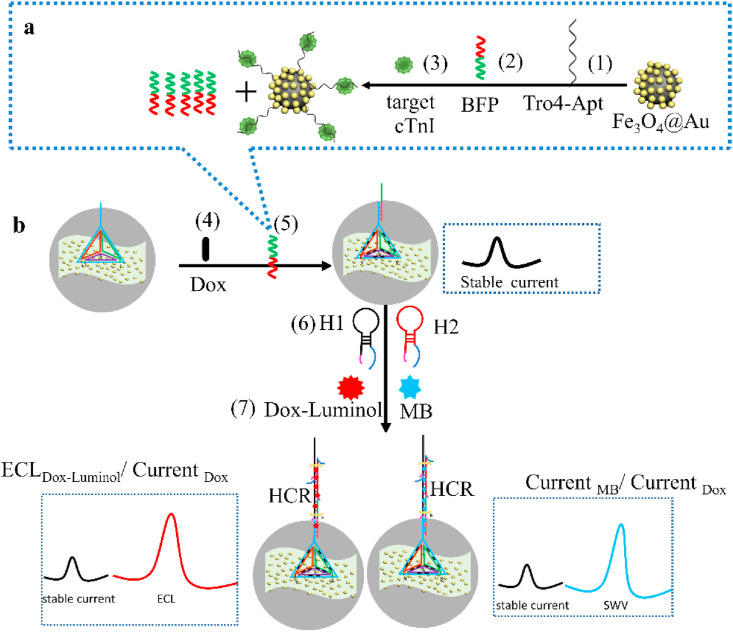
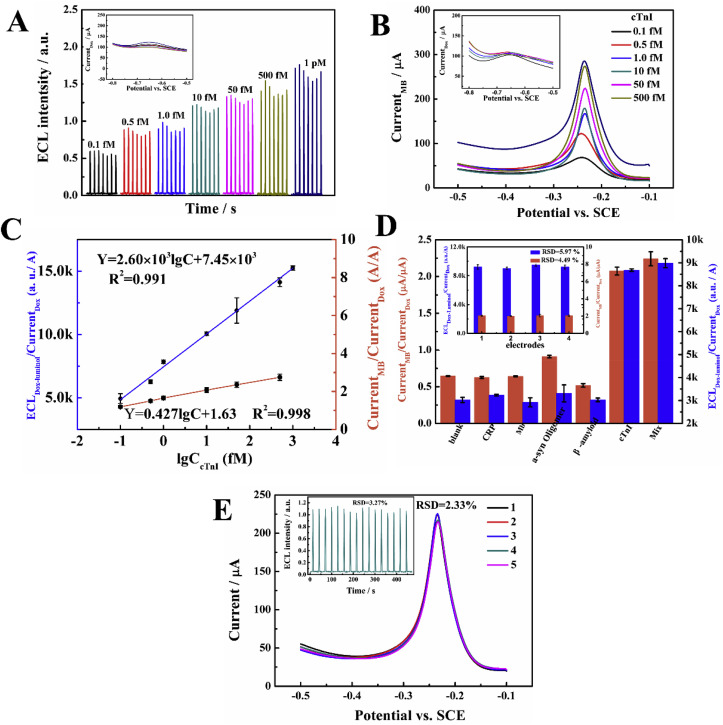
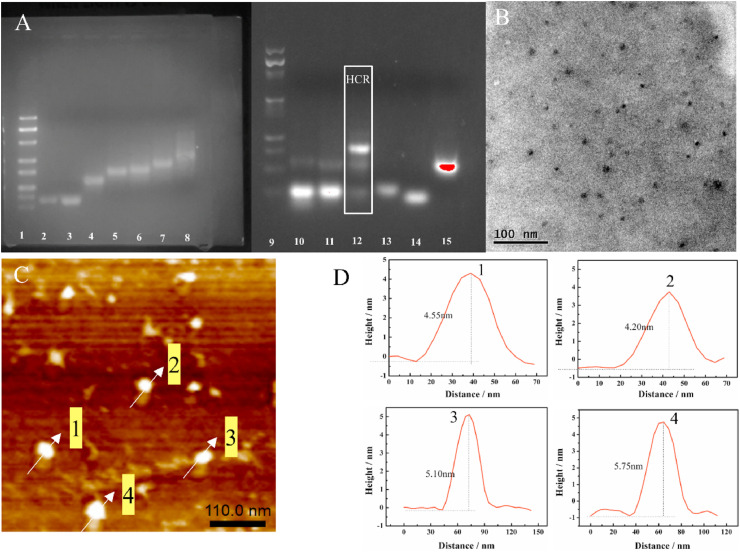
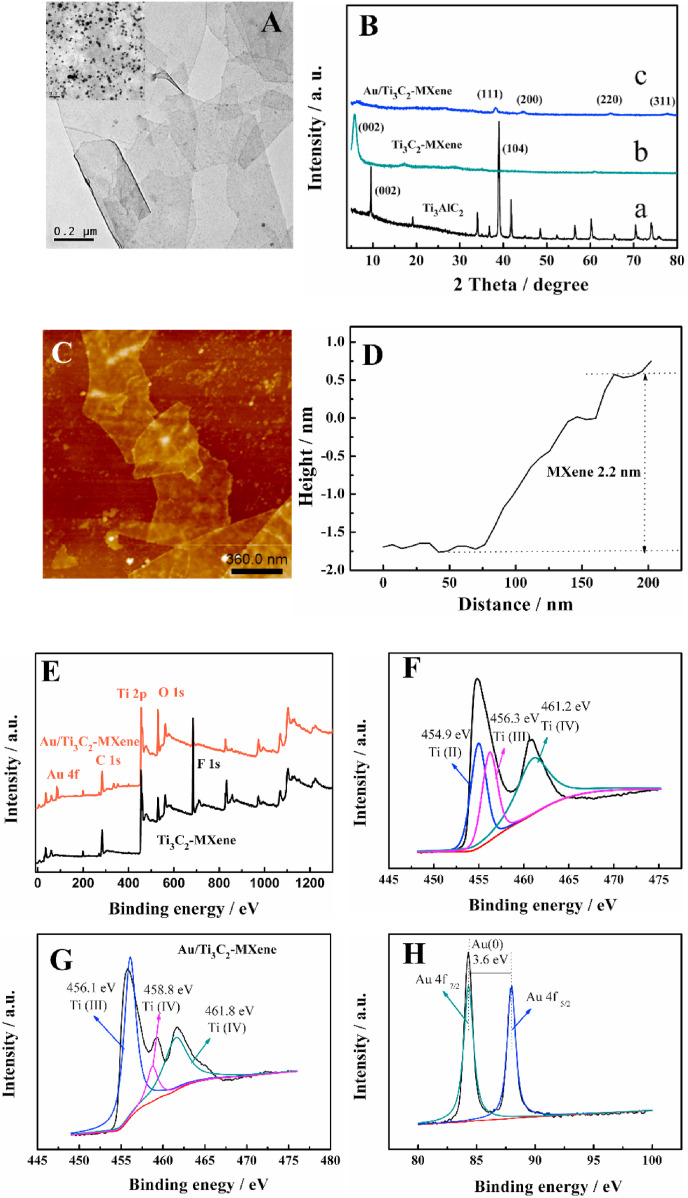
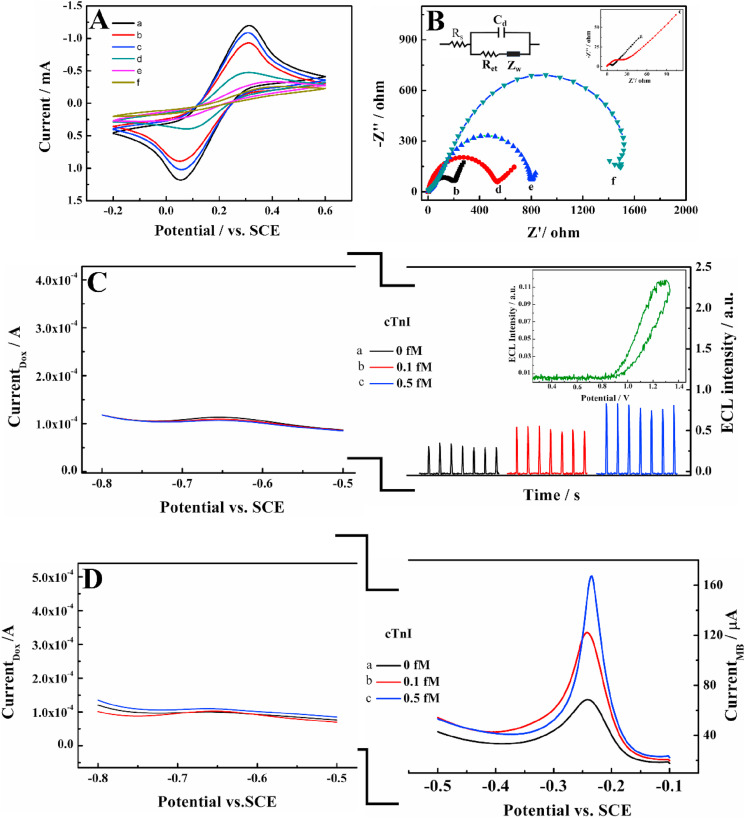
The accurate assay of cardiac troponin I (cTnI) is very important for acute myocardial infarction (AMI), it also can be employed as an effective index for screening serious patients in COVID-19 pandemic before fatal heart injury to reduce the mortality. A ratiometric sensing strategy was proposed based on electrochemiluminescent (ECL) signal of doxorubicin (Dox)-luminol or the electrochemical (EC) signal of methylene blue (MB) vs. referable EC signal of Dox. The bio-recognitive Tro4-aptamer ensures the high specificity of the sensor by affinity binding to catch cTnI, and the tetrahedral DNA (TDs) on Au/TiC-MXene built an excellent sensing matrix. An in situ hybrid chain reaction (HCR) amplification greatly improved the sensitivity. The ratiometric sensing responses ECL/Current or Current/Current linearly regressed to cTnI concentration in the range of 0.1 fM-1 pM or 0.1 fM-500 fM with the limit of detection (LOD) as 0.04 fM or 0.1 fM, respectively. Served as the reference signal, Current reflected the variation of sensor, it is very effective to ensure the accuracy of detection to obviate the false results. The proposed biosensors show good specificity, sensitivity, reproducibility and stability, have been applied to determine cTnI in real samples with satisfactory results. They are worth looking forward to be used for screening serious patient of COVID-19 to reduce the mortality, especially in mobile cabin hospital.
心肌肌钙蛋白 I(cTnI)的准确检测对急性心肌梗死(AMI)非常重要,它也可用于在致命性心脏损伤前筛选 COVID-19 大流行中的严重患者,以降低死亡率。基于阿霉素(Dox)-鲁米诺的电化学发光(ECL)信号或亚甲蓝(MB)的电化学(EC)信号与 Dox 的可参考 EC 信号,提出了一种比率感应策略。生物识别 Tro4-适体通过亲和结合捕获 cTnI 确保了传感器的高特异性,并且 Au/TiC-MXene 上的四面体形 DNA(TDs)构建了出色的传感基质。原位杂交链反应(HCR)扩增大大提高了灵敏度。比率感应响应 ECL/Current 或 Current/Current 与 cTnI 浓度呈线性回归,范围分别为 0.1 fM-1 pM 或 0.1 fM-500 fM,检测限(LOD)分别为 0.04 fM 或 0.1 fM。作为参考信号,Current 反映了传感器的变化,它非常有效地确保了检测的准确性,避免了假阳性结果。所提出的生物传感器具有良好的特异性、灵敏度、重现性和稳定性,已用于测定实际样品中的 cTnI,结果令人满意。它们有望用于筛选 COVID-19 的严重患者,以降低死亡率,特别是在移动方舱医院。