Domestication Lab, Wolf Science Center, Konrad Lorenz Institute of Ethology, Department of Interdisciplinary Life Sciences, University of Veterinary Medicine, Veterinaerplatz 1, 1210, Vienna, Austria.
University of Leipzig, ZLS, Prager Str. 34, 04317, Leipzig, Germany.
Sci Rep. 2021 Jul 13;11(1):14423. doi: 10.1038/s41598-021-93922-1.
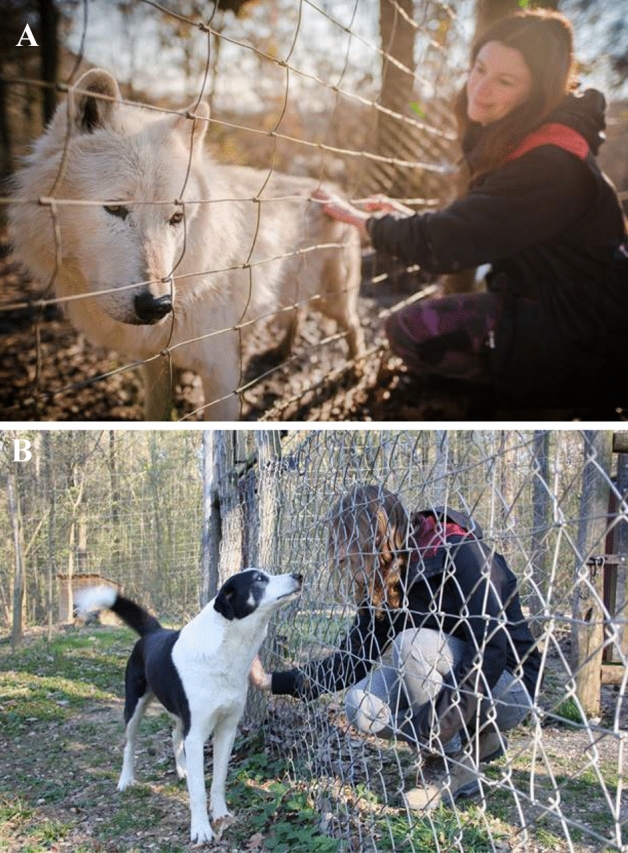
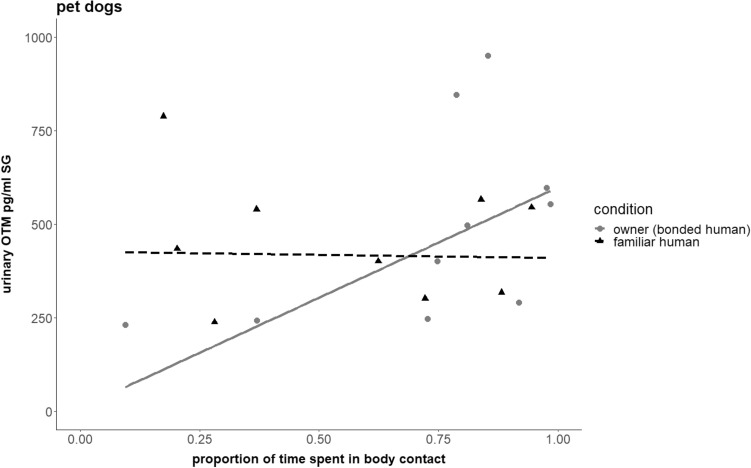
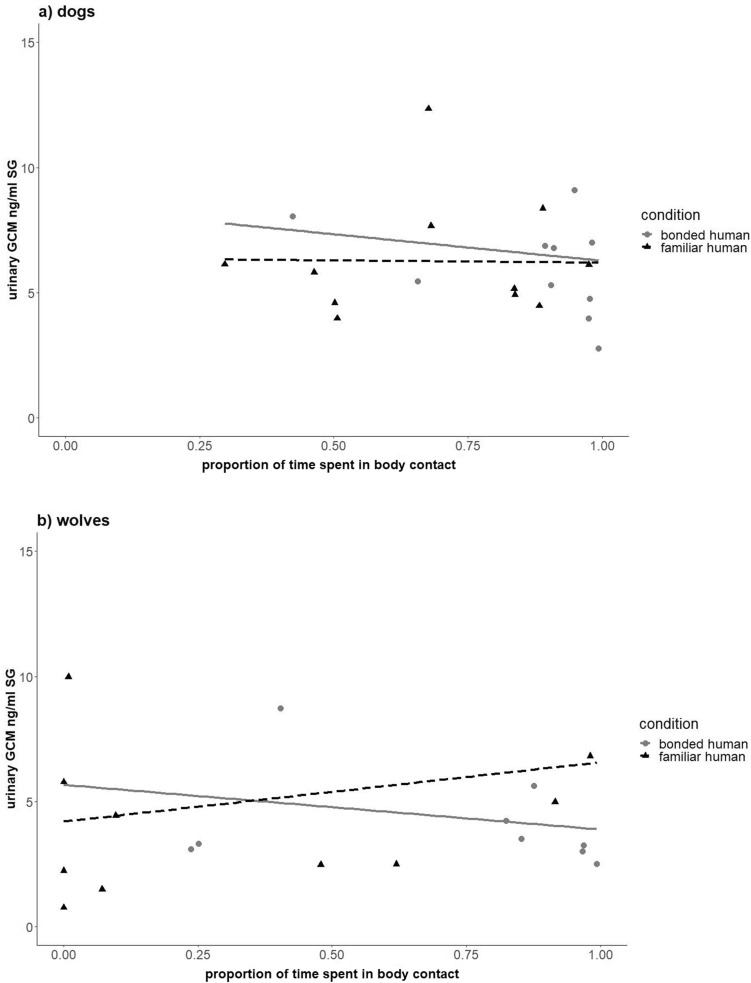
Dogs' increased human-directed sociability compared to wolves may be the result of increased oxytocin system activity and decreased stress responses, but comparative studies accounting for life experience are lacking. We compared hand-raised, pack-living wolves' and dogs' behavior and hormone concentrations after interacting with a closely bonded and a familiar human. Both preferred the bonded partner, but dogs showed less variability in human-directed sociability than wolves. Physical contact was not associated with oxytocin but correlated positively with glucocorticoids in the pack-living animals when the human was not bonded. To clarify the role of life experience, we tested pet dogs and found that oxytocin concentrations correlated positively with physical contact with their owners, while glucocorticoids remained unaffected. Results show that, given similar experiences, wolf-dog differences in human-directed sociability and associated hormones are subtle and indicate that factors related to life as a pet dog rather than domestication account for oxytocin release during human-dog interactions.
与狼相比,狗对人类的社交能力增强,可能是由于其催产素系统活动增加和应激反应减少所致,但缺乏考虑生活经历的比较研究。我们比较了经过人工饲养、群体生活的狼和狗在与亲密的人类伙伴和熟悉的人类互动后的行为和激素浓度。两者都更喜欢与绑定的人类伙伴互动,但狗在人类导向的社交行为上比狼表现出更小的变异性。在群体生活的动物中,当人与动物没有绑定关系时,身体接触与催产素无关,但与糖皮质激素呈正相关。为了阐明生活经历的作用,我们测试了宠物狗,发现催产素浓度与与主人的身体接触呈正相关,而糖皮质激素则不受影响。结果表明,在类似的经历下,狼与狗在人类导向的社交能力和相关激素方面的差异是微妙的,这表明与作为宠物狗的生活相关的因素而不是驯化,解释了在人与狗的互动中催产素的释放。