Department of Sociology, College of Arts and Sciences, Indiana University, Bloomington, IN, United States of America.
Department of Epidemiology and Biostatistics, School of Public Health, Indiana University, Bloomington, IN, United States of America.
PLoS One. 2021 Jul 14;16(7):e0252658. doi: 10.1371/journal.pone.0252658. eCollection 2021.
The efficacy of testing and tracing programs to reduce COVID-19 transmission hinges not only on widespread access to testing, but also on the public's willingness to participate in them. To the extent that testing intentions are patterned by social determinants of health, this constitutes an understudied mechanism of disparities in COVID-19 morbidity and mortality.
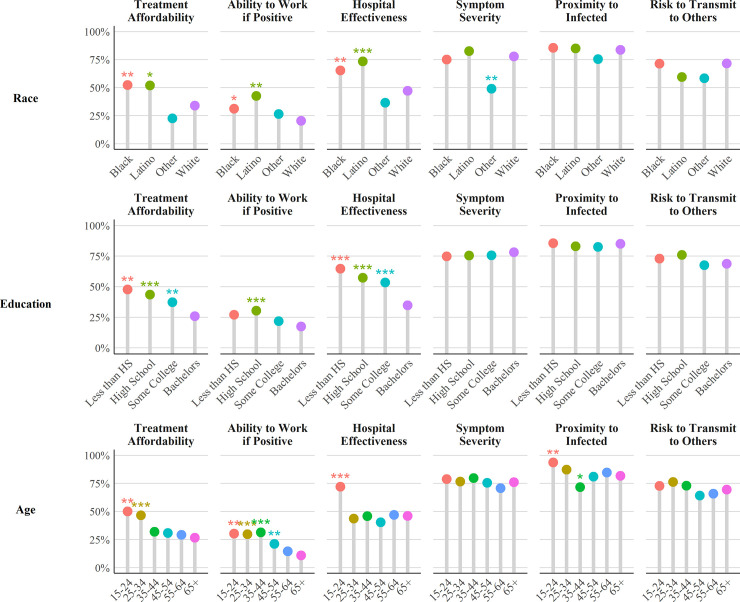
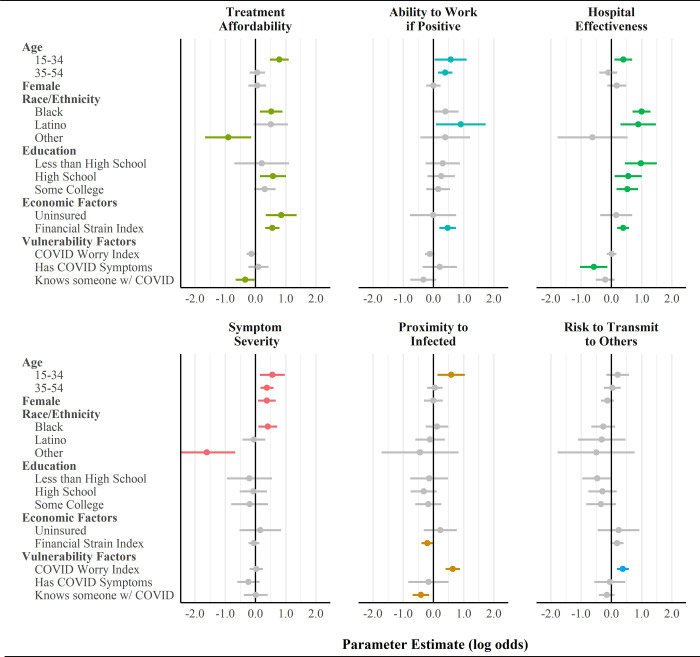
Using data from a representative household probability sample, the Person to Person Health Interview Study (n = 935), sociodemographic, economic, and psychological determinants of testing considerations were evaluated across six domains: treatment affordability, ability to work if positive, hospital effectiveness, symptom severity, proximity to infected, and risk of transmitting to others.
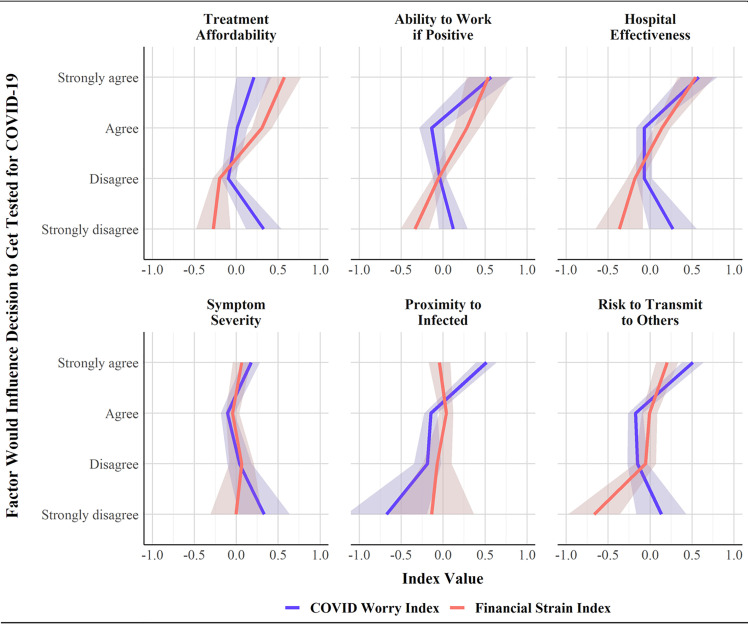
Findings demonstrated significant differences in testing motivations across race/ethnicity, education level, socioeconomic status, and worry about self and loved ones. Notably, Black (p<0.01) and Latino (p<0.05) respondents and those experiencing financial strain (p<0.001) were disproportionately likely to indicate that resource factors would influence their decision to get tested. Desire to reduce transmission and concern about proximity to the infected were reported among those who expressed COVID-19 worries (p<0.001).
Public health efforts to combat the COVID-19 pandemic must address social, economic, and psychological factors that enable and constrain individual behavior. Increasing access to preventative interventions and technologies, including vaccines, is unlikely to markedly reduce morbidity and mortality without effective messaging and economic support to improve uptake in vulnerable populations.
测试和追踪计划的有效性不仅取决于广泛获得测试的机会,还取决于公众参与这些计划的意愿。在测试意图受健康社会决定因素影响的程度上,这构成了 COVID-19 发病率和死亡率差异的一个研究不足的机制。
利用来自代表性家庭概率样本的个人对人健康访谈研究(n=935)的数据,评估了六个领域的测试考虑因素的社会人口经济学和心理决定因素:治疗负担能力、阳性时工作的能力、医院效果、症状严重程度、与感染者的接近程度以及向他人传播的风险。
研究结果表明,不同种族/族裔、教育水平、社会经济地位和对自己和亲人的担忧程度对测试动机存在显著差异。值得注意的是,黑人和拉丁裔(p<0.05)受访者以及经济困难者(p<0.001)更有可能表示资源因素会影响他们接受检测的决定。那些表示对 COVID-19 担忧的人(p<0.001)报告了减少传播的愿望和对接近感染者的担忧。
公共卫生部门在抗击 COVID-19 大流行时,必须解决使个人行为成为可能并受到限制的社会、经济和心理因素。如果没有有效的信息传递和经济支持来改善弱势群体的接受程度,增加预防干预和技术(包括疫苗)的获取不太可能显著降低发病率和死亡率。