de Oliveira Analú Barros, Ferrisse Túlio Morandin, Salomão Karina Borges, Miranda Marina Lins, Bufalino Andreia, Brighenti Fernanda Lourenção
Universidade Estadual de São Paulo (Unesp), Faculdade de Odontologia de Araraquara, Departamento de Morfologia e Clínica Infantil, Araraquara, SP, Brasil.
Universidade Estadual de São Paulo (Unesp), Faculdade de Odontologia de Araraquara, Departamento de Diagnóstico e Cirurgia, Araraquara, SP, Brasil.
Autops Case Rep. 2020 Dec 14;11:e2020220. doi: 10.4322/acr.2020.220. eCollection 2021.
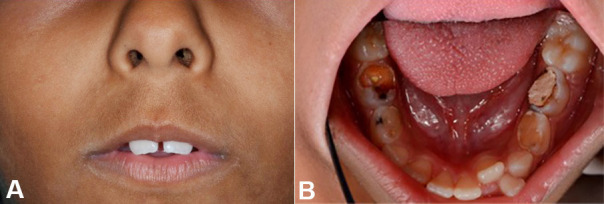
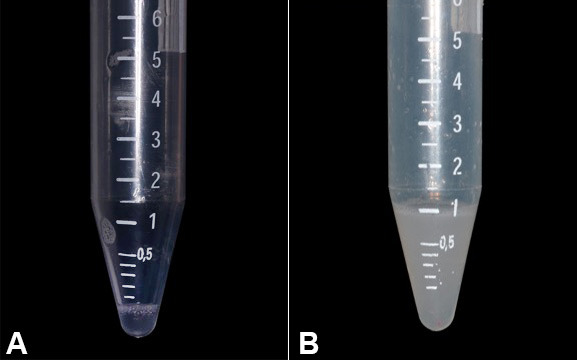
Scleroderma is a rare autoimmune disease characterized by excessive collagen production. The oral manifestations of the patient with scleroderma can include microstomia, xerostomia, and changes in the resorption teeth. We report the case of a 7-year-old female patient diagnosed with systemic scleroderma where photobiomodulation therapy was used to treat xerostomia associated with hyposalivation. She attended a pediatric clinic and presented with dry and rigid facial skin, trismus, xerostomia, malocclusion, and difficulty swallowing. Stimulated salivary flow was assessed before, during, and after treatment. Photobiomodulation therapy was conducted at four points at the sublingual glands with 660 nm, 100 mW, and 0.8 J/cm to each point; eight points at the parotid glands; and six points at the submandibular glands with 808 nm, 100 mW, and 0.8 J/cm for 8 seconds at each point. After this therapy, an increase in salivary flow, remission of the xerostomia, and an improvement in mastication and swallowing were observed. Photobiomodulation therapy was effective in controlling xerostomia in this pediatric patient, resulting in increased salivary flow and an improvement in her quality of life.
硬皮病是一种罕见的自身免疫性疾病,其特征是胶原蛋白过度生成。硬皮病患者的口腔表现可包括小口畸形、口干症以及牙齿吸收改变。我们报告一例7岁女性系统性硬皮病患者,采用光生物调节疗法治疗与唾液分泌减少相关的口干症。她就诊于儿科诊所,表现为面部皮肤干燥、僵硬,牙关紧闭,口干症,错牙合畸形以及吞咽困难。在治疗前、治疗期间和治疗后评估刺激唾液流量。光生物调节疗法在舌下腺的四个点进行,波长660nm,功率100mW,每个点能量密度0.8J/cm²;在腮腺的八个点;以及在下颌下腺的六个点进行,波长808nm,功率100mW,每个点能量密度0.8J/cm²,每次照射8秒。该疗法后,观察到唾液流量增加、口干症缓解以及咀嚼和吞咽功能改善。光生物调节疗法对该儿科患者控制口干症有效,从而增加了唾液流量并改善了她的生活质量。