Ahmed Alauddin, Siegel Donald J
Mechanical Engineering Department, University of Michigan, Ann Arbor, MI 48109, USA.
Materials Science & Engineering, University of Michigan, Ann Arbor, MI 48109, USA.
Patterns (N Y). 2021 Jun 24;2(7):100291. doi: 10.1016/j.patter.2021.100291. eCollection 2021 Jul 9.
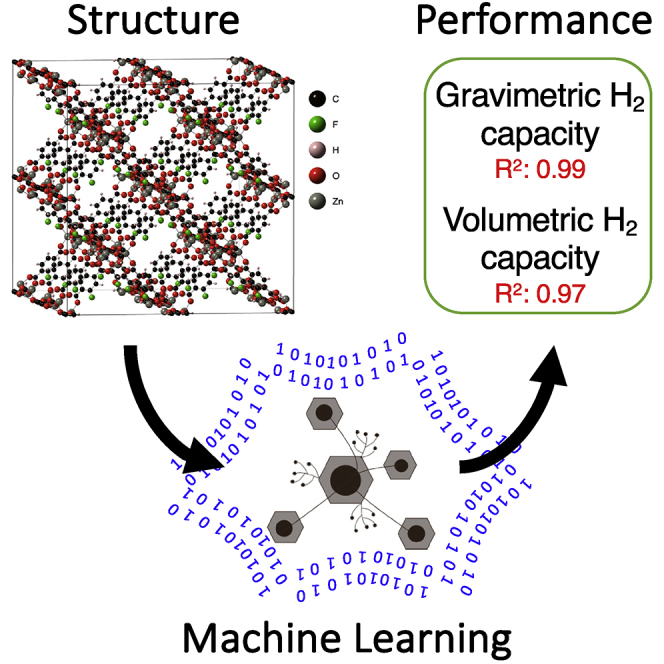
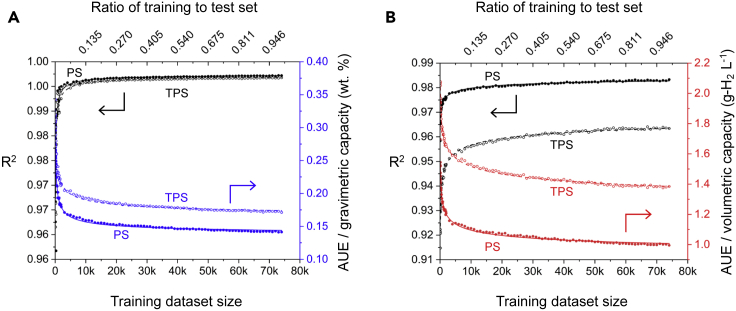
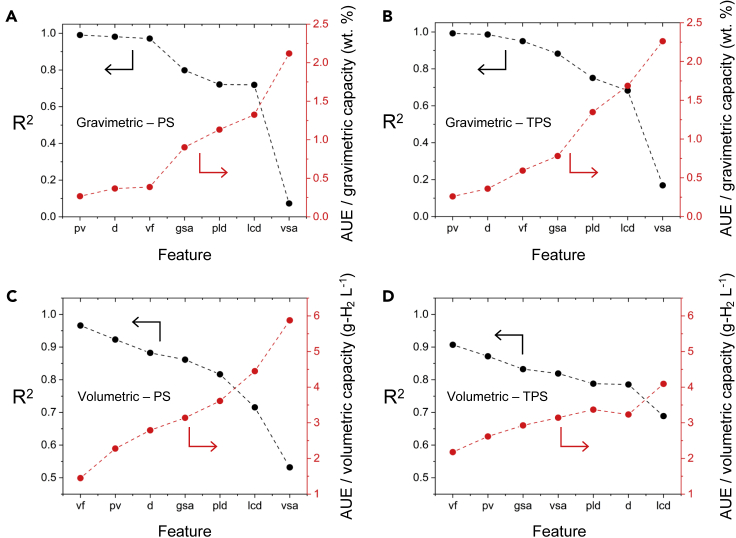
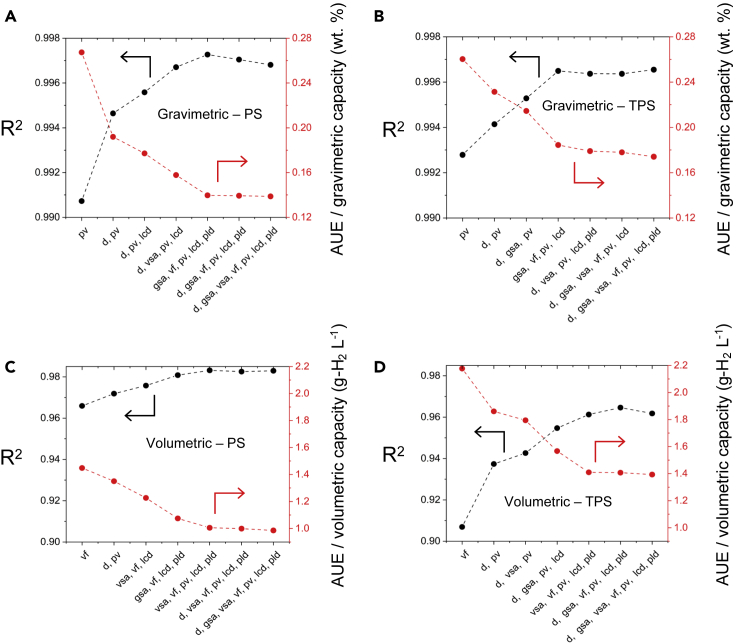
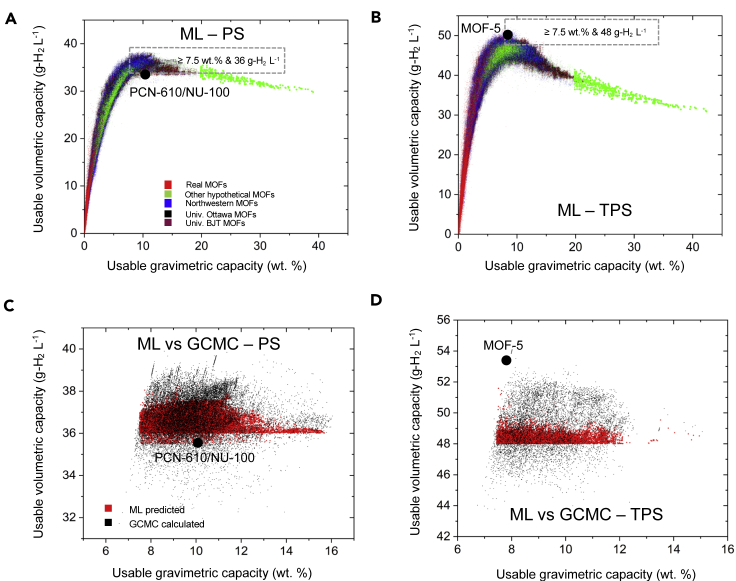
The H capacities of a diverse set of 918,734 metal-organic frameworks (MOFs) sourced from 19 databases is predicted via machine learning (ML). Using only 7 structural features as input, ML identifies 8,282 MOFs with the potential to exceed the capacities of state-of-the-art materials. The identified MOFs are predominantly hypothetical compounds having low densities (<0.31 g cm) in combination with high surface areas (>5,300 m g), void fractions (∼0.90), and pore volumes (>3.3 cm g). The relative importance of the input features are characterized, and dependencies on the ML algorithm and training set size are quantified. The most important features for predicting H uptake are pore volume (for gravimetric capacity) and void fraction (for volumetric capacity). The ML models are available on the web, allowing for rapid and accurate predictions of the hydrogen capacities of MOFs from limited structural data; the simplest models require only a single crystallographic feature.
通过机器学习(ML)预测了从19个数据库中获取的918,734种不同金属有机框架(MOF)的储氢容量。仅使用7个结构特征作为输入,ML识别出8282种有可能超过现有材料储氢容量的MOF。所识别出的MOF主要是低密度(<0.31 g/cm³)、高表面积(>5300 m²/g)、孔隙率(~0.90)和孔体积(>3.3 cm³/g)的假设化合物。对输入特征的相对重要性进行了表征,并对ML算法和训练集大小的依赖性进行了量化。预测氢吸附量最重要的特征是孔体积(用于重量容量)和孔隙率(用于体积容量)。ML模型可在网上获取,能够根据有限的结构数据快速准确地预测MOF的储氢容量;最简单的模型仅需一个晶体学特征。