Yang Chang, Zhang Zhao-Cong, Liu Tian-Bo, Xu Ye, Xia Bai-Rong, Lou Ge
Department of Gynecology Oncology, Harbin Medical University Cancer Hospital, Harbin, 150086 P.R. China.
Cancer Cell Int. 2020 Oct 12;20:500. doi: 10.1186/s12935-020-01594-0. eCollection 2020.
Cervical cancer is the second leading cause of death in women 20-39 years old. Because coverage for cervical cancer screening is low, and the vaccination rate of human papillomavirus (HPV) is poor in some countries, potential markers to detect the disease at early stages are needed. E2F transcription factors (E2Fs) are a family of transcription factors that function in cell proliferation, differentiation, apoptosis, and tumorigenesis. As abnormal activation and regulation of E2Fs are related to tumor development and poor prognosis, we performed bioinformatic analyses and in vitro assays to evaluate the role of E2Fs in cervical cancer.
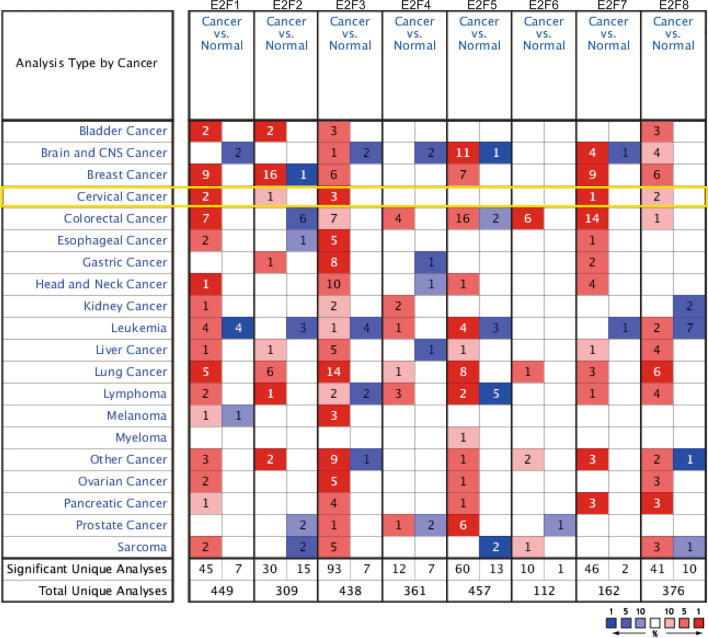
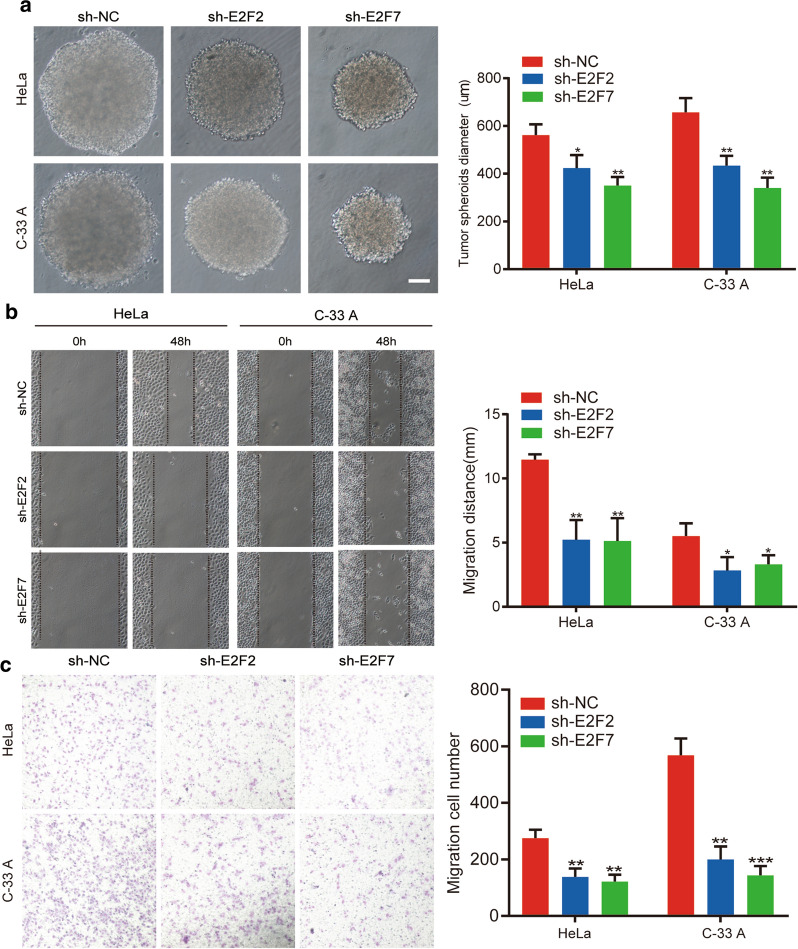
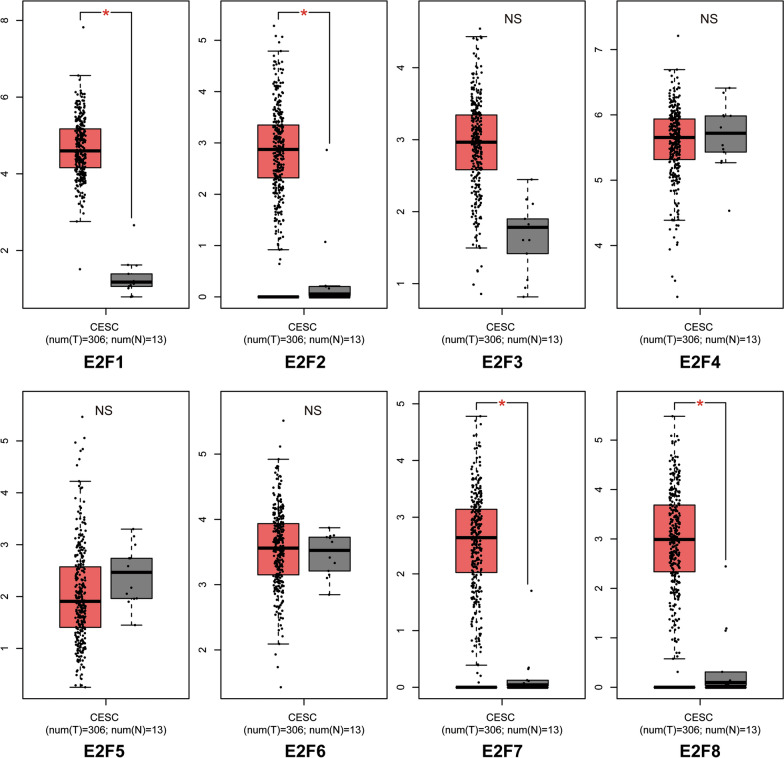
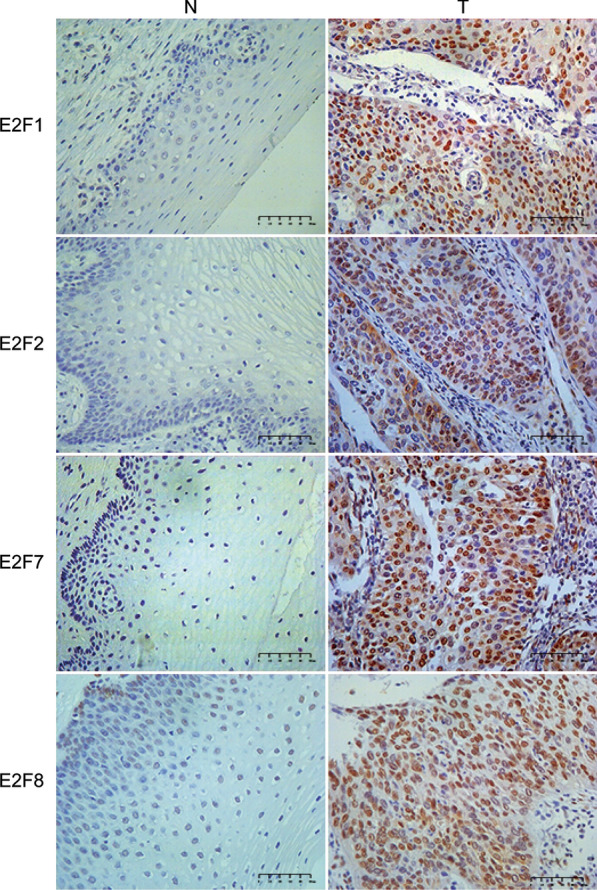
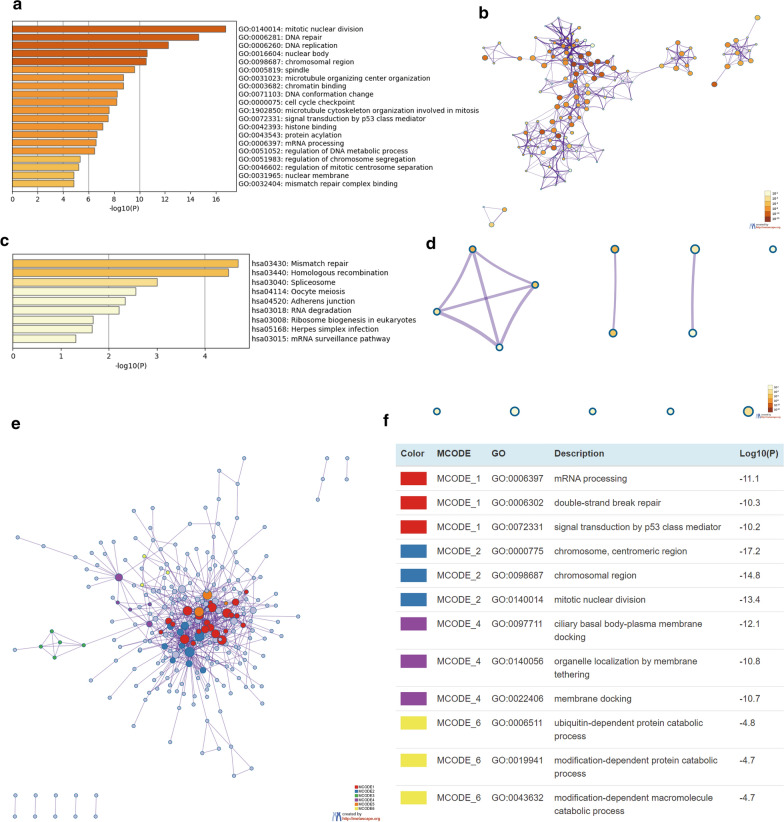
Transcriptional expression of E2Fs was initially evaluated in silico using ONCOMINE and Gene Expression Profiling Interactive Analysis (GEPIA), followed by evaluation of E2F1/2/7/8 protein levels using immunohistochemistry in 88 patient tissues. E2F2 and E2F7 mRNA levels were measured by RT-qPCR. LinkedOmics and Metascape were used to predict functions of E2Fs, and in vitro experiments were performed to assess the tumorigenic role of E2F2 and E2F7.
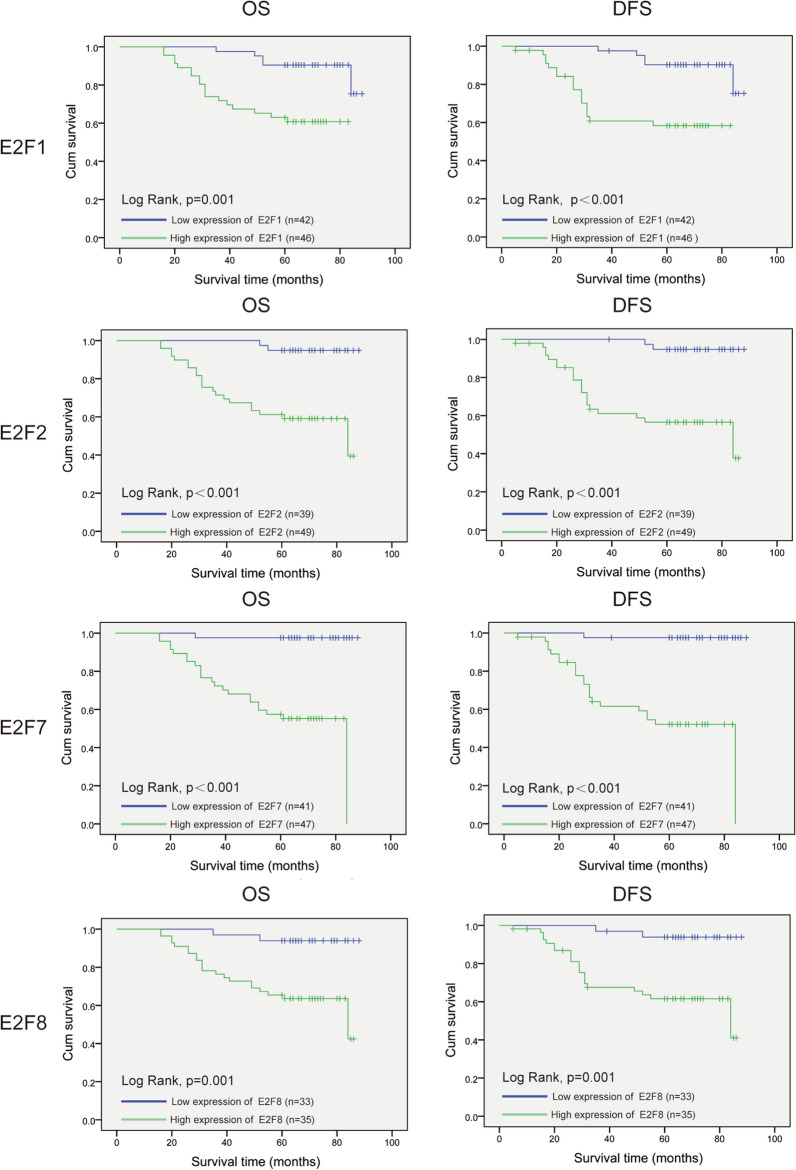
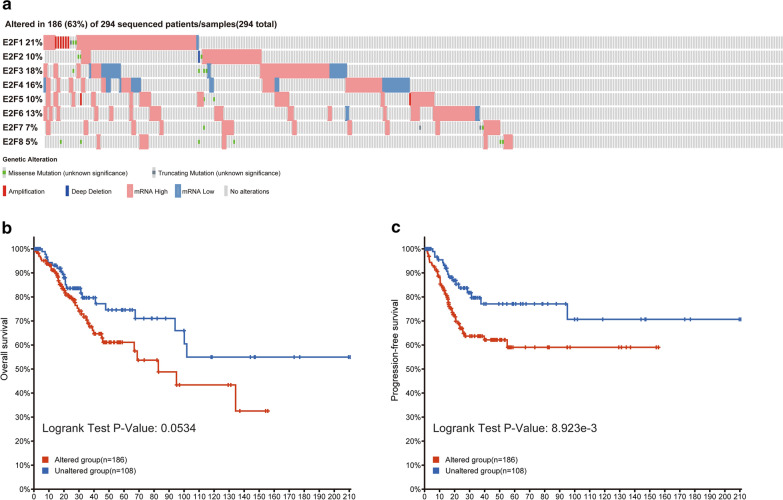
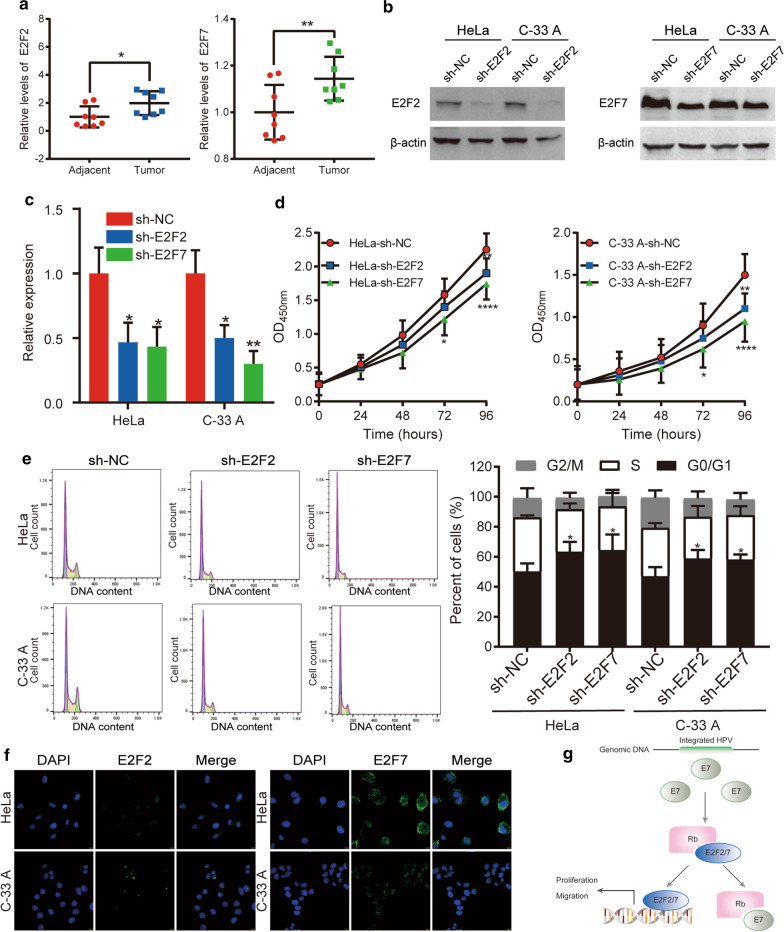
In silico analysis showed that E2F1/2/7/8 were significantly overexpressed in cervical cancer, findings which were confirmed at the protein level using immunohistochemistry. Further, upregulation of E2F1/2/7/8 was associated with different clinicopathological prognostic factors, including positivity for lymph vessel invasion and deep invasion of cervical stroma. Increased expression of E2F1/2/7/8 was also related to shorter overall survival (OS) and disease-free survival (DFS) in patients with cervical cancer. Using multivariate analysis, we confirmed E2F1/2/7/8 as independent prognostic factors for shorter OS of patients with cervical cancer. Finally, in vitro experiments showed that E2F2 and E2F7 are involved in cell proliferation and migration and cell cycle regulation in both HPV-positive and HPV-negative cervical cancer cells.
E2F1/2/7/8 may be prognostic biomarkers for survival of patients with cervical cancer. E2F2 and E2F7 are involved in cell proliferation, migration, and cell cycle in both HPV-positive and HPV-negative cervical cancer cells.
宫颈癌是20至39岁女性的第二大死因。由于宫颈癌筛查覆盖率较低,且在一些国家人乳头瘤病毒(HPV)疫苗接种率不佳,因此需要早期检测该疾病的潜在标志物。E2F转录因子(E2Fs)是一类转录因子,在细胞增殖、分化、凋亡和肿瘤发生中发挥作用。由于E2Fs的异常激活和调控与肿瘤发展及不良预后相关,我们进行了生物信息学分析和体外实验,以评估E2Fs在宫颈癌中的作用。
首先使用ONCOMINE和基因表达谱交互分析(GEPIA)在计算机上评估E2Fs的转录表达,随后在88例患者组织中使用免疫组织化学评估E2F1/2/7/8蛋白水平。通过RT-qPCR测量E2F2和E2F7 mRNA水平。使用LinkedOmics和Metascape预测E2Fs的功能,并进行体外实验以评估E2F2和E2F7的致瘤作用。
计算机分析显示E2F1/2/7/8在宫颈癌中显著过表达,这一结果在蛋白水平上通过免疫组织化学得到证实。此外,E2F1/2/7/8的上调与不同的临床病理预后因素相关,包括淋巴管浸润阳性和宫颈基质深层浸润。E2F1/2/7/8表达增加也与宫颈癌患者较短的总生存期(OS)和无病生存期(DFS)相关。通过多变量分析,我们确认E2F1/2/7/8是宫颈癌患者较短OS的独立预后因素。最后,体外实验表明E2F2和E2F7在HPV阳性和HPV阴性宫颈癌细胞中均参与细胞增殖、迁移和细胞周期调控。
E2F1/2/7/8可能是宫颈癌患者生存的预后生物标志物。E2F2和E2F7在HPV阳性和HPV阴性宫颈癌细胞中均参与细胞增殖、迁移和细胞周期调控。