Department of Oral and Maxillofacial Surgery, The First Affiliated Hospital of Chongqing Medical University, No.1, Youyi Road, Yuzhong District, 400016, Chongqing, China.
Department of Otorhinolaryngology, The First Affiliated Hospital of Chongqing Medical University, 400016, Chongqing, China.
BMC Med Genomics. 2023 Feb 28;16(1):38. doi: 10.1186/s12920-023-01470-6.
Head and neck squamous cell carcinoma (HNSCC) is the sixth most prevalent cancer worldwide. E2Fs are a group of transcription factors involved in the carcinogenesis and progression of various cancers. However, the exact roles of each member of E2F family in the development and progression of HNSCC are still unknown.
RNASeq and clinical follow-up information were extracted from The Cancer Genome Atlas (TCGA). The expressions of E2Fs and their roles in HNSCC progression were explored using the R software and the cBioPortal database.
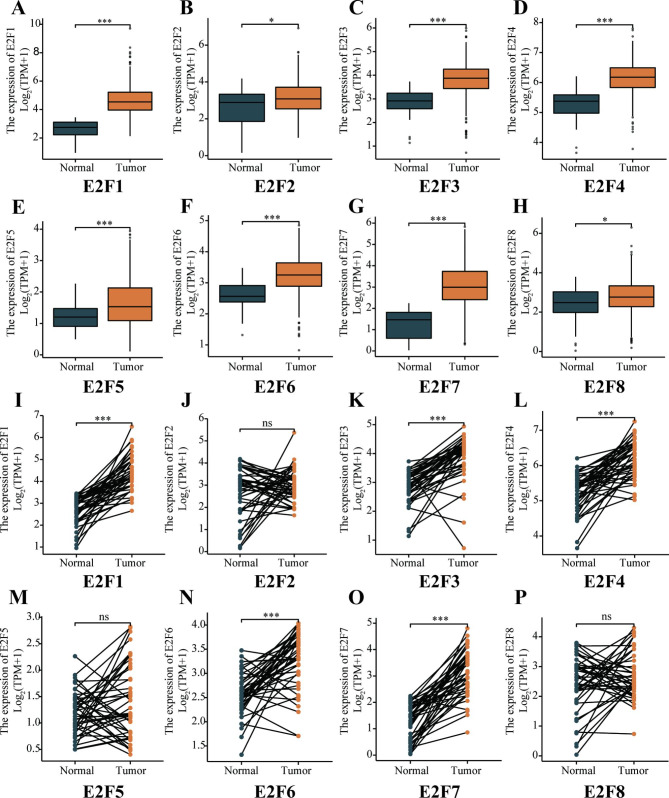
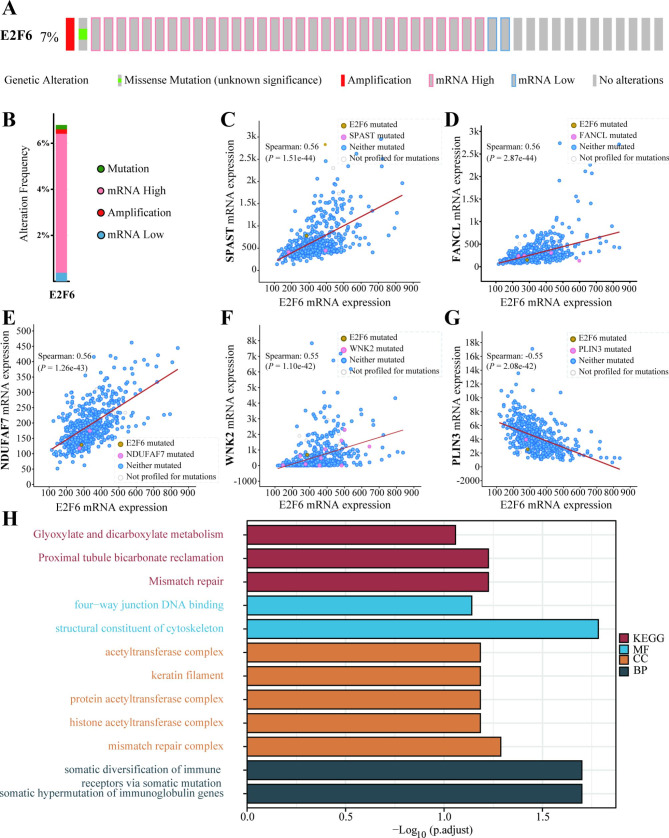
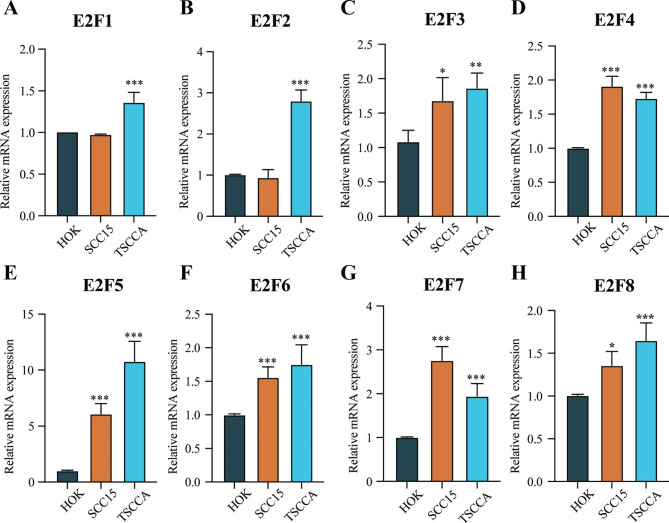
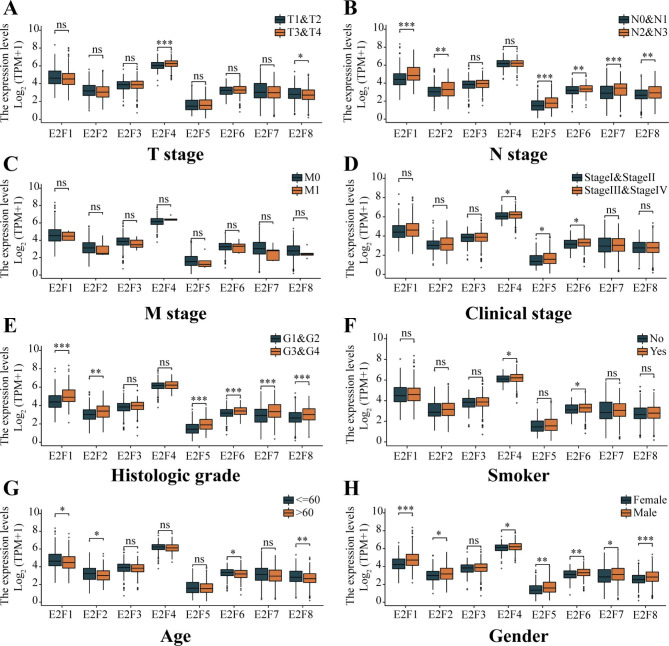
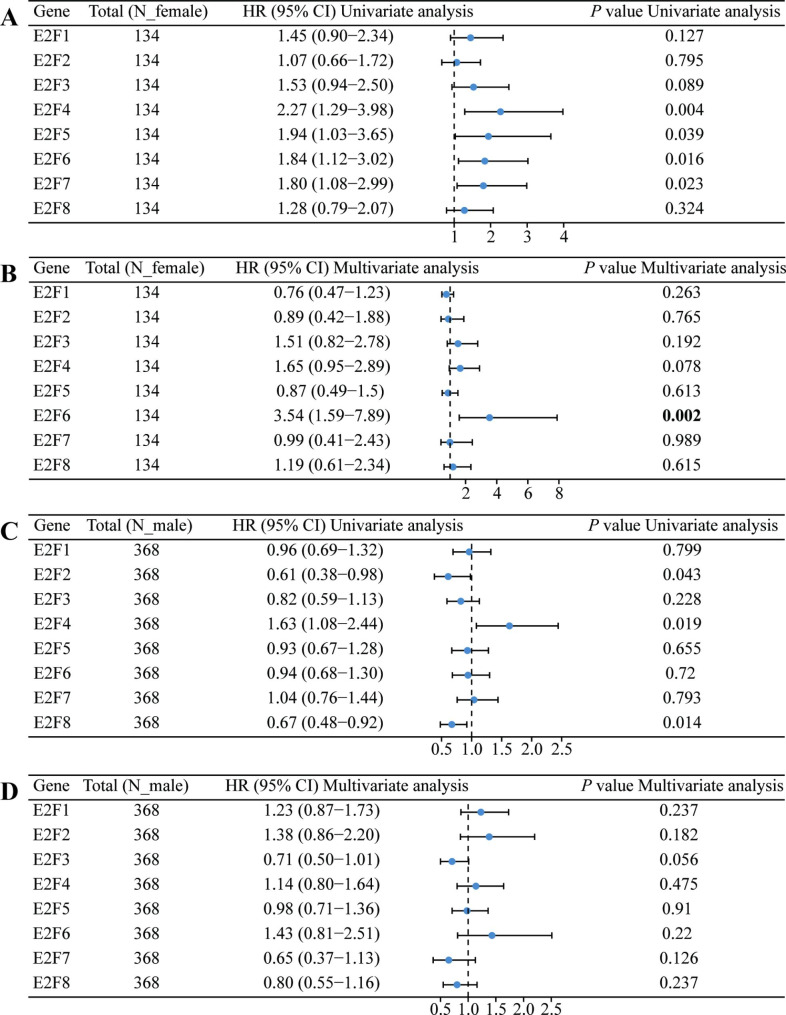
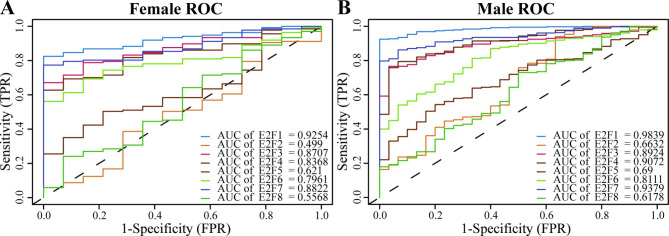
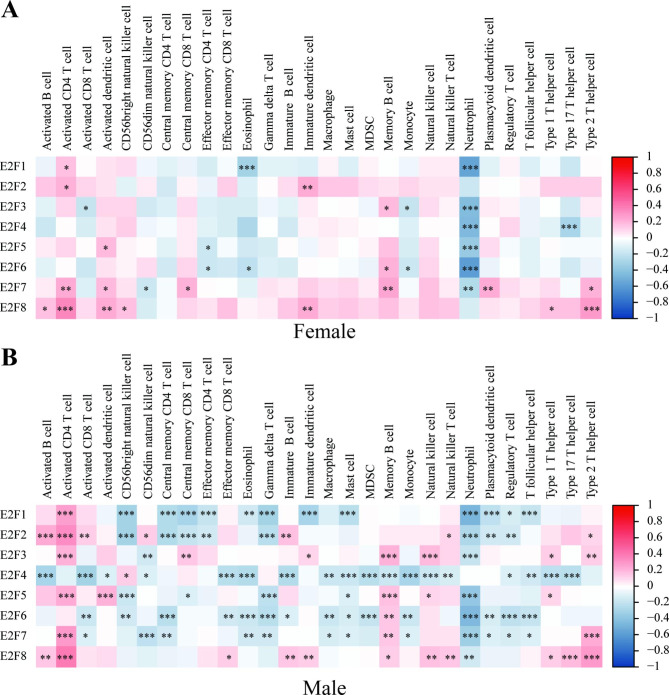
Our results showed that the mRNA levels of E2Fs were significantly higher in HNSCC tumors than in normal tissues. E2F1, E2F3, E2F4, E2F6, and E2F7 were identified as reliable diagnostic markers. E2Fs (except for E2F3) expressions were closely related to the clinical features (excluding metastasis) of HNSCC. High E2F6 mRNA expression was an independent risk factor for the OS of female HNSCC patients. In addition, high E2F4 expression could lead to poor prognosis in HNSCC in both males and females, high expressions of E2F5, E2F6, and E2F7 were associated with poor OS of female HNSCC patients, while high E2F2 and E2F8 expressions were positively correlated with the OS of male HNSCC patients. Interestingly, E2Fs expressions had stronger associations with immune cell infiltrations in male HNSCC patients than in female HNSCC patients.
The expressions of E2Fs were found to be correlated with the progression of HNSCC. E2F1, E2F3, E2F4, E2F6, and E2F7 could be good diagnostic molecules for HNSCC. In addition, E2F6 was an independent risk factor for the prognosis of female HNSCC patients.
头颈部鳞状细胞癌(HNSCC)是全球第六大常见癌症。E2F 是一组参与多种癌症发生和进展的转录因子。然而,E2F 家族的每个成员在 HNSCC 的发展和进展中的具体作用仍不清楚。
从癌症基因组图谱(TCGA)中提取 RNAseq 和临床随访信息。使用 R 软件和 cBioPortal 数据库研究 E2Fs 的表达及其在 HNSCC 进展中的作用。
我们的结果表明,E2Fs 的 mRNA 水平在 HNSCC 肿瘤中明显高于正常组织。E2F1、E2F3、E2F4、E2F6 和 E2F7 被鉴定为可靠的诊断标志物。E2Fs(除 E2F3 外)的表达与 HNSCC 的临床特征(不包括转移)密切相关。E2F6 mRNA 表达高是女性 HNSCC 患者 OS 的独立危险因素。此外,E2F4 高表达可导致男女 HNSCC 患者预后不良,E2F5、E2F6 和 E2F7 高表达与女性 HNSCC 患者 OS 不良相关,而 E2F2 和 E2F8 高表达与男性 HNSCC 患者 OS 呈正相关。有趣的是,E2Fs 的表达与男性 HNSCC 患者的免疫细胞浸润相关性更强,而与女性 HNSCC 患者的相关性较弱。
E2Fs 的表达与 HNSCC 的进展相关。E2F1、E2F3、E2F4、E2F6 和 E2F7 可能是 HNSCC 的良好诊断分子。此外,E2F6 是女性 HNSCC 患者预后的独立危险因素。