Osborne Hugh, Lai Yi Ming, Lepperød Mikkel Elle, Sichau David, Deutz Lukas, de Kamps Marc
Institute for Artificial Intelligence and Biological Computation, School of Computing, University of Leeds, Leeds, United Kingdom.
School of Medicine, University of Nottingham, Nottingham, United Kingdom.
Front Neuroinform. 2021 Jul 6;15:614881. doi: 10.3389/fninf.2021.614881. eCollection 2021.
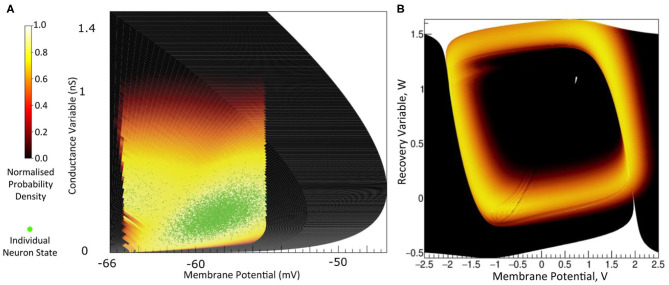
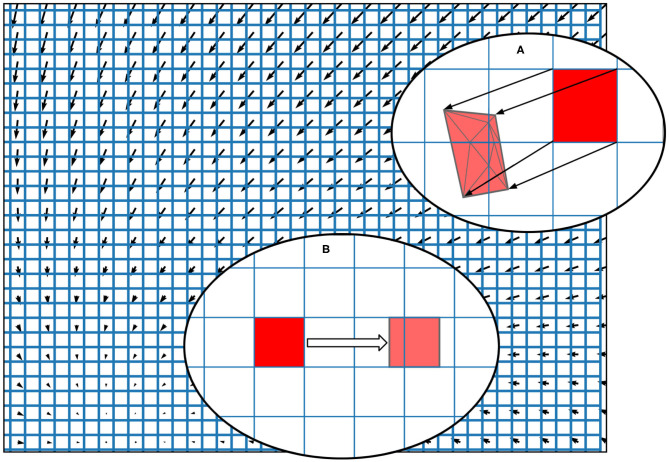
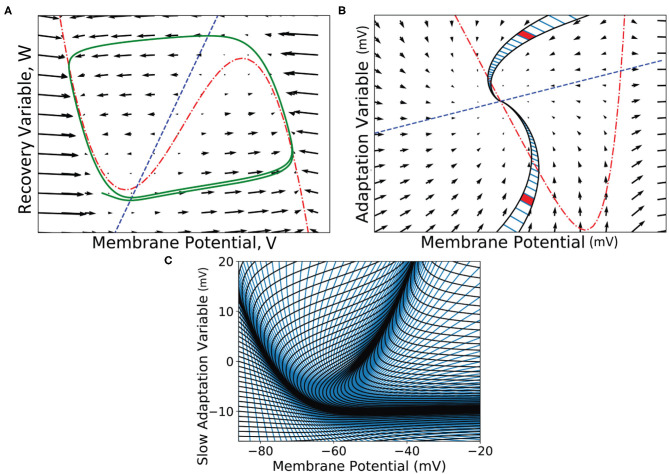
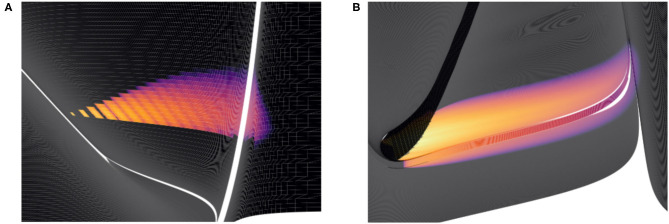
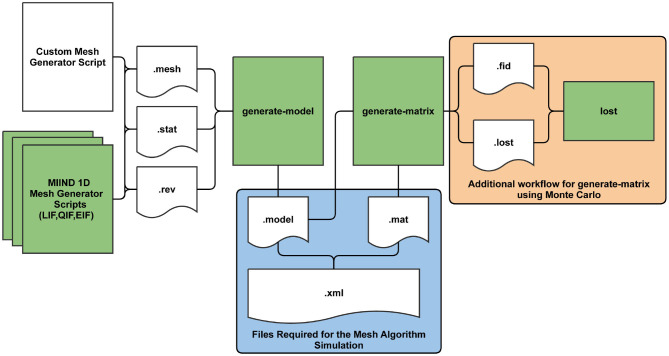
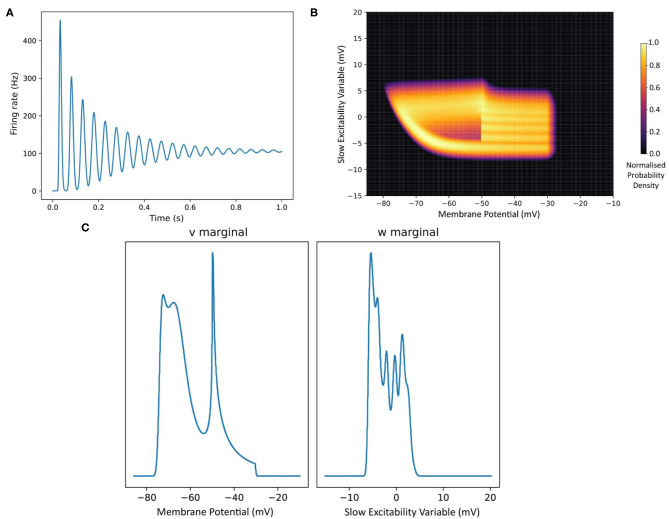
MIIND is a software platform for easily and efficiently simulating the behaviour of interacting populations of point neurons governed by any 1D or 2D dynamical system. The simulator is entirely agnostic to the underlying neuron model of each population and provides an intuitive method for controlling the amount of noise which can significantly affect the overall behaviour. A network of populations can be set up quickly and easily using MIIND's XML-style simulation file format describing simulation parameters such as how populations interact, transmission delays, post-synaptic potentials, and what output to record. During simulation, a visual display of each population's state is provided for immediate feedback of the behaviour and population activity can be output to a file or passed to a Python script for further processing. The Python support also means that MIIND can be integrated into other software such as The Virtual Brain. MIIND's population density technique is a geometric and visual method for describing the activity of each neuron population which encourages a deep consideration of the dynamics of the neuron model and provides insight into how the behaviour of each population is affected by the behaviour of its neighbours in the network. For 1D neuron models, MIIND performs far better than direct simulation solutions for large populations. For 2D models, performance comparison is more nuanced but the population density approach still confers certain advantages over direct simulation. MIIND can be used to build neural systems that bridge the scales between an individual neuron model and a population network. This allows researchers to maintain a plausible path back from mesoscopic to microscopic scales while minimising the complexity of managing large numbers of interconnected neurons. In this paper, we introduce the MIIND system, its usage, and provide implementation details where appropriate.
MIIND是一个软件平台,用于轻松高效地模拟由任何一维或二维动力系统控制的点神经元相互作用群体的行为。该模拟器完全不考虑每个群体的底层神经元模型,并提供了一种直观的方法来控制噪声量,而噪声会显著影响整体行为。使用MIIND的XML样式模拟文件格式可以快速轻松地设置群体网络,该文件格式描述了模拟参数,如群体如何相互作用、传输延迟、突触后电位以及记录哪些输出。在模拟过程中,会提供每个群体状态的可视化显示,以便即时反馈行为,群体活动可以输出到文件或传递给Python脚本进行进一步处理。对Python的支持还意味着MIIND可以集成到其他软件中,如The Virtual Brain。MIIND的群体密度技术是一种几何和可视化方法,用于描述每个神经元群体的活动,它鼓励深入考虑神经元模型的动力学,并深入了解每个群体的行为如何受到其在网络中邻居行为的影响。对于一维神经元模型,对于大量群体,MIIND比直接模拟解决方案表现得好得多。对于二维模型,性能比较更为微妙,但群体密度方法仍然比直接模拟具有某些优势。MIIND可用于构建连接单个神经元模型和群体网络尺度的神经系统。这使研究人员能够在从介观尺度回到微观尺度时保持一条合理的路径,同时将管理大量相互连接神经元的复杂性降至最低。在本文中,我们介绍了MIIND系统、其用法,并在适当的地方提供了实现细节。