Fierheller Caitlin T, Alenezi Wejdan M, Tonin Patricia N
Department of Human Genetics, McGill University, Montreal, QC H3A 1A1, Canada.
Cancer Research Program, Centre for Translational Biology, The Research Institute of the McGill University Health Centre, Montreal, QC H4A 3J1, Canada.
Cancers (Basel). 2021 Jul 7;13(14):3406. doi: 10.3390/cancers13143406.
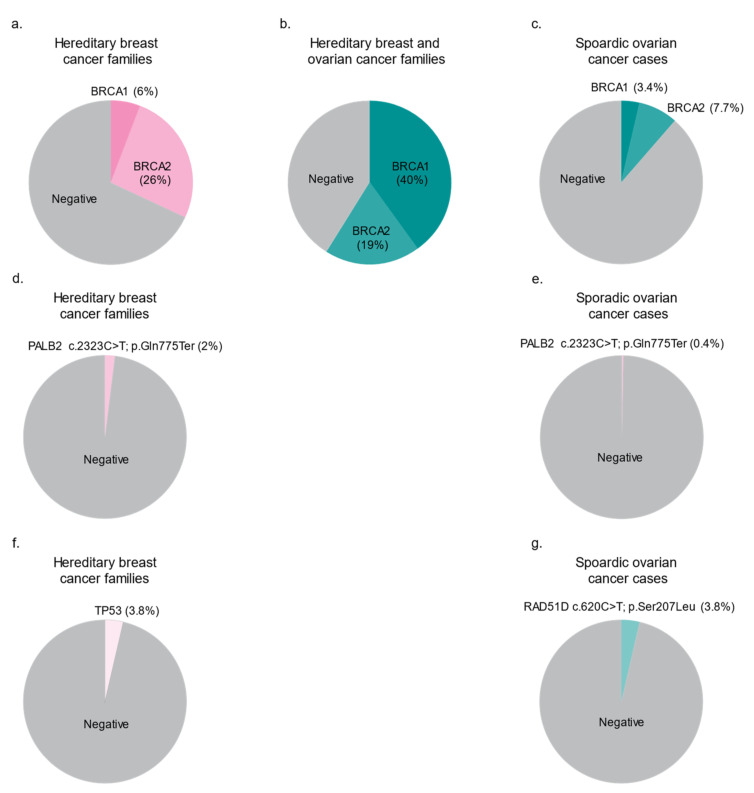
The French Canadian population of the province of Quebec has been recognized for its contribution to research in medical genetics, especially in defining the role of heritable pathogenic variants in cancer predisposing genes. Multiple carriers of a limited number of pathogenic variants in and , the major risk genes for hereditary breast and/or ovarian cancer syndrome families, have been identified in French Canadians, which is in stark contrast to the array of over 2000 different pathogenic variants reported in each of these genes in other populations. As not all such cancer syndrome families are explained by and , newly proposed gene candidates identified in other populations have been investigated for their role in conferring risk in French Canadian cancer families. For example, multiple carriers of distinct variants were identified in and . The unique genetic architecture of French Canadians has been attributed to shared ancestry due to common ancestors of early settlers of this population with origins mainly from France. In this review, we discuss the merits of genetically characterizing cancer predisposing genes in French Canadians of Quebec. We focused on genes that have been implicated in hereditary breast and/or ovarian cancer syndrome families as they have been the most thoroughly characterized cancer syndromes in this population. We describe how genetic analyses of French Canadians have facilitated: (i) the classification of variants in and ; (ii) the identification and classification of variants in newly proposed breast and/or ovarian cancer predisposing genes; and (iii) the identification of a new breast cancer predisposing gene candidate, . The genetic architecture of French Canadians provides a unique opportunity to evaluate new candidate cancer predisposing genes regardless of the population in which they were identified.
魁北克省的法裔加拿大人在医学遗传学研究方面的贡献得到了认可,尤其是在确定遗传性致病变异在癌症易感基因中的作用方面。在法裔加拿大人中已鉴定出多个携带遗传性乳腺癌和/或卵巢癌综合征家族主要风险基因BRCA1和BRCA2中有限数量致病变异的个体,这与其他人群中报道的这两个基因各自有超过2000种不同致病变异形成鲜明对比。由于并非所有此类癌症综合征家族都能由BRCA1和BRCA2来解释,因此对在其他人群中新提出的基因候选者在法裔加拿大癌症家族中赋予风险的作用进行了研究。例如,在PALB2和RAD51D中鉴定出了多个携带不同变异的个体。法裔加拿大人独特的遗传结构归因于该人群早期定居者主要来自法国的共同祖先所带来的共同血统。在本综述中,我们讨论了对魁北克法裔加拿大人的癌症易感基因进行基因特征分析的优点。我们重点关注了与遗传性乳腺癌和/或卵巢癌综合征家族相关的基因,因为它们是该人群中特征最全面的癌症综合征。我们描述了对法裔加拿大人的基因分析如何促进了:(i)BRCA1和BRCA2中变异的分类;(ii)新提出的乳腺癌和/或卵巢癌易感基因中变异的鉴定和分类;以及(iii)一个新的乳腺癌易感基因候选者TMEM135的鉴定。法裔加拿大人的遗传结构提供了一个独特的机会来评估新的候选癌症易感基因,无论它们是在哪个群体中被鉴定出来的。