Stroke Pharmacogenomics and Genetics Group, Institut de Recerca de l'Hospital de la Santa Creu i Sant Pau, 08041 Barcelona, Spain.
Cerebrovascular Division, Department of Neurology, Hospital Universitari del Sagrat Cor, Universitat de Barcelona, 08007 Barcelona, Spain.
Int J Mol Sci. 2021 Jul 8;22(14):7357. doi: 10.3390/ijms22147357.
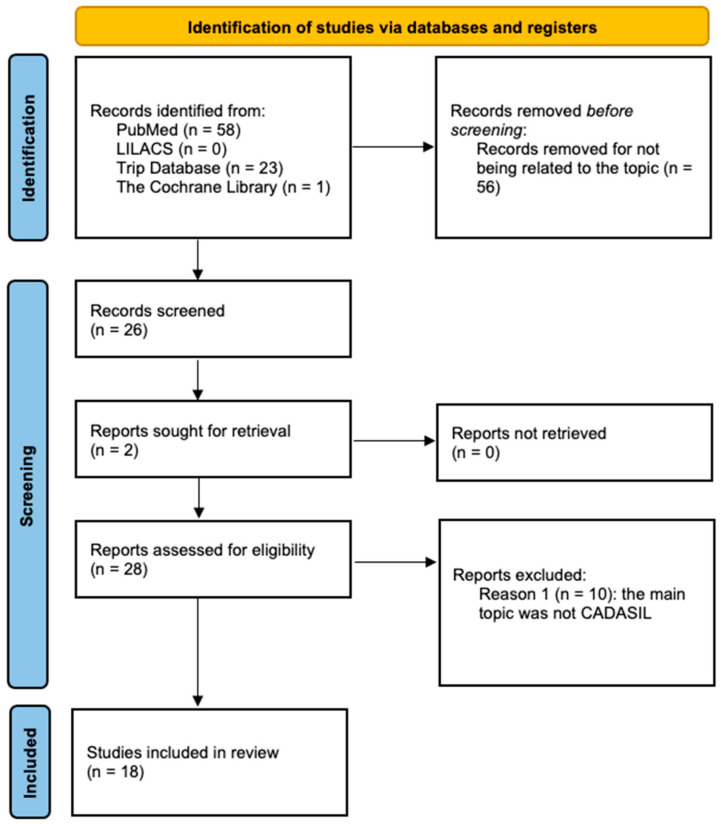
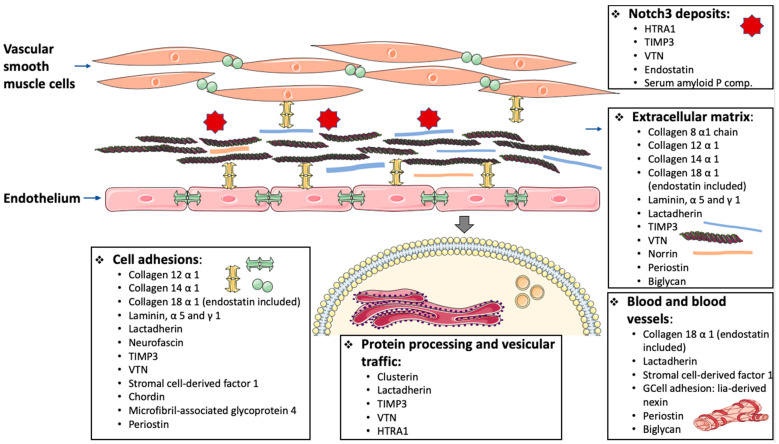
CADASIL (Cerebral Autosomal Dominant Arteriopathy with Subcortical Infarcts and Leukoencephalopathy) is a small vessel disease caused by mutations in that lead to an odd number of cysteines in the epidermal growth factor (EGF)-like repeat domain, causing protein misfolding and aggregation. The main symptoms are migraines, psychiatric disorders, recurrent strokes, and dementia. Omic technologies allow the massive study of different molecules for understanding diseases in a non-biased manner or even for discovering targets and their possible treatments. We analyzed the progress in understanding CADASIL that has been made possible by omics sciences. For this purpose, we included studies that focused on CADASIL and used omics techniques, searching bibliographic resources, such as PubMed. We excluded studies with other phenotypes, such as migraine or leukodystrophies. A total of 18 articles were reviewed. Due to the high prevalence of mutations considered pathogenic to date in genomic repositories, one can ask whether all of them produce CADASIL, different degrees of the disease, or whether they are just a risk factor for small vessel disease. Besides, proteomics and transcriptomics studies found that the molecules that are significantly altered in CADASIL are mainly related to cell adhesion, the cytoskeleton or extracellular matrix components, misfolding control, autophagia, angiogenesis, or the transforming growth factor β (TGFβ) signaling pathway. The omics studies performed on CADASIL have been useful for understanding the biological mechanisms and could be key factors for finding potential drug targets.
CADASIL(伴有皮质下梗死和白质脑病的常染色体显性脑动脉病)是一种小血管疾病,由 基因突变引起,导致表皮生长因子(EGF)样重复结构域中半胱氨酸数量异常,导致蛋白质错误折叠和聚集。主要症状是偏头痛、精神障碍、复发性中风和痴呆。组学技术允许大规模研究不同的分子,以便以非偏见的方式了解疾病,甚至发现靶点及其可能的治疗方法。我们分析了组学科学在理解 CADASIL 方面取得的进展。为此,我们纳入了专注于 CADASIL 并使用组学技术的研究,搜索了文献资源,如 PubMed。我们排除了具有其他表型(如偏头痛或白质营养不良)的研究。共回顾了 18 篇文章。由于迄今为止在基因组库中认为致病性的 突变的高患病率,人们不禁要问,它们是否都会导致 CADASIL、疾病的不同程度,还是它们只是小血管疾病的一个风险因素。此外,蛋白质组学和转录组学研究发现,CADASIL 中显著改变的分子主要与细胞黏附、细胞骨架或细胞外基质成分、错误折叠控制、自噬、血管生成或转化生长因子 β(TGFβ)信号通路有关。在 CADASIL 上进行的组学研究有助于理解生物学机制,可能是寻找潜在药物靶点的关键因素。