Cyrino L G, Galpern Jennie, Moore Lori, Borgi Lea, Riella Leonardo V
Center for Transplantation Sciences, Department of Surgery, Massachusetts General Hospital, Boston, Massachusetts, USA.
Division of Nephrology, Massachusetts General Hospital, Harvard Medical School, Boston, Massachusetts, USA.
Kidney Int Rep. 2021 Apr 27;6(7):1764-1774. doi: 10.1016/j.ekir.2021.04.009. eCollection 2021 Jul.
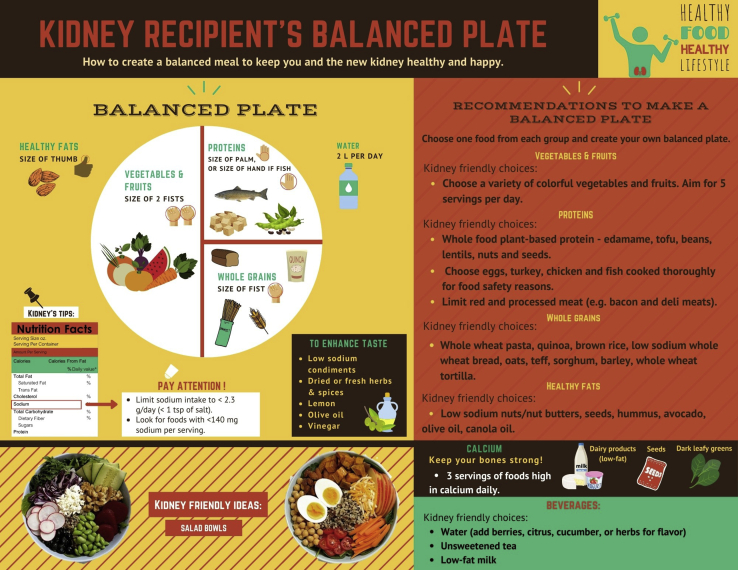
A healthy eating pattern has proven to lower the risk of metabolic and cardiovascular diseases. However, there are sparse dietary recommendations for kidney transplant recipients, and the ones available focus only on single nutrients intake, such as sodium, potassium, and proteins, and not on the overall eating pattern. Considering that individuals do not typically consume nutrients in isolation, but as part of a complete dietary pattern, it is challenging for the average transplanted patient to understand and implement specific dietary recommendations. Also, single-nutrient interventions demonstrate largely inconclusive effects, and it seems improbable that they could have a strong enough impact on transplant outcomes. Dietary trends such as plant-based diets, intermittent fasting, low-carb diet/keto-diet, and juicing, have gained major attention from the media. Herein, we review the potential risks and benefits of these diets in kidney transplant recipients and provide an updated dietary recommendation for this population with consideration of current nutritional trends. Overall, the Mediterranean and DASH diets have demonstrated to be the most beneficial dietary patterns to the post kidney transplant population by focusing on less meat and processed foods, while increasing the intake of fresh foods and plant-based choices. We believe that to maintain a healthy lifestyle posttransplant, patients should be educated about the scientific evidence of different diets and choose a dietary pattern that is sustainable long-term.
健康的饮食模式已被证明可降低代谢性疾病和心血管疾病的风险。然而,针对肾移植受者的饮食建议却很少,现有的建议仅关注单一营养素的摄入,如钠、钾和蛋白质,而不是整体饮食模式。鉴于个体通常不会孤立地摄入营养素,而是作为完整饮食模式的一部分,普通移植患者很难理解和执行具体的饮食建议。此外,单一营养素干预的效果大多尚无定论,而且它们似乎不太可能对移植结果产生足够大的影响。植物性饮食、间歇性禁食、低碳水化合物饮食/生酮饮食和榨汁等饮食趋势已受到媒体的广泛关注。在此,我们回顾了这些饮食对肾移植受者的潜在风险和益处,并结合当前的营养趋势,为这一人群提供最新的饮食建议。总体而言,地中海饮食和得舒饮食已被证明是对肾移植后人群最有益的饮食模式,它们注重减少肉类和加工食品的摄入,同时增加新鲜食品和植物性食物的选择。我们认为,为了在移植后保持健康的生活方式,患者应该了解不同饮食的科学依据,并选择一种可持续的长期饮食模式。