Instituto René Rachou, Fundação Oswaldo Cruz, Belo Horizonte, Minas Gerais, Brazil.
Instituto de Ciências Biológicas, Departamento de Bioquímica e Imunologia, Universidade Federal de Minas Gerais, Belo Horizonte, Minas Gerais, Brazil.
mBio. 2021 Aug 31;12(4):e0124721. doi: 10.1128/mBio.01247-21. Epub 2021 Jul 27.
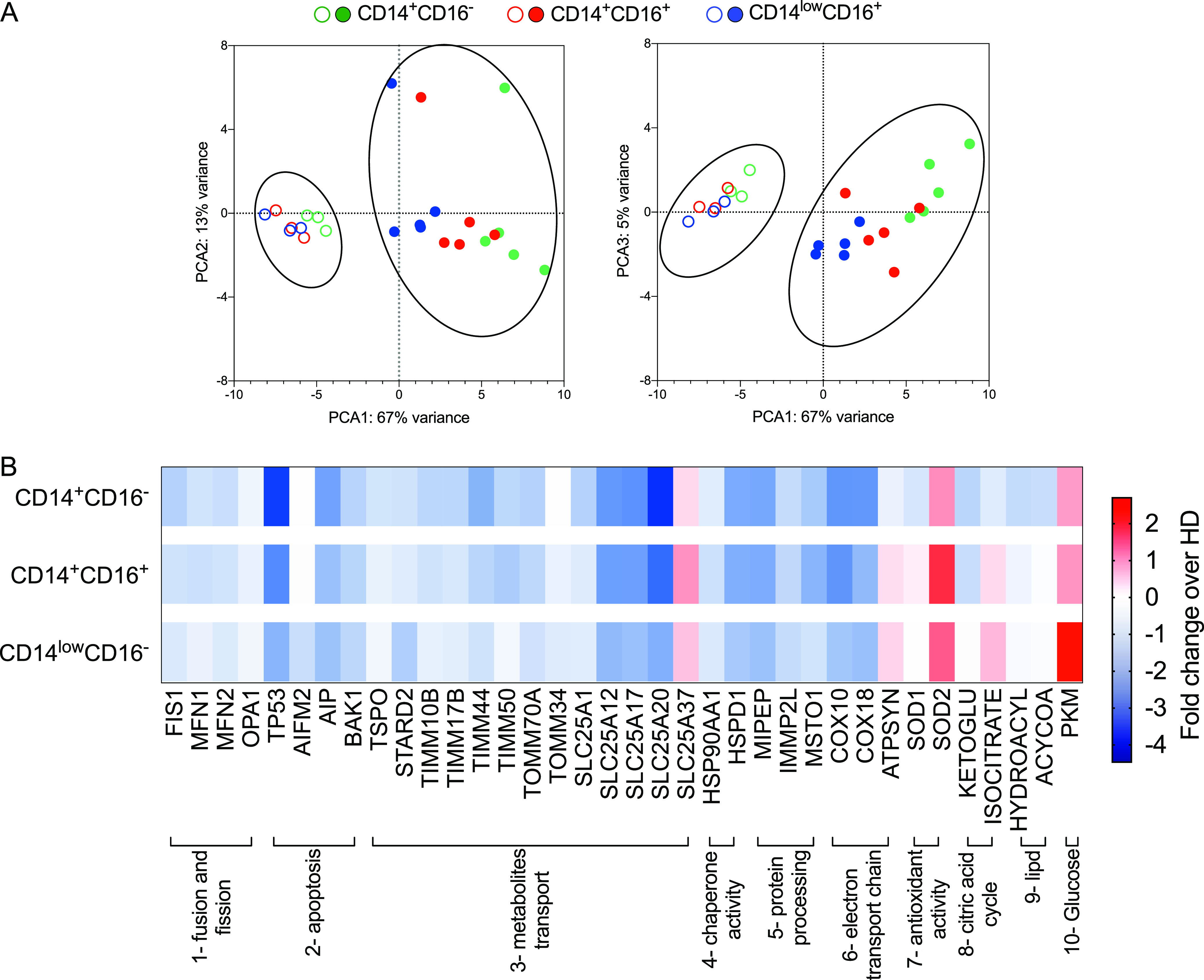
Monocytes play an important role in the host defense against Plasmodium vivax as the main source of inflammatory cytokines and mitochondrial reactive oxygen species (mROS). Here, we show that monocyte metabolism is altered during human P. vivax malaria, with mitochondria playing a major function in this switch. The process involves a reprograming in which the cells increase glucose uptake and produce ATP via glycolysis instead of oxidative phosphorylation. P. vivax infection results in dysregulated mitochondrial gene expression and in altered membrane potential leading to mROS increase rather than ATP production. When monocytes were incubated with P. vivax-infected reticulocytes, mitochondria colocalized with phagolysosomes containing parasites representing an important source mROS. Importantly, the mitochondrial enzyme superoxide dismutase 2 (SOD2) is simultaneously induced in monocytes from malaria patients. Taken together, the monocyte metabolic reprograming with an increased mROS production may contribute to protective responses against P. vivax while triggering immunomodulatory mechanisms to circumvent tissue damage. Plasmodium vivax is the most widely distributed causative agent of human malaria. To achieve parasite control, the human immune system develops a substantial inflammatory response that is also responsible for the symptoms of the disease. Among the cells involved in this response, monocytes play an important role. Here, we show that monocyte metabolism is altered during malaria, with its mitochondria playing a major function in this switch. This change involves a reprograming process in which the cells increase glucose uptake and produce ATP via glycolysis instead of oxidative phosphorylation. The resulting altered mitochondrial membrane potential leads to an increase in mitochondrial reactive oxygen species rather than ATP. These data suggest that agents that change metabolism should be investigated and used with caution during malaria.
单核细胞在宿主防御间日疟原虫(Plasmodium vivax)中发挥重要作用,是炎症细胞因子和线粒体活性氧(reactive oxygen species,ROS)的主要来源。在这里,我们表明单核细胞代谢在人类间日疟原虫感染期间发生改变,线粒体在此转变中起主要作用。该过程涉及细胞重新编程,即增加葡萄糖摄取并通过糖酵解而不是氧化磷酸化产生 ATP。间日疟原虫感染导致线粒体基因表达失调和膜电位改变,导致 ROS 增加而不是 ATP 产生。当单核细胞与感染间日疟原虫的网织红细胞孵育时,线粒体与含有寄生虫的吞噬溶酶体共定位,这是 ROS 的一个重要来源。重要的是,疟疾病人的单核细胞中同时诱导了线粒体酶超氧化物歧化酶 2(superoxide dismutase 2,SOD2)。综上所述,单核细胞代谢的重新编程伴随着 ROS 产生的增加,可能有助于对抗间日疟原虫的保护性反应,同时触发免疫调节机制以避免组织损伤。间日疟原虫是分布最广泛的人类疟疾病原体。为了实现寄生虫控制,人体免疫系统会产生强烈的炎症反应,这也是疾病症状的原因。在参与该反应的细胞中,单核细胞起着重要作用。在这里,我们表明单核细胞代谢在疟疾期间发生改变,其线粒体在这一转变中起着主要作用。这种变化涉及一个重新编程的过程,即细胞通过糖酵解增加葡萄糖摄取并产生 ATP,而不是通过氧化磷酸化。由此产生的改变的线粒体膜电位导致线粒体活性氧的增加而不是 ATP 的增加。这些数据表明,代谢改变的药物在疟疾期间的使用应进行调查和谨慎使用。