Laboratório de Imunopatologia, Centro de Pesquisas René Rachou, Fundação Oswaldo Cruz, Belo Horizonte, Minas Gerais, Brazil.
PLoS Negl Trop Dis. 2012;6(6):e1710. doi: 10.1371/journal.pntd.0001710. Epub 2012 Jun 26.
The activation of innate immune responses by Plasmodium vivax results in activation of effector cells and an excessive production of pro-inflammatory cytokines that may culminate in deleterious effects. Here, we examined the activation and function of neutrophils during acute episodes of malaria.
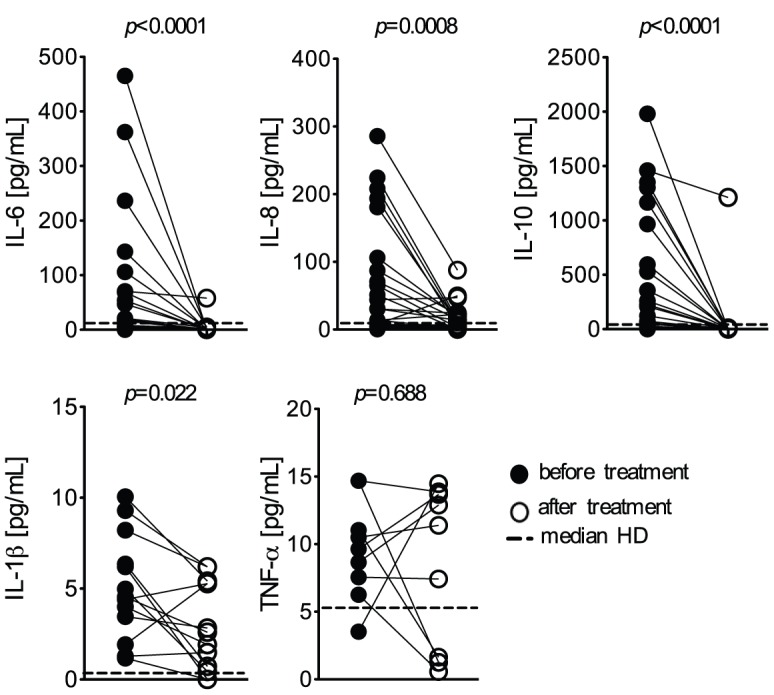
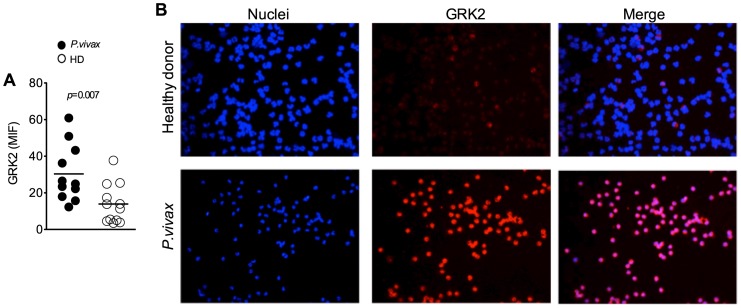
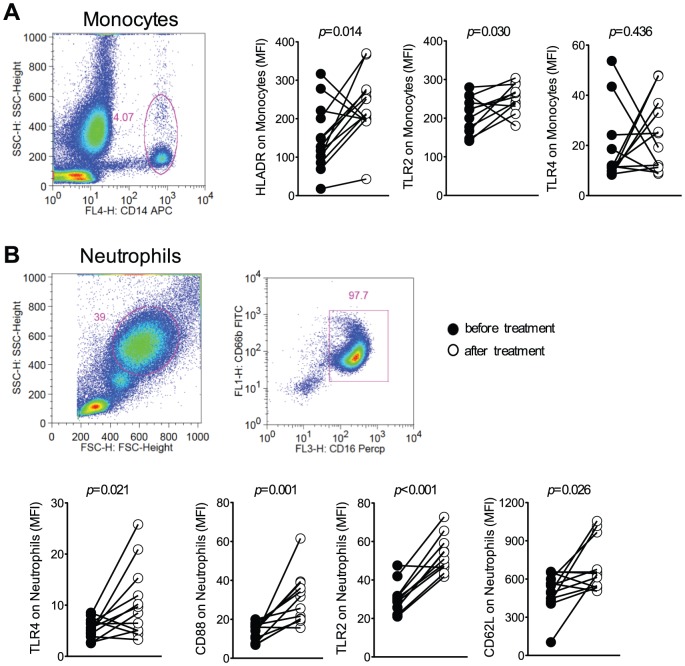
Blood samples were collected from P. vivax-infected patients at admission (day 0) and 30-45 days after treatment with chloroquine and primaquine. Expression of activation markers and cytokine levels produced by highly purified monocytes and neutrophils were measured by the Cytometric Bead Assay. Phagocytic activity, superoxide production, chemotaxis and the presence of G protein-coupled receptor (GRK2) were also evaluated in neutrophils from malaria patients.
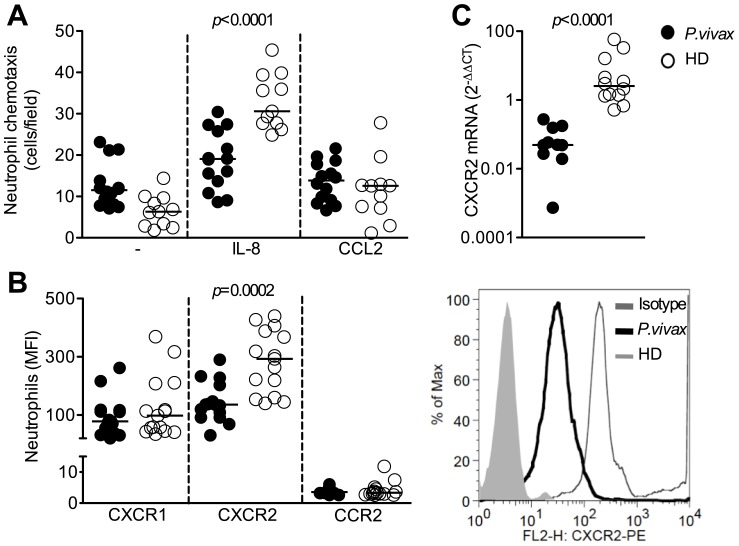
Both monocytes and neutrophils from P. vivax-infected patients were highly activated. While monocytes were found to be the main source of cytokines in response to TLR ligands, neutrophils showed enhanced phagocytic activity and superoxide production. Interestingly, neutrophils from the malaria patients expressed high levels of GRK2, low levels of CXCR2, and displayed impaired chemotaxis towards IL-8 (CXCL8).
Activated neutrophils from malaria patients are a poor source of pro-inflammatory cytokines and display reduced chemotactic activity, suggesting a possible mechanism for an enhanced susceptibility to secondary bacterial infection during malaria.
间日疟原虫激活先天免疫反应会导致效应细胞的激活和促炎细胞因子的过度产生,这可能导致有害影响。在这里,我们研究了疟原虫感染患者中性粒细胞在急性疟疾病例中的激活和功能。
在接受氯喹和伯氨喹治疗 30-45 天后,采集间日疟原虫感染患者入院时(第 0 天)和入院时的血样。通过流式细胞术检测高度纯化的单核细胞和中性粒细胞产生的激活标志物和细胞因子水平。还评估了疟疾病例中性粒细胞的吞噬活性、超氧化物产生、趋化性和 G 蛋白偶联受体(GRK2)的存在。
来自间日疟原虫感染患者的单核细胞和中性粒细胞均高度激活。虽然单核细胞被发现是对 TLR 配体产生细胞因子的主要来源,但中性粒细胞表现出增强的吞噬活性和超氧化物产生。有趣的是,疟疾病例中的中性粒细胞表达高水平的 GRK2、低水平的 CXCR2,并表现出对白细胞介素-8(CXCL8)的趋化性受损。
疟疾病例中激活的中性粒细胞是促炎细胞因子的不良来源,并且表现出降低的趋化性活性,这表明在疟疾期间继发性细菌感染易感性增强的可能机制。