Department of Pharmacy, Research Centre on Bioactive Peptides (CIRPeB), University of Naples "Federico II", Via Mezzocannone 16, 80134, Naples, Italy.
Institute of Crystallography (CNR), Via Amendola 122, 70126, Bari, Italy.
Chemistry. 2021 Oct 13;27(57):14307-14316. doi: 10.1002/chem.202102481. Epub 2021 Aug 31.
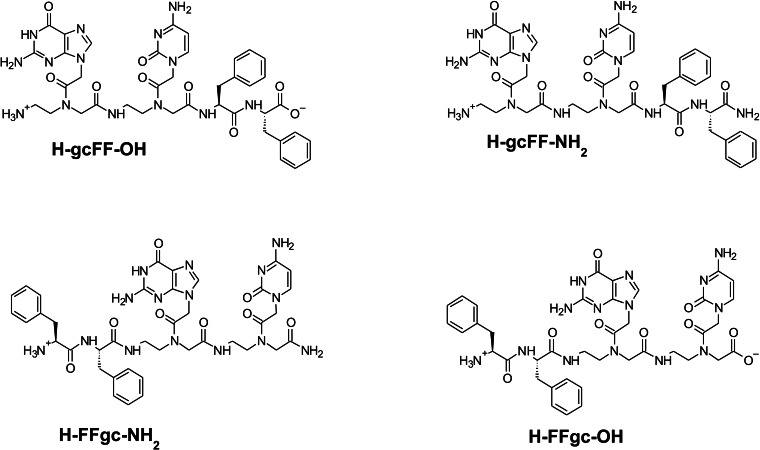
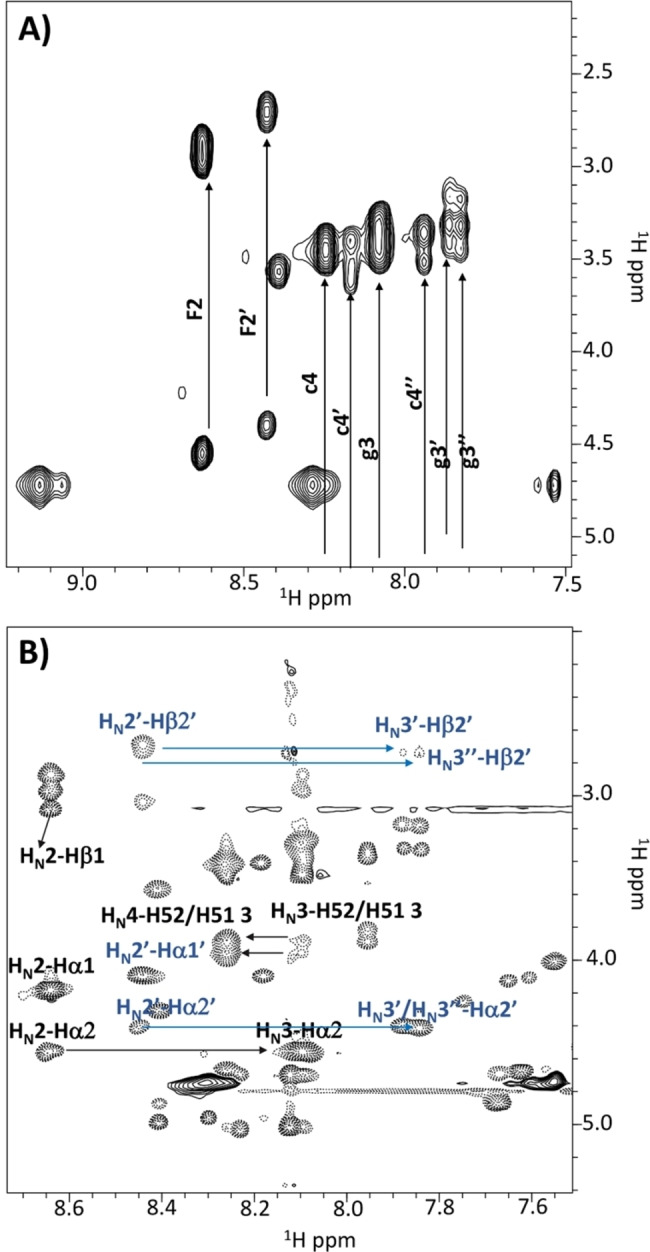
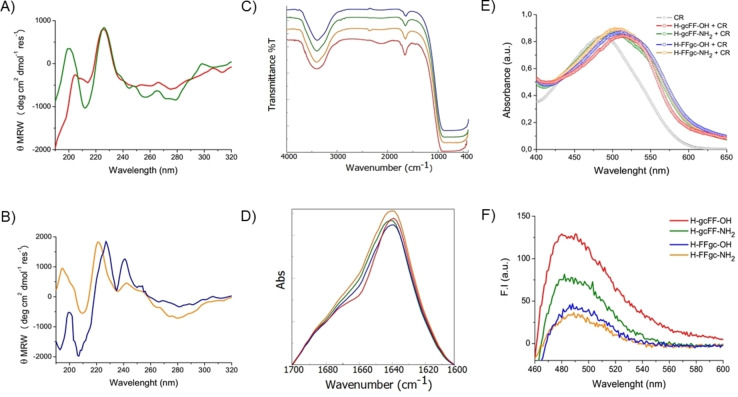
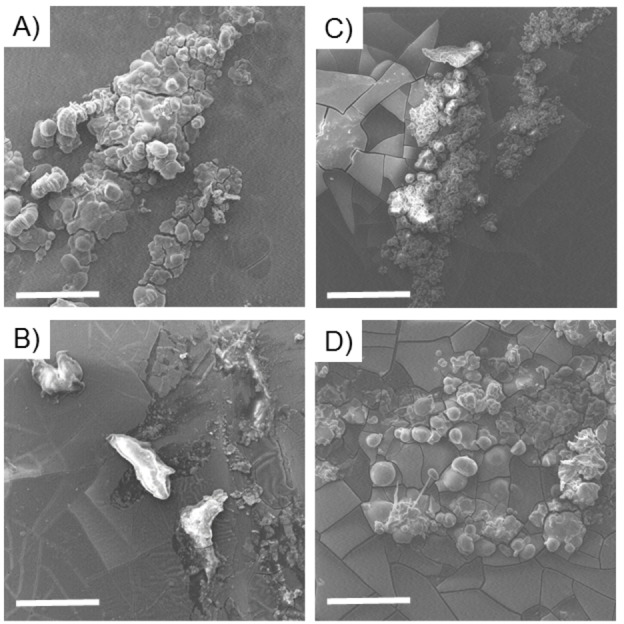
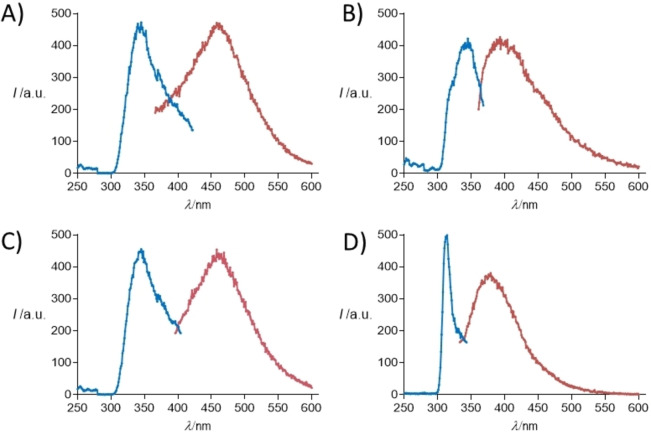
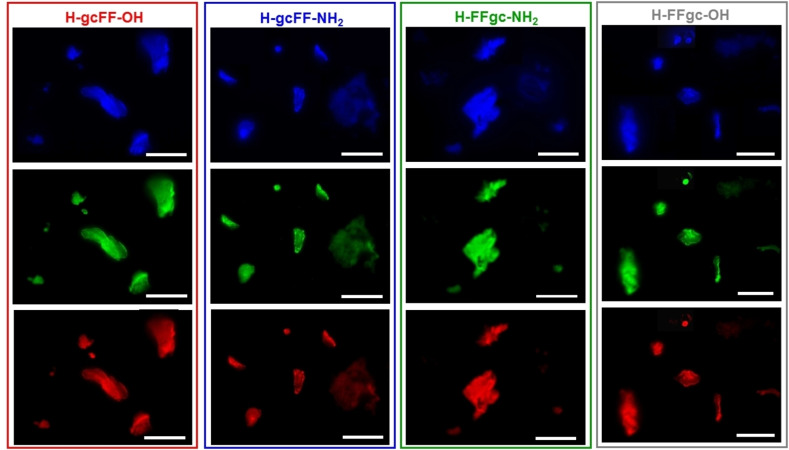
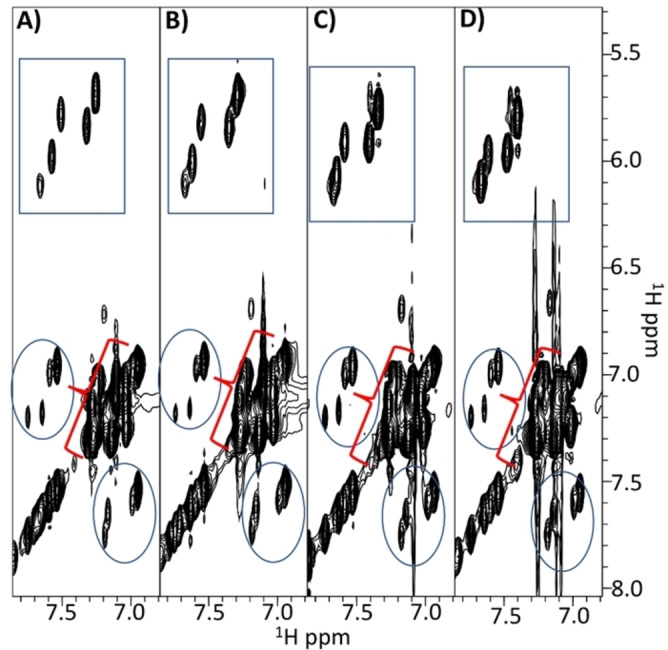
Peptides and nucleic acids can self-assemble to give supramolecular structures that find application in different fields, ranging from the delivery of drugs to the obtainment of materials endowed with optical properties. Forces that stabilize the "suprastructures" typically are hydrogen bonds or aromatic interactions; in case of nucleic acids, Watson-Crick pairing drives self-assembly while, in case of peptides, backbone hydrogen bonds and interactions between aromatic side chains trigger the formation of structures, such as nanotubes or ribbons. Molecules containing both aromatic peptides and nucleic acids could in principle exploit different forces to self-assemble. In this work we meant to investigate the self-assembly of mixed systems, with the aim to understand which forces play a major role and determine formation/structure of aggregates. We therefore synthesized conjugates of the peptide FF to the peptide nucleic acid dimer "gc" and characterized their aggregates by different spectroscopic techniques, including NMR, CD and fluorescence.
肽和核酸可以自组装形成超分子结构,这些结构在从药物传递到获得具有光学性质的材料等不同领域都有应用。稳定“超结构”的力通常是氢键或芳构相互作用;在核酸的情况下,沃森-克里克配对驱动自组装,而在肽的情况下,骨架氢键和芳构侧链之间的相互作用引发纳米管或带状结构的形成。原则上,同时含有芳香肽和核酸的分子可以利用不同的力进行自组装。在这项工作中,我们旨在研究混合体系的自组装,目的是了解哪些力起主要作用并决定聚集体的形成/结构。为此,我们合成了肽 FF 与肽核酸二聚体“gc”的缀合物,并通过包括 NMR、CD 和荧光在内的不同光谱技术对其聚集体进行了表征。