National Institute for Biological Standards and Control, Potters Bar, United Kingdom.
Sanofi Pasteur, Swiftwater, Pennsylvania, USA.
mSphere. 2021 Aug 25;6(4):e0056721. doi: 10.1128/mSphere.00567-21. Epub 2021 Jul 28.
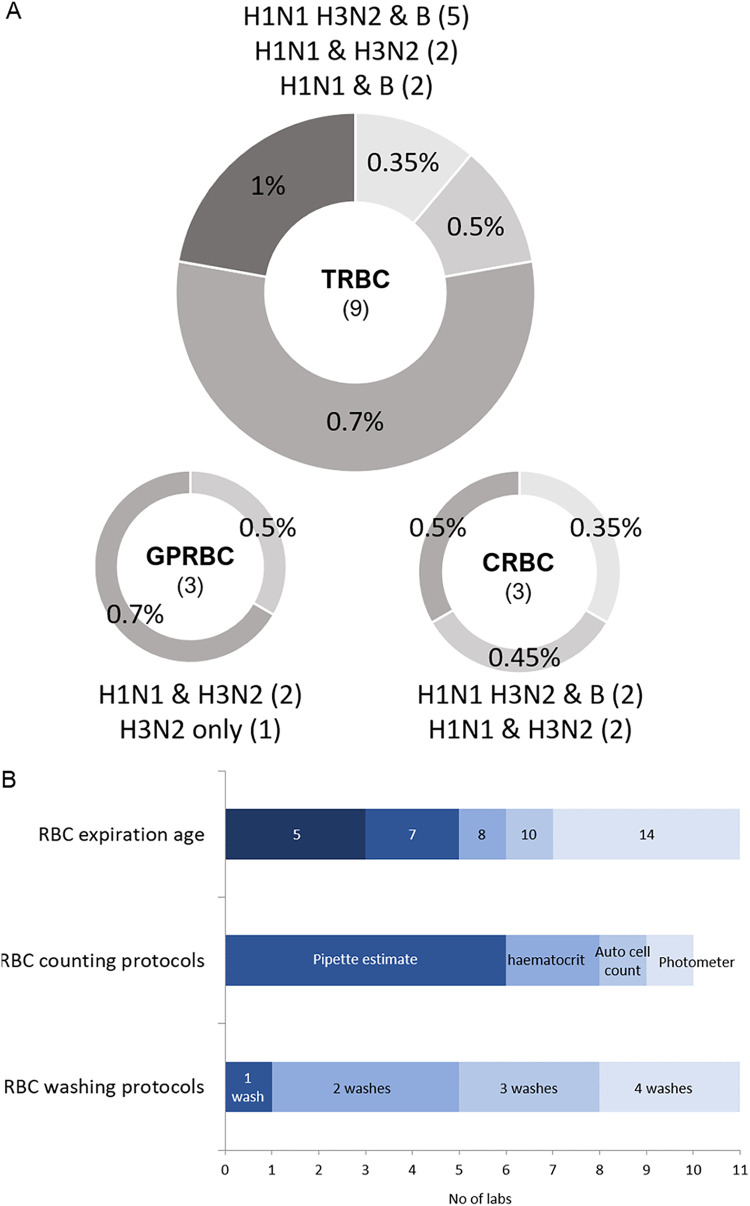
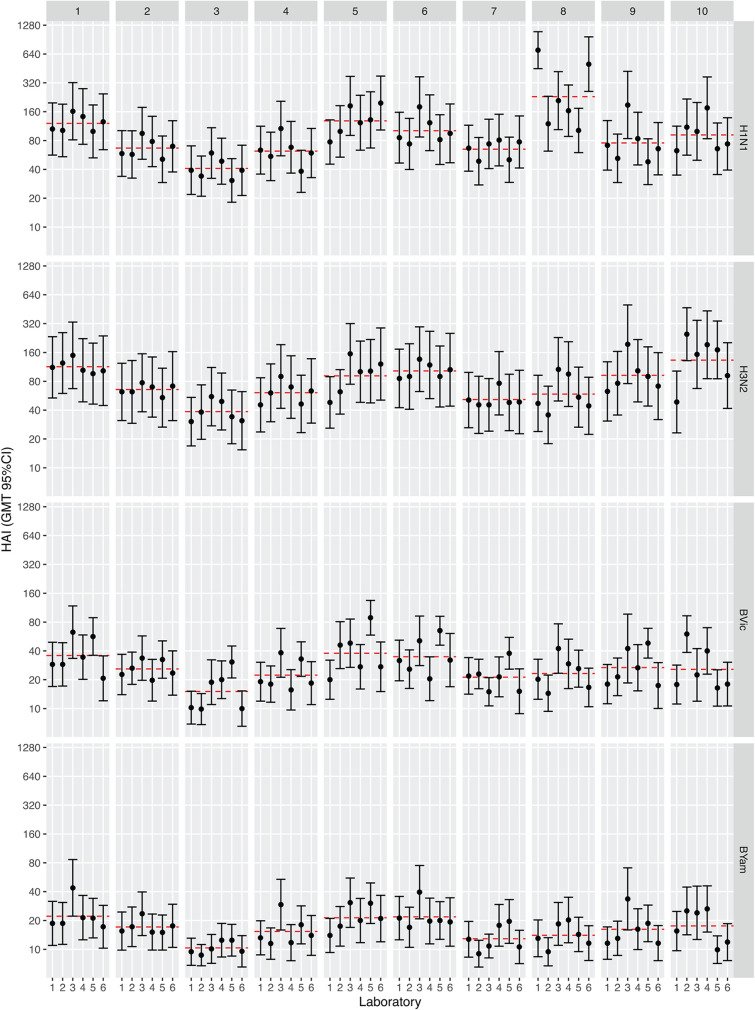
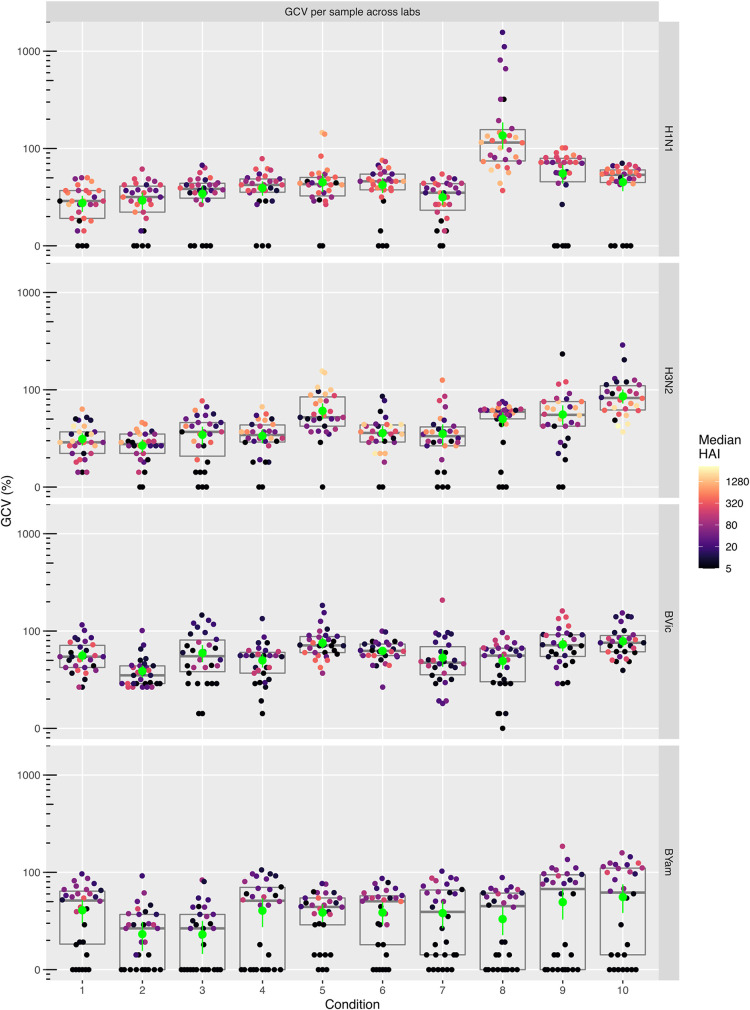
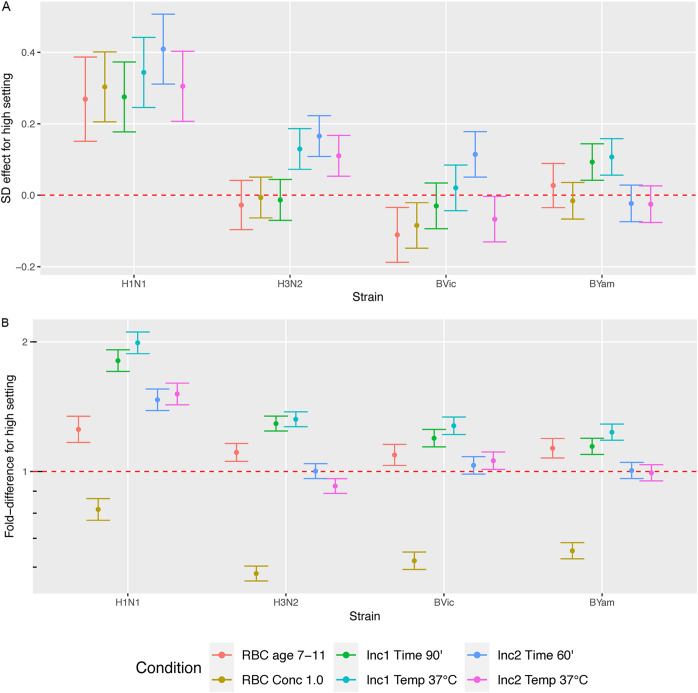
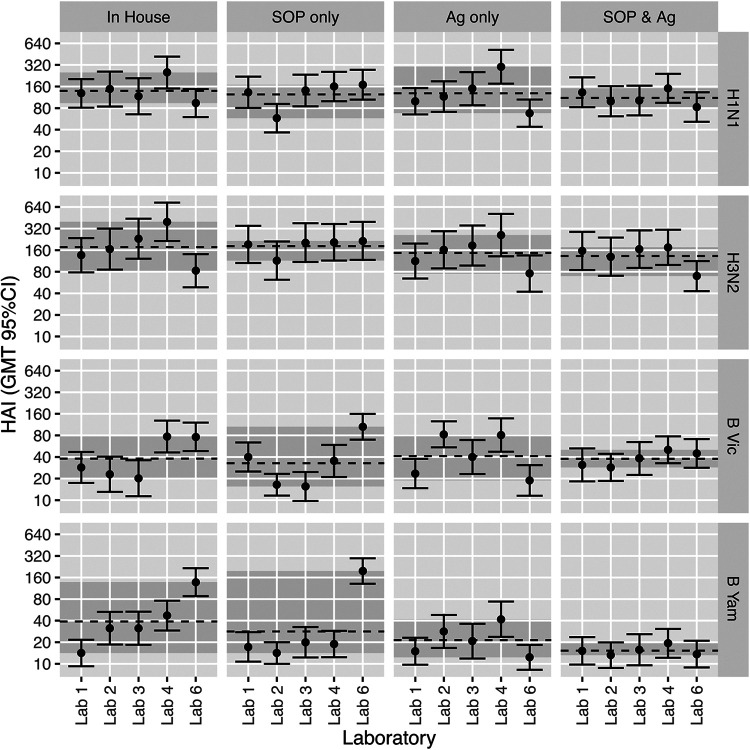
The hemagglutination inhibition (HAI) assay is an established technique for assessing influenza immunity, through measurement of antihemagglutinin antibodies. Improved reproducibility of this assay is required to provide meaningful data across different testing laboratories. This study assessed the impact of harmonizing the HAI assay protocol/reagents and using standards on interlaboratory variability. Human pre- and postvaccination sera from individuals ( = 30) vaccinated against influenza were tested across six laboratories. We used a design of experiment (DOE) method to evaluate the impact of assay parameters on interlaboratory HAI assay variability. Statistical and mathematical approaches were used for data analysis. We developed a consensus protocol and assessed its performance against in-house HAI testing. We additionally tested the performance of several potential biological standards. In-house testing with four reassortant viruses showed considerable interlaboratory variation (geometric coefficient of variation [GCV] range of 50% to 117%). The age, concentration of turkey red blood cells, incubation duration, and temperature were key assay parameters affecting variability. Use of a consensus protocol with common reagents, including viruses, significantly reduced GCV between laboratories to 22% to 54%. Pooled postvaccination human sera from different vaccination campaigns were effective as biological standards. Our results demonstrate that the harmonization of protocols and critical reagents is effective in reducing interlaboratory variability in HAI assay results and that pools of postvaccination human sera have potential as biological standards that can be used over multiple vaccination campaigns. Moreover, the use of standards together with in-house protocols is as potent as the use of common protocols and reagents in reducing interlaboratory variability. The hemagglutination inhibition (HAI) assay is the most commonly used serology assay to detect antibodies from influenza vaccination or influenza virus infection. This assay has been used for decades but requires improved standardization of procedures to provide meaningful data. We designed a large study to assess selected parameters for their contribution to assay variability and developed a standard protocol to promote consistent HAI testing methods across laboratories. The use of this protocol and common reagents resulted in lower levels of variability in results between participating laboratories than achieved using in-house HAI testing. Human sera sourced from vaccination campaigns over several years, and thus including antibody to different influenza vaccine strains, served as effective assay standards. Based on our findings, we recommend the use of a common protocol and/or human serum standards, if available, for testing human sera for the presence of antibodies against seasonal influenza using turkey red blood cells.
血凝抑制(HAI)试验是一种评估流感免疫的成熟技术,通过测量抗血凝素抗体来实现。为了在不同的检测实验室提供有意义的数据,需要提高该试验的重现性。本研究评估了标准化 HAI 试验方案/试剂和使用标准对实验室间变异性的影响。来自接种流感疫苗的个体的( = 30)的预接种和接种后血清在六个实验室进行了检测。我们使用实验设计(DOE)方法来评估试验参数对实验室间 HAI 试验变异性的影响。统计和数学方法用于数据分析。我们开发了一个共识方案,并对其与内部 HAI 检测的性能进行了评估。我们还测试了几种潜在生物标准品的性能。用四种重配病毒进行内部检测显示出相当大的实验室间差异(几何变异系数 [GCV] 范围为 50%至 117%)。年龄、火鸡红细胞的浓度、孵育时间和温度是影响变异性的关键试验参数。使用具有共同试剂(包括病毒)的共识方案显著降低了实验室间的 GCV 至 22%至 54%。来自不同疫苗接种活动的混合接种后人类血清是有效的生物标准品。我们的结果表明,方案和关键试剂的标准化可有效降低 HAI 试验结果的实验室间变异性,并且混合接种后人类血清可作为生物标准品,可在多个疫苗接种活动中使用。此外,使用标准品和内部方案与使用通用方案和试剂一样,可有效降低实验室间的变异性。血凝抑制(HAI)试验是最常用于检测流感疫苗接种或流感病毒感染产生的抗体的血清学试验。该试验已使用了数十年,但需要改进程序的标准化,以提供有意义的数据。我们设计了一项大型研究来评估选定参数对试验变异性的贡献,并开发了一个标准方案来促进实验室间一致的 HAI 检测方法。与使用内部 HAI 检测相比,使用该方案和共同试剂导致参与实验室之间的结果变异性水平降低。来自多年疫苗接种活动的人类血清源,因此包括针对不同流感疫苗株的抗体,可作为有效的试验标准品。基于我们的研究结果,我们建议在使用火鸡红细胞检测人类血清中针对季节性流感的抗体时,如果可能的话,使用通用方案和/或人类血清标准品。