Maternal, Newborn, Child and Adolescent Health and Aging Department, World Health Organization, Geneva, Switzerland.
Division of Data, Analytics, Planning and Monitoring, UNICEF, New York, NY, USA.
Glob Health Action. 2021 Jan 1;14(1):1947565. doi: 10.1080/16549716.2021.1947565.
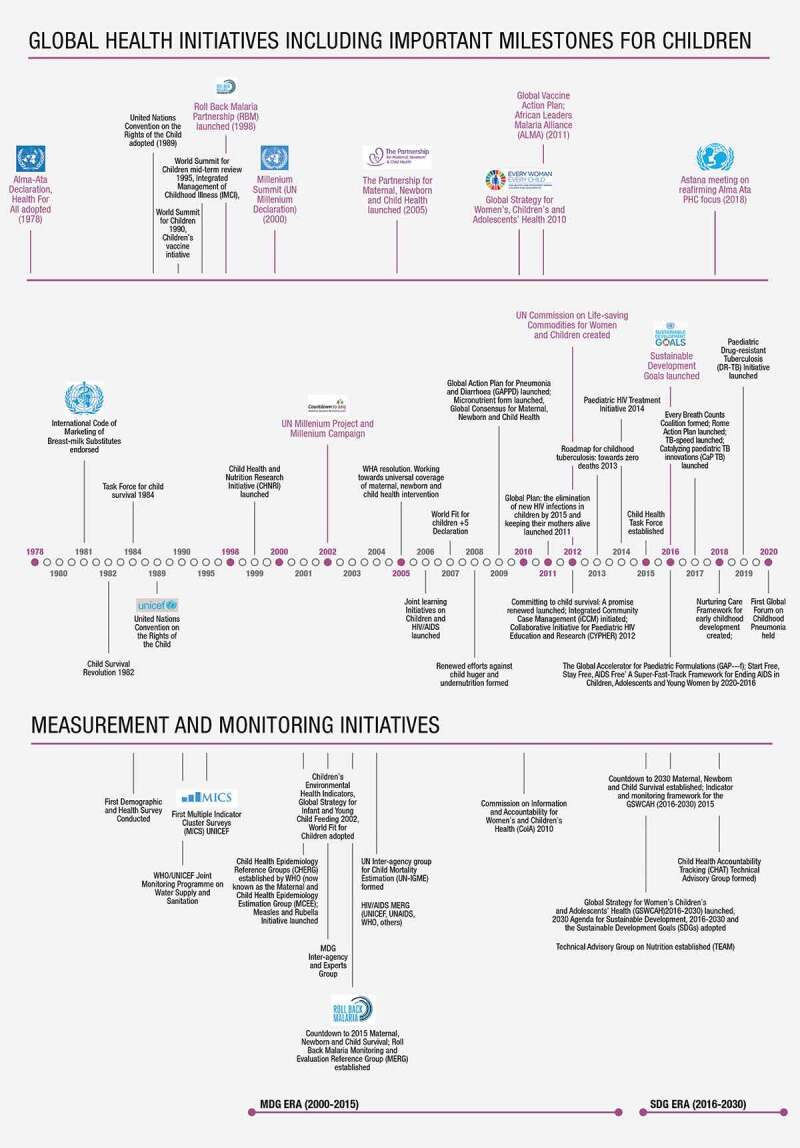
Essential health, education and other service disruptions arising from the COVID-19 pandemic risk reversing some of the hard-won gains in improving child survival over the past 40 years. Although children have milder symptoms of COVID-19 disease than adults, pandemic control measures in many countries have disrupted health, education and other services for children, often leaving them without access to birth and postnatal care, vaccinations and early childhood preventive and treatment services. These disruptions mean that the SARS-CoV-2 virus, along with climate change and shifting epidemiological and demographic patterns, are challenging the survival gains that we have seen over the past 40 years. We revisit the initiatives and actions of the past that catalyzed survival improvements in an effort to learn how to maintain these gains even in the face of today's global challenges.
由于 COVID-19 大流行,基本的卫生、教育和其他服务受到干扰,这有可能使过去 40 年来在改善儿童生存方面取得的一些来之不易的成果付诸东流。虽然儿童感染 COVID-19 的症状比成年人轻,但许多国家的大流行控制措施扰乱了儿童的卫生、教育和其他服务,往往使他们无法获得出生和产后护理、疫苗接种以及儿童期预防和治疗服务。这些干扰意味着,SARS-CoV-2 病毒以及气候变化和不断变化的流行病学和人口统计模式,正在挑战我们在过去 40 年中看到的生存收益。我们重新审视过去促进生存改善的举措和行动,以努力学习如何在即使面对当今全球挑战的情况下,也能保持这些收益。