Université de Lyon, CNRS, Laboratoire de Biométrie et Biologie Evolutive UMR 5558, Villeurbanne, France.
Université de Paris, CNRS, Institut Jacques Monod, Paris, France.
PLoS Biol. 2021 Jul 29;19(7):e3001309. doi: 10.1371/journal.pbio.3001309. eCollection 2021 Jul.
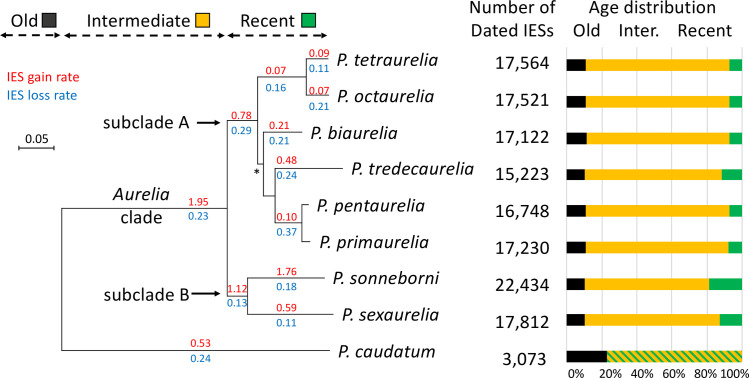
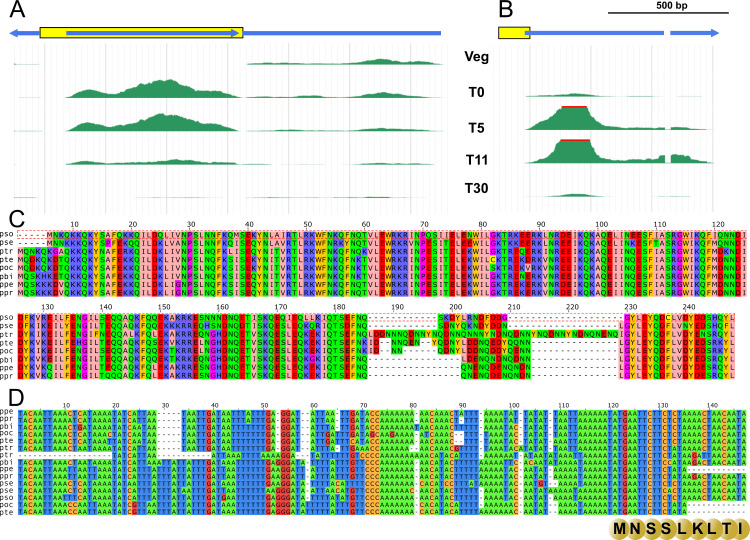
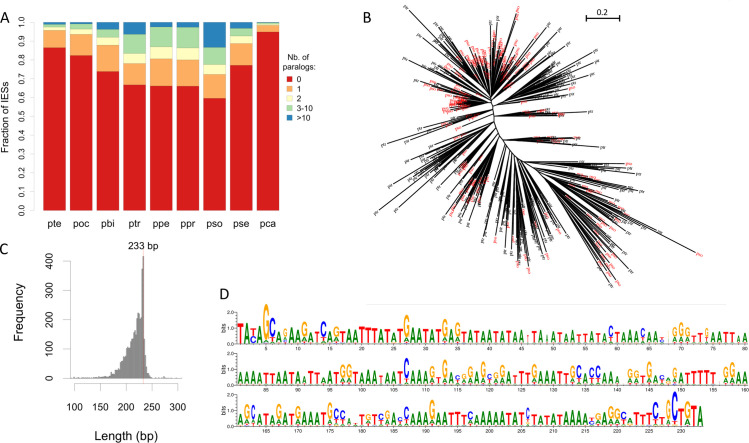
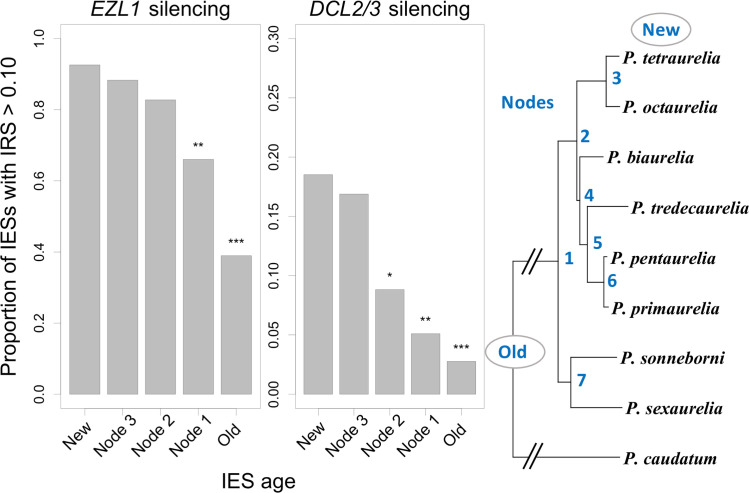
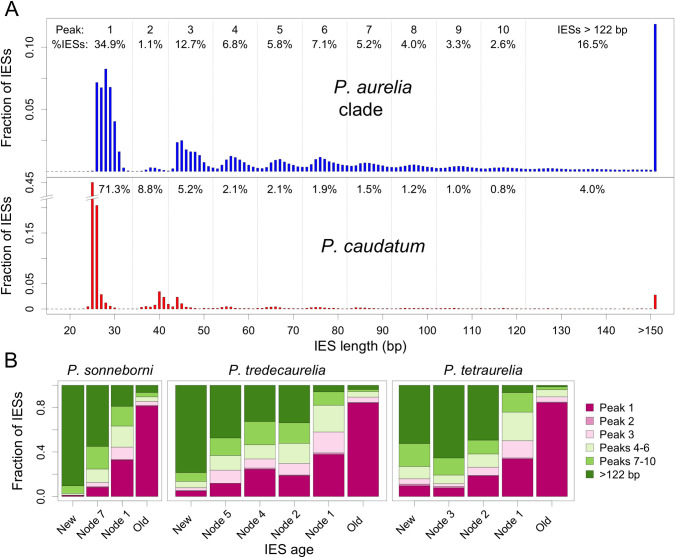
Ciliates are unicellular eukaryotes with both a germline genome and a somatic genome in the same cytoplasm. The somatic macronucleus (MAC), responsible for gene expression, is not sexually transmitted but develops from a copy of the germline micronucleus (MIC) at each sexual generation. In the MIC genome of Paramecium tetraurelia, genes are interrupted by tens of thousands of unique intervening sequences called internal eliminated sequences (IESs), which have to be precisely excised during the development of the new MAC to restore functional genes. To understand the evolutionary origin of this peculiar genomic architecture, we sequenced the MIC genomes of 9 Paramecium species (from approximately 100 Mb in Paramecium aurelia species to >1.5 Gb in Paramecium caudatum). We detected several waves of IES gains, both in ancestral and in more recent lineages. While the vast majority of IESs are single copy in present-day genomes, we identified several families of mobile IESs, including nonautonomous elements acquired via horizontal transfer, which generated tens to thousands of new copies. These observations provide the first direct evidence that transposable elements can account for the massive proliferation of IESs in Paramecium. The comparison of IESs of different evolutionary ages indicates that, over time, IESs shorten and diverge rapidly in sequence while they acquire features that allow them to be more efficiently excised. We nevertheless identified rare cases of IESs that are under strong purifying selection across the aurelia clade. The cases examined contain or overlap cellular genes that are inactivated by excision during development, suggesting conserved regulatory mechanisms. Similar to the evolution of introns in eukaryotes, the evolution of Paramecium IESs highlights the major role played by selfish genetic elements in shaping the complexity of genome architecture and gene expression.
纤毛虫是具有生殖系基因组和同一细胞质中体细胞基因组的单细胞真核生物。负责基因表达的体细胞巨核(MAC)并非通过性传播,但在每个有性世代中,从生殖系微核(MIC)的一个拷贝发育而来。在 Paramecium tetraurelia 的 MIC 基因组中,基因被数万个称为内部缺失序列(IESs)的独特插入序列所打断,这些 IESs 在新 MAC 的发育过程中必须精确切除,以恢复有功能的基因。为了了解这种特殊基因组结构的进化起源,我们对 9 种 Paramecium 物种的 MIC 基因组进行了测序(从 Paramecium aurelia 物种的约 100Mb 到 Paramecium caudatum 的>1.5Gb)。我们检测到在祖先和更近的谱系中都有几波 IES 获得。虽然在当今的基因组中,绝大多数 IES 是单拷贝的,但我们鉴定了几个移动 IES 家族,包括通过水平转移获得的非自主元件,它们产生了数十到数千个新拷贝。这些观察结果提供了第一个直接证据,证明转座元件可以解释 Paramecium 中 IES 的大量增殖。不同进化年龄的 IES 比较表明,随着时间的推移,IES 在序列上迅速缩短和发散,同时获得了使其更有效地被切除的特征。然而,我们确实鉴定到在 aurelia 进化枝中受到强烈净化选择的 IES 罕见情况。所检查的情况包含或重叠在发育过程中通过切除失活的细胞基因,这表明存在保守的调控机制。与真核生物内含子的进化类似,Paramecium IES 的进化突出了自私遗传元件在塑造基因组结构和基因表达复杂性方面所起的主要作用。