Genomic Medicine Institute, Lerner Research Institute, Cleveland Clinic, Cleveland, OH, USA.
Florida Research and Innovation Center, Cleveland Clinic, Port Saint Lucie, FL, USA.
Signal Transduct Target Ther. 2021 Jul 30;6(1):292. doi: 10.1038/s41392-021-00709-x.
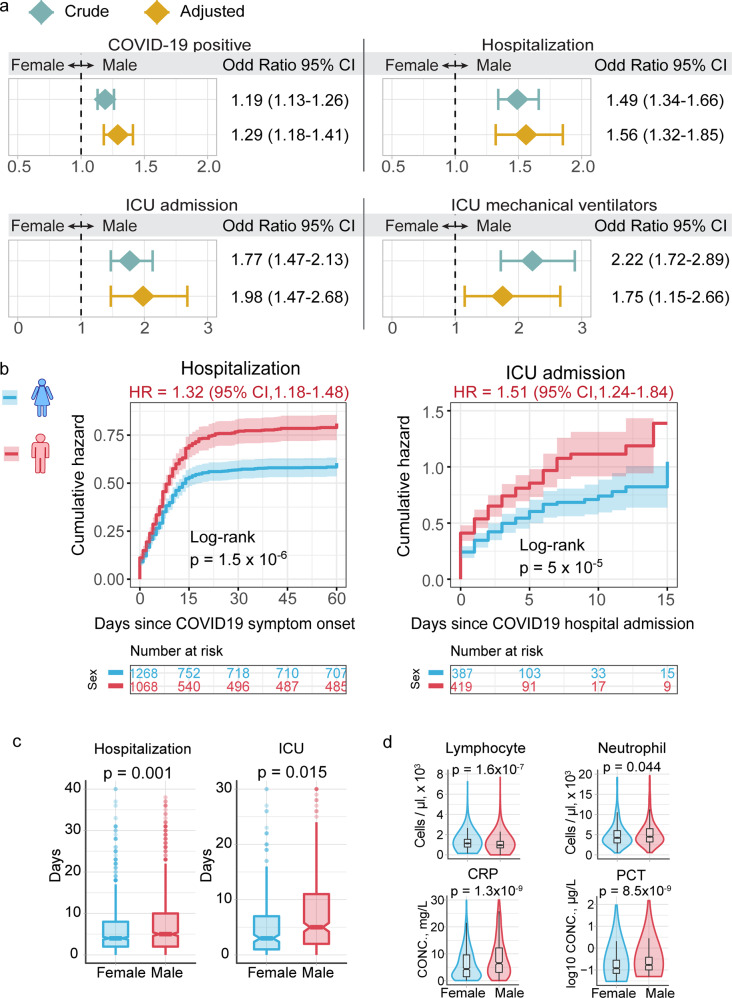
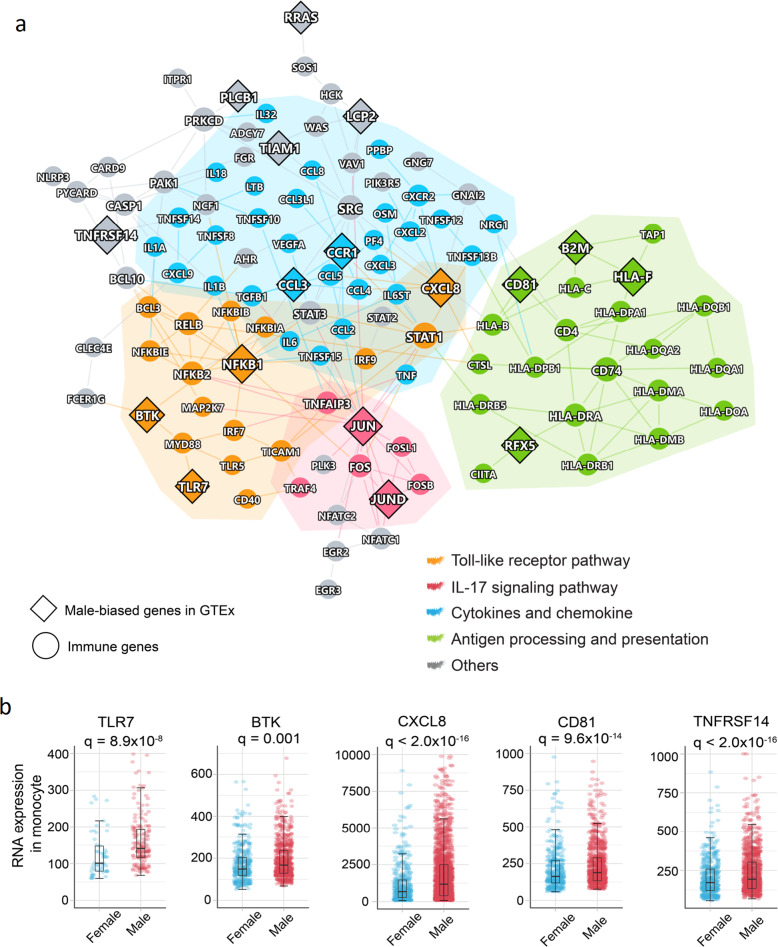
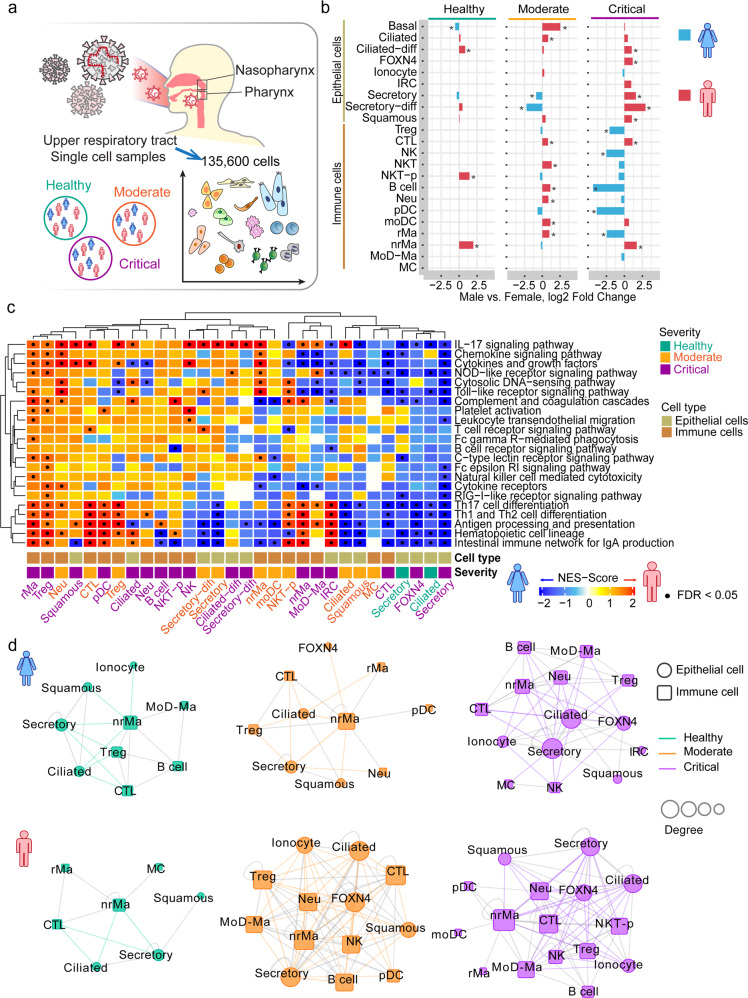
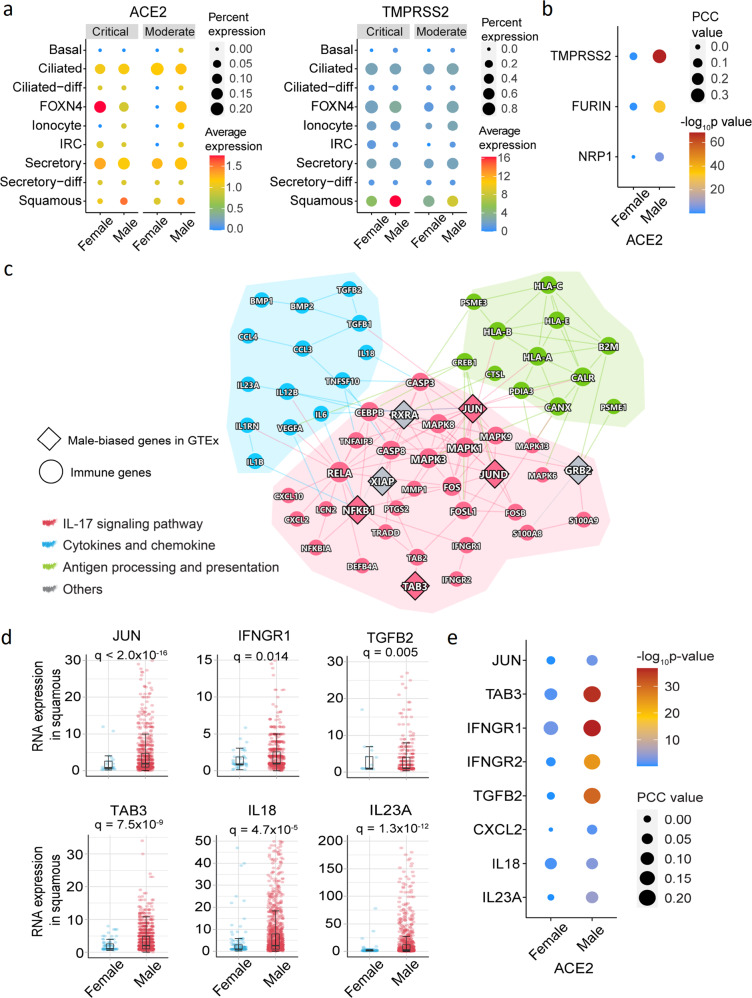
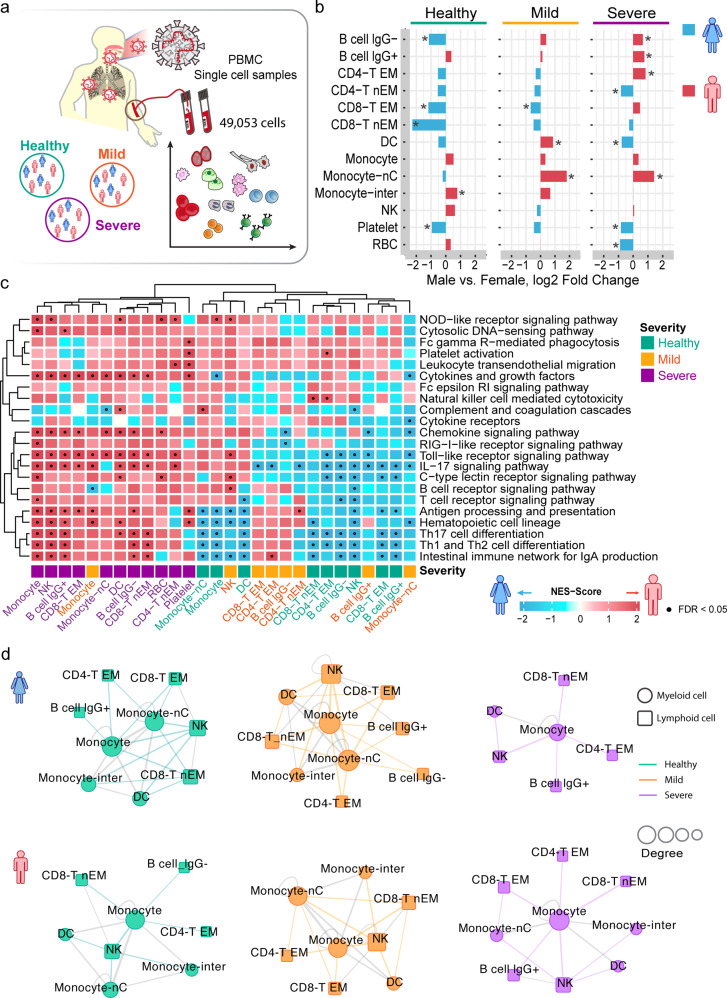
Sex differences in the susceptibility of SARS-CoV-2 infection and severity have been controversial, and the underlying mechanisms of COVID-19 in a sex-specific manner remain understudied. Here we inspected sex differences in SARS-CoV-2 infection, hospitalization, admission to the intensive care unit (ICU), sera inflammatory biomarker profiling, and single-cell RNA-sequencing (scRNA-seq) profiles across nasal, bronchoalveolar lavage fluid (BALF), and peripheral blood mononuclear cells (PBMCs) from COVID-19 patients with varying degrees of disease severities. Our propensity score-matching observations revealed that male individuals have a 29% elevated likelihood of SARS-CoV-2 positivity, with a hazard ratio (HR) 1.32 (95% confidence interval [CI] 1.18-1.48) for hospitalization and HR 1.51 (95% CI 1.24-1.84) for admission to ICU. Sera from male patients at hospital admission had elevated neutrophil-lymphocyte ratio and elevated expression of inflammatory markers (C-reactive protein and procalcitonin). We found that SARS-CoV-2 entry factors, including ACE2, TMPRSS2, FURIN, and NRP1, have elevated expression in nasal squamous cells from male individuals with moderate and severe COVID-19. We observed male-biased transcriptional activation in SARS-CoV-2-infected macrophages from BALF and sputum samples, which offers potential molecular mechanism for sex-biased susceptibility to viral infection. Cell-cell interaction network analysis reveals potential epithelium-immune cell interactions and immune vulnerability underlying male-elevated disease severity and mortality in COVID-19. Mechanistically, monocyte-elevated expression of Toll-like receptor 7 (TLR7) and Bruton tyrosine kinase (BTK) is associated with severe outcomes in males with COVID-19. In summary, these findings provide basis to decipher immune responses underlying sex differences and designing sex-specific targeted interventions and patient care for COVID-19.
性别在 SARS-CoV-2 感染易感性和严重程度上的差异一直存在争议,而 COVID-19 以性别特异性方式的潜在机制仍在研究中。在这里,我们研究了 COVID-19 患者中不同严重程度的 SARS-CoV-2 感染、住院、入住重症监护病房(ICU)、血清炎症生物标志物谱和单细胞 RNA 测序(scRNA-seq)谱在性别上的差异,这些患者的鼻腔、支气管肺泡灌洗液(BALF)和外周血单核细胞(PBMC)样本存在不同程度的疾病。我们的倾向评分匹配观察结果表明,男性个体感染 SARS-CoV-2 的可能性增加 29%,住院的风险比(HR)为 1.32(95%置信区间 [CI] 1.18-1.48),入住 ICU 的 HR 为 1.51(95% CI 1.24-1.84)。男性患者入院时的血清中性粒细胞与淋巴细胞比值升高,炎症标志物(C 反应蛋白和降钙素原)表达升高。我们发现,SARS-CoV-2 进入因子,包括 ACE2、TMPRSS2、FURIN 和 NRP1,在中重度 COVID-19 男性个体的鼻腔鳞状细胞中表达升高。我们观察到 BALF 和痰液样本中感染 SARS-CoV-2 的巨噬细胞中存在男性偏倚的转录激活,这为病毒感染的性别易感性提供了潜在的分子机制。细胞-细胞相互作用网络分析揭示了 COVID-19 中男性疾病严重程度和死亡率升高的潜在上皮细胞-免疫细胞相互作用和免疫脆弱性。从机制上讲,COVID-19 男性患者中单核细胞 Toll 样受体 7(TLR7)和布鲁顿酪氨酸激酶(BTK)的高表达与严重结局相关。总之,这些发现为解析性别差异背后的免疫反应以及设计 COVID-19 的性别特异性靶向干预和患者护理提供了依据。