Genomic Medicine Institute, Lerner Research Institute, Cleveland Clinic, Cleveland, Ohio, USA.
Quantitative Health Sciences, Lerner Research Institute, Cleveland Clinic, Cleveland, Ohio, USA.
Aging Cell. 2022 Feb;21(2):e13544. doi: 10.1111/acel.13544. Epub 2022 Jan 12.
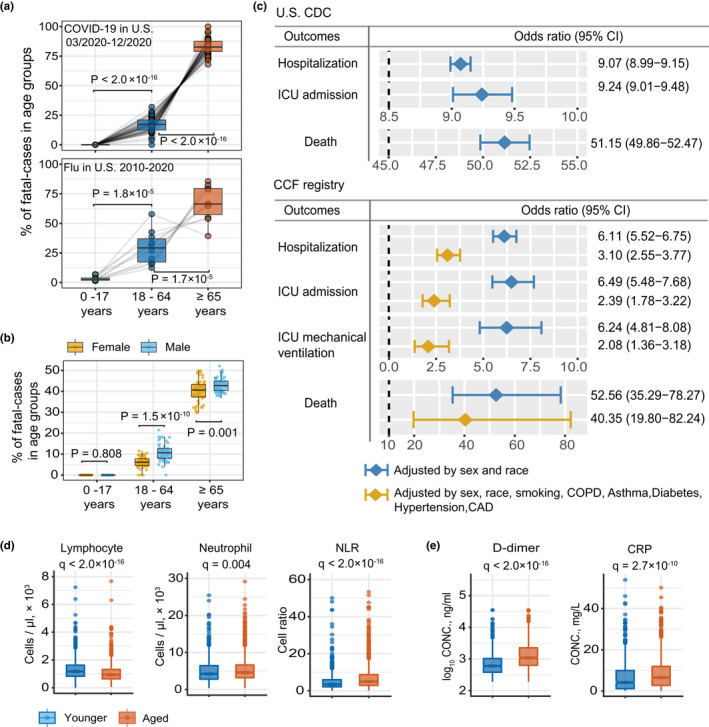
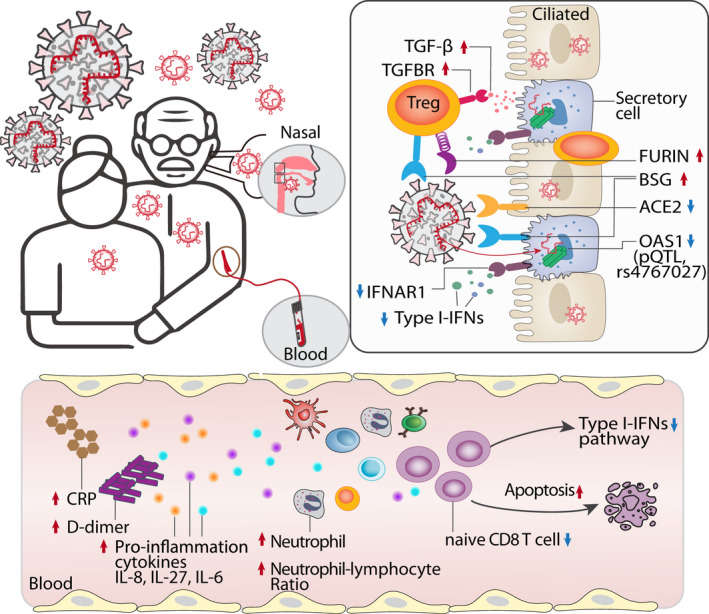
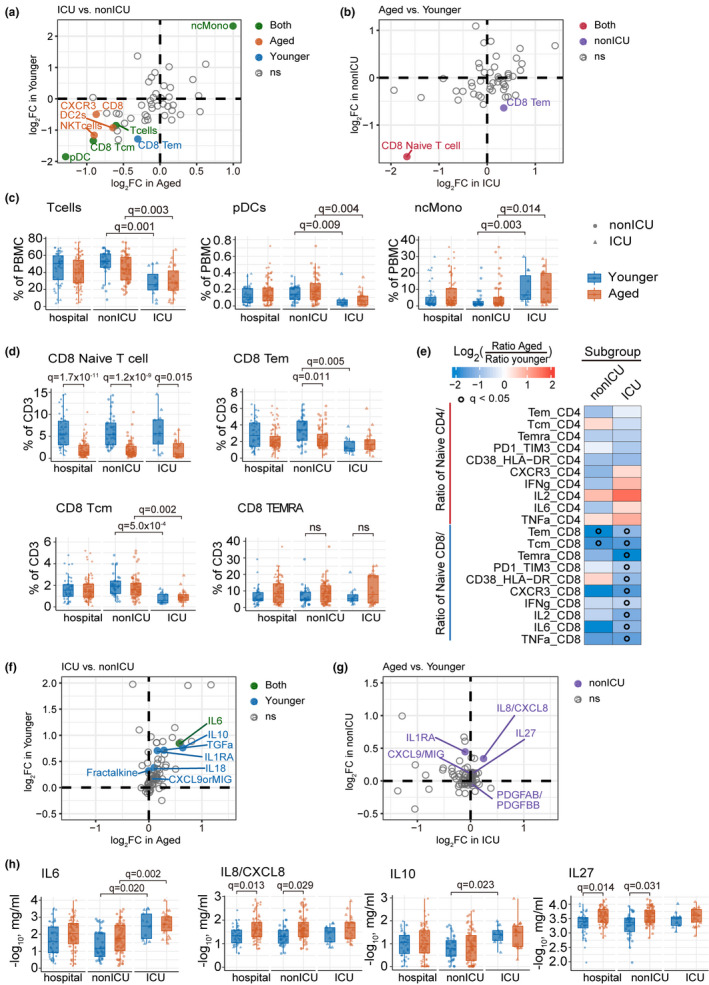
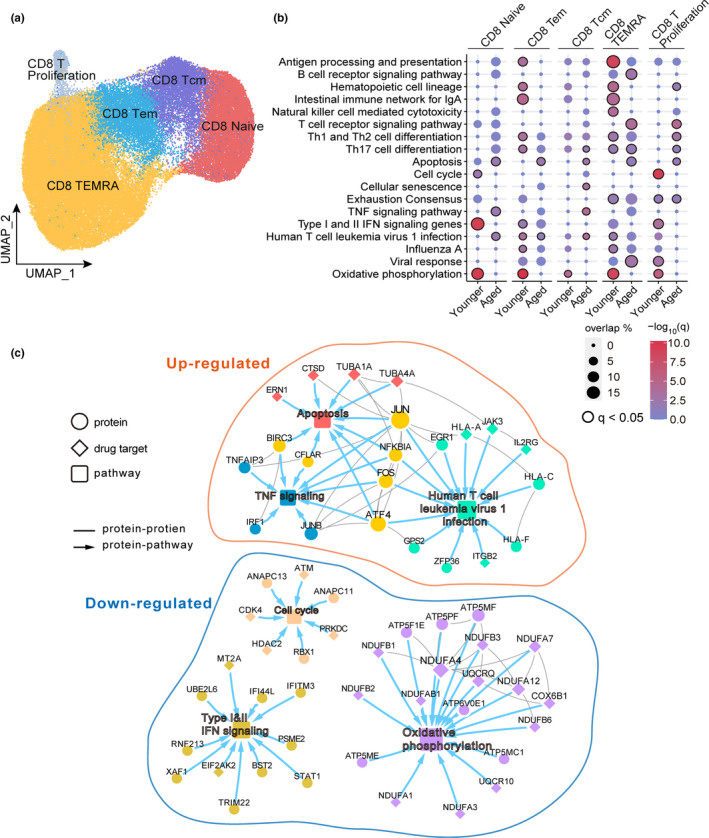
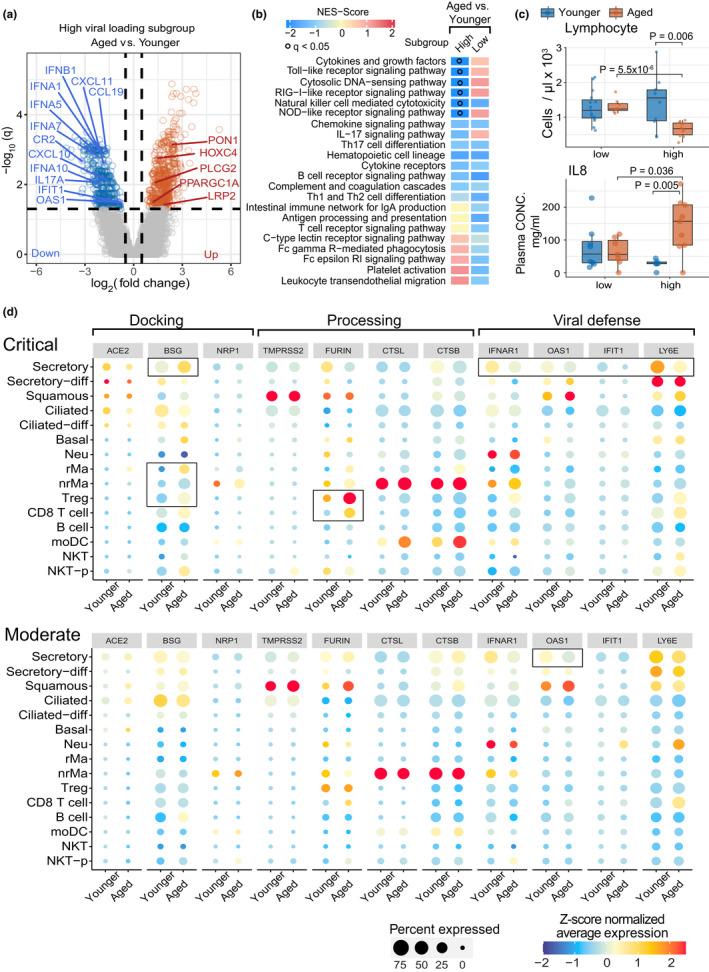
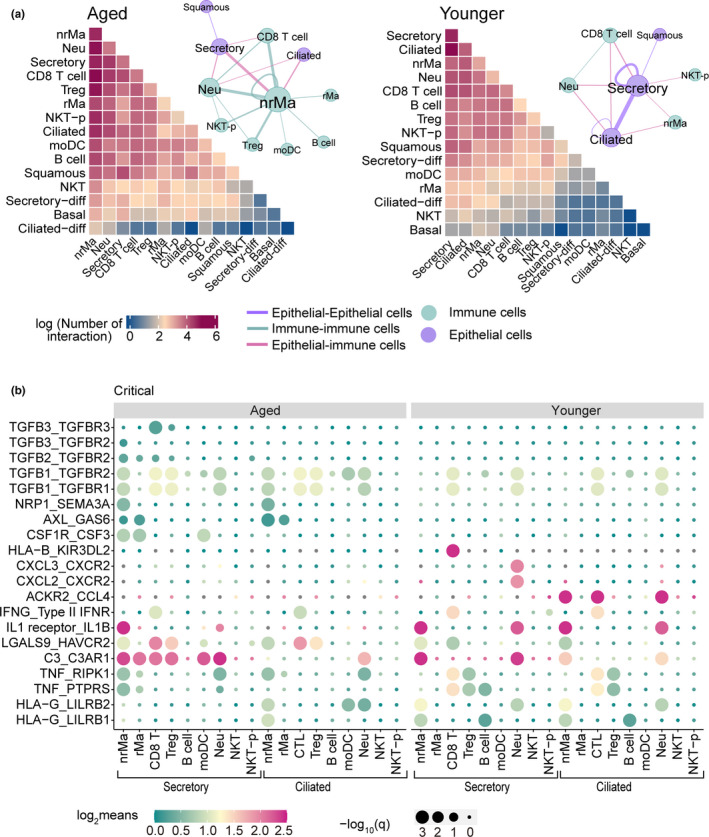
Coronavirus disease 2019 (COVID-19) is especially severe in aged patients, defined as 65 years or older, for reasons that are currently unknown. To investigate the underlying basis for this vulnerability, we performed multimodal data analyses on immunity, inflammation, and COVID-19 incidence and severity as a function of age. Our analysis leveraged age-specific COVID-19 mortality and laboratory testing from a large COVID-19 registry, along with epidemiological data of ~3.4 million individuals, large-scale deep immune cell profiling data, and single-cell RNA-sequencing data from aged COVID-19 patients across diverse populations. We found that decreased lymphocyte count and elevated inflammatory markers (C-reactive protein, D-dimer, and neutrophil-lymphocyte ratio) are significantly associated with age-specific COVID-19 severities. We identified the reduced abundance of naïve CD8 T cells with decreased expression of antiviral defense genes (i.e., IFITM3 and TRIM22) in aged severe COVID-19 patients. Older individuals with severe COVID-19 displayed type I and II interferon deficiencies, which is correlated with SARS-CoV-2 viral load. Elevated expression of SARS-CoV-2 entry factors and reduced expression of antiviral defense genes (LY6E and IFNAR1) in the secretory cells are associated with critical COVID-19 in aged individuals. Mechanistically, we identified strong TGF-beta-mediated immune-epithelial cell interactions (i.e., secretory-non-resident macrophages) in aged individuals with critical COVID-19. Taken together, our findings point to immuno-inflammatory factors that could be targeted therapeutically to reduce morbidity and mortality in aged COVID-19 patients.
新型冠状病毒病 2019(COVID-19)在年龄较大的患者中尤其严重,这些患者被定义为 65 岁或以上,目前原因尚不清楚。为了研究这种脆弱性的潜在基础,我们对免疫、炎症以及 COVID-19 的发病率和严重程度与年龄的关系进行了多模式数据分析。我们的分析利用了来自大型 COVID-19 注册中心的特定年龄 COVID-19 死亡率和实验室检测数据,以及约 340 万人的流行病学数据、大规模深度免疫细胞分析数据以及来自不同人群的老年 COVID-19 患者的单细胞 RNA 测序数据。我们发现,淋巴细胞计数降低和炎症标志物(C 反应蛋白、D-二聚体和中性粒细胞-淋巴细胞比值)升高与特定年龄 COVID-19 严重程度显著相关。我们在老年严重 COVID-19 患者中发现了幼稚 CD8+T 细胞数量减少,抗病毒防御基因(即 IFITM3 和 TRIM22)表达降低。严重 COVID-19 的老年患者表现出 I 型和 II 型干扰素缺乏,这与 SARS-CoV-2 病毒载量相关。SARS-CoV-2 进入因子表达升高和抗病毒防御基因(LY6E 和 IFNAR1)表达降低与老年个体的危急 COVID-19 相关。从机制上讲,我们在患有危急 COVID-19 的老年个体中发现了强烈的 TGF-β介导的免疫-上皮细胞相互作用(即分泌型非常驻巨噬细胞)。总之,我们的研究结果指出了免疫炎症因素,这些因素可能成为治疗老年 COVID-19 患者的靶点,以降低发病率和死亡率。