Monash Sustainable Development Institute, Monash University, 8 Scenic Boulevard, Clayton Campus, Melbourne, VIC, 3800, Australia.
Safer Care Victoria, 50 Lonsdale St, Melbourne, VIC, 3000, Australia.
Implement Sci. 2021 Jul 31;16(1):74. doi: 10.1186/s13012-021-01142-y.
Involving patients in their healthcare using shared decision-making (SDM) is promoted through policy and research, yet its implementation in routine practice remains slow. Research into SDM has stemmed from primary and secondary care contexts, and research into the implementation of SDM in tertiary care settings has not been systematically reviewed. Furthermore, perspectives on SDM beyond those of patients and their treating clinicians may add insights into the implementation of SDM. This systematic review aimed to review literature exploring barriers and facilitators to implementing SDM in hospital settings from multiple stakeholder perspectives.
The search strategy focused on peer-reviewed qualitative studies with the primary aim of identifying barriers and facilitators to implementing SDM in hospital (tertiary care) settings. Studies from the perspective of patients, clinicians, health service administrators, and decision makers, government policy makers, and other stakeholders (for example researchers) were eligible for inclusion. Reported qualitative results were mapped to the Theoretical Domains Framework (TDF) to identify behavioural barriers and facilitators to SDM.
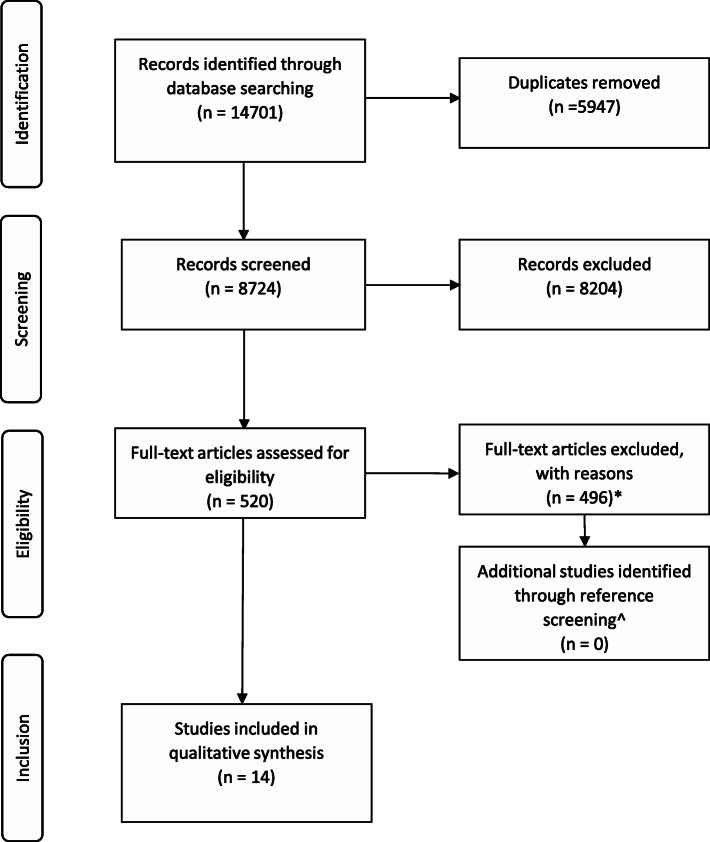
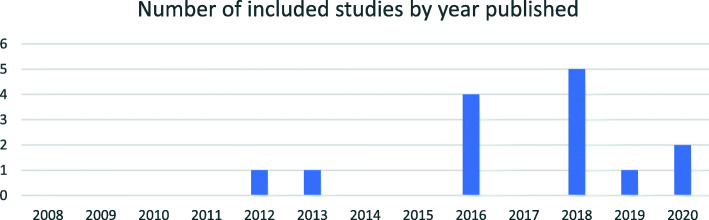
Titles and abstracts of 8724 articles were screened and 520 were reviewed in full text. Fourteen articles met inclusion criteria. Most studies (n = 12) were conducted in the last four years; only four reported perspectives in addition to the patient-clinician dyad. In mapping results to the TDF, the dominant themes were Environmental Context and Resources, Social/Professional Role and Identity, Knowledge and Skills, and Beliefs about Capabilities. A wide range of barriers and facilitators across individual, organisational, and system levels were reported. Barriers specific to the hospital setting included noisy and busy ward environments and a lack of private spaces in which to conduct SDM conversations.
SDM implementation research in hospital settings appears to be a young field. Future research should build on studies examining perspectives beyond the clinician-patient dyad and further consider the role of organisational- and system-level factors. Organisations wishing to implement SDM in hospital settings should also consider factors specific to tertiary care settings in addition to addressing their organisational and individual SDM needs.
The protocol for the review is registered on the Open Science Framework and can be found at https://osf.io/da645/ , DOI https://doi.org/10.17605/OSF.IO/DA645 .
通过政策和研究推动患者参与医疗保健的决策(SDM),但在常规实践中的实施仍然缓慢。SDM 的研究源于初级和二级保健背景,而对三级保健环境中 SDM 实施的研究尚未进行系统审查。此外,除了患者及其治疗临床医生的观点之外,对 SDM 的看法可能会深入了解 SDM 的实施。本系统评价旨在从多个利益相关者的角度综述文献,探索在医院环境中实施 SDM 的障碍和促进因素。
该搜索策略主要针对同行评议的定性研究,主要目的是确定在医院(三级保健)环境中实施 SDM 的障碍和促进因素。从患者、临床医生、卫生服务管理人员和决策者、政府政策制定者以及其他利益相关者(例如研究人员)的角度来看,符合条件的研究均包括在内。报告的定性结果被映射到理论领域框架(TDF),以确定 SDM 的行为障碍和促进因素。
筛选了 8724 篇文章的标题和摘要,全文共审查了 520 篇。符合纳入标准的文章有 14 篇。大多数研究(n=12)是在过去四年进行的;只有四项研究除了患者-临床医生对偶之外还报告了其他观点。在将结果映射到 TDF 时,主要主题是环境背景和资源、社会/专业角色和身份、知识和技能以及对能力的信念。报告了个人、组织和系统各级的各种障碍和促进因素。医院环境特有的障碍包括嘈杂和繁忙的病房环境以及缺乏进行 SDM 对话的私人空间。
医院环境中 SDM 实施研究似乎是一个年轻的领域。未来的研究应建立在研究超越临床医生-患者对偶的基础上,并进一步考虑组织和系统层面因素的作用。希望在医院环境中实施 SDM 的组织还应考虑到三级保健环境特有的因素,除了解决其组织和个人 SDM 需求外。
该综述的方案在开放科学框架上注册,可以在 https://osf.io/da645/ 找到,DOI https://doi.org/10.17605/OSF.IO/DA645 。