Wu Dongqing, Zhu Huaqing, Wang Hua
Laboratory of Molecular Biology, Department of Biochemistry, Anhui Medical University, Hefei, China.
Department of Oncology, The First Affiliated Hospital of Anhui Medical University, Hefei, China.
Front Physiol. 2021 Jul 14;12:707429. doi: 10.3389/fphys.2021.707429. eCollection 2021.
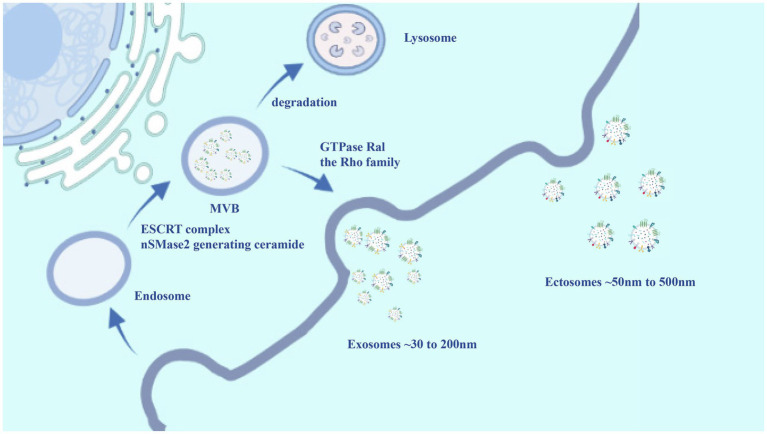
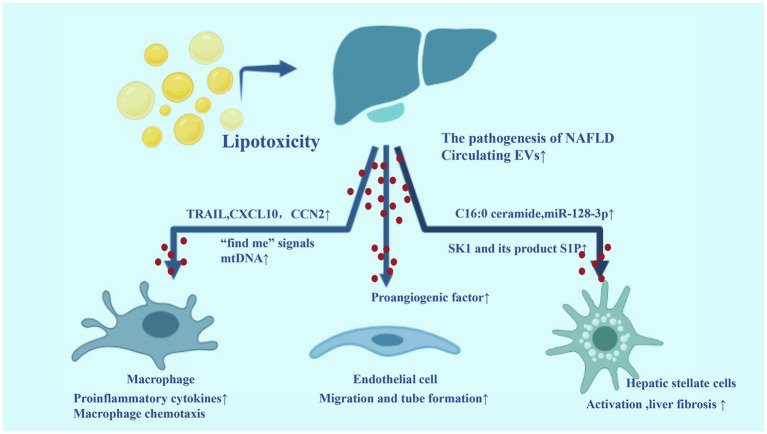
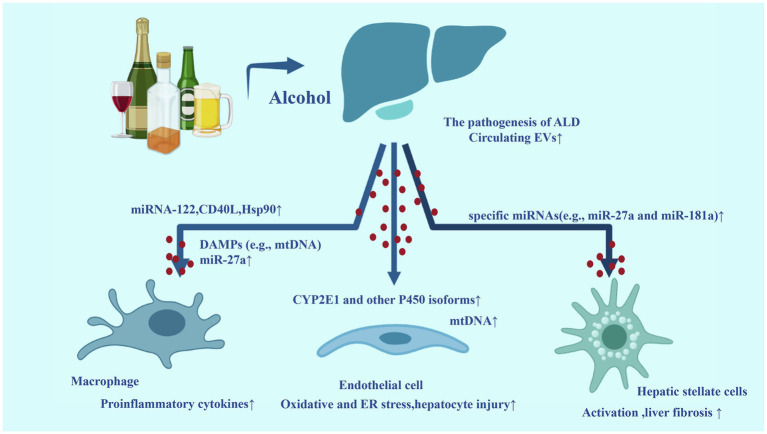
As the largest vital solid organ in the body, liver is consisting of multiple types of cells including hepatocytes, Kupffer cell, hepatic stellate cells (HSCs), liver sinusoidal endothelial cells (LSECs), and other immune cells. The communication between these cells is critical in maintaining liver function homeostasis, and dysregulation of such communication contributes to the pathogenesis of various liver diseases. Extracellular vesicles (EVs), including exosomes and ectosomes, act as important mediators of cell-to-cell communication. EVs can be produced and uptaken by a wide range of cells including all types of cells in the liver. Growing evidences show that EVs are involved in the development of liver diseases, especially non-alcoholic fatty liver disease (NAFLD) and alcoholic liver disease (ALD). In this review, we will summarize recent advance in how EVs production are altered in NAFLD and ALD and how the changes of EVs quantity and cargos influence the progression of these diseases. The therapeutic and diagnostic potential of EVs in NAFLD and ALD will be also discussed in this review.
作为人体最大的重要实体器官,肝脏由多种类型的细胞组成,包括肝细胞、库普弗细胞、肝星状细胞(HSCs)、肝窦内皮细胞(LSECs)以及其他免疫细胞。这些细胞之间的通讯对于维持肝脏功能的稳态至关重要,而这种通讯的失调会导致各种肝脏疾病的发病机制。细胞外囊泡(EVs),包括外泌体和微泡,是细胞间通讯的重要介质。EVs可由包括肝脏中所有类型细胞在内的多种细胞产生并被摄取。越来越多的证据表明,EVs参与肝脏疾病的发展,尤其是非酒精性脂肪性肝病(NAFLD)和酒精性肝病(ALD)。在这篇综述中,我们将总结NAFLD和ALD中EVs产生如何改变以及EVs数量和货物的变化如何影响这些疾病进展的最新进展。本文还将讨论EVs在NAFLD和ALD中的治疗和诊断潜力。