Stem Cell Laboratory, Department of Pathophysiology and Transplantation, University of Milan, Dino Ferrari Center, Fondazione IRCCS Cà Granda Ospedale Maggiore Policlinico, Milan, Italy.
Front Immunol. 2021 Jul 14;12:666879. doi: 10.3389/fimmu.2021.666879. eCollection 2021.
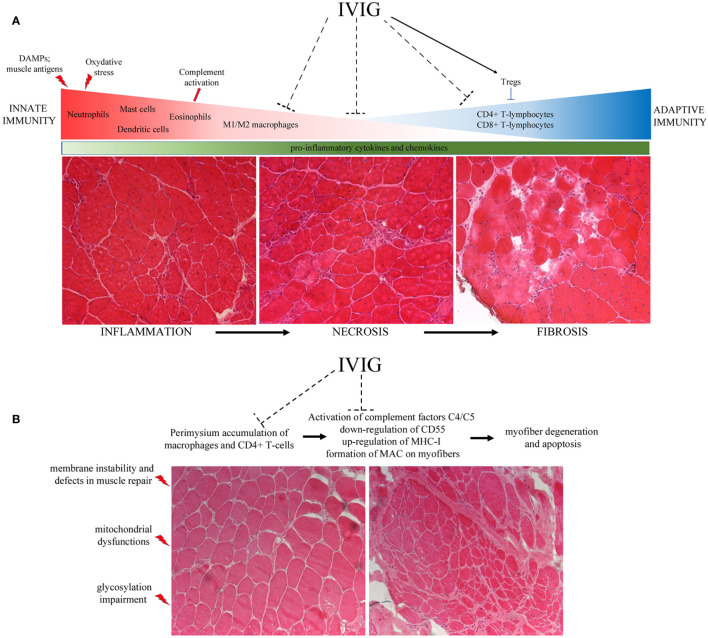
Muscular dystrophies and inflammatory myopathies are heterogeneous muscular disorders characterized by progressive muscle weakness and mass loss. Despite the high variability of etiology, inflammation and involvement of both innate and adaptive immune response are shared features. The best understood immune mechanisms involved in these pathologies include complement cascade activation, auto-antibodies directed against muscular proteins or expressed antigens in myofibers, MHC-I overexpression in myofibers, and lymphocytes-mediated cytotoxicity. Intravenous immunoglobulins (IVIGs) administration could represent a suitable immunomodulator with this respect. Here we focus on mechanisms of action of immunoglobulins in muscular dystrophies and inflammatory myopathies highlighting results of IVIGs from pre-clinical and case reports evidences.
肌肉萎缩症和炎性肌病是异质性肌肉疾病,其特征为进行性肌肉无力和肌肉量减少。尽管病因高度多样化,但炎症和先天及适应性免疫反应的参与是其共同特征。在这些病理中涉及的最易理解的免疫机制包括补体级联激活、针对肌肉蛋白或肌纤维中表达的抗原的自身抗体、肌纤维中 MHC-I 的过度表达以及淋巴细胞介导的细胞毒性。在这方面,静脉注射免疫球蛋白 (IVIG) 可能是一种合适的免疫调节剂。在这里,我们重点介绍了免疫球蛋白在肌肉萎缩症和炎性肌病中的作用机制,并强调了来自临床前和病例报告证据的 IVIG 结果。