Department of Critical Care Medicine, Nanfang Hospital, Southern Medical University, Guangzhou, China.
Guangdong Provincial Key Laboratory of Shock and Microcirculation, School of Basic Medical Sciences, Southern Medical University, Guangzhou, China.
Front Immunol. 2021 Jul 14;12:685523. doi: 10.3389/fimmu.2021.685523. eCollection 2021.
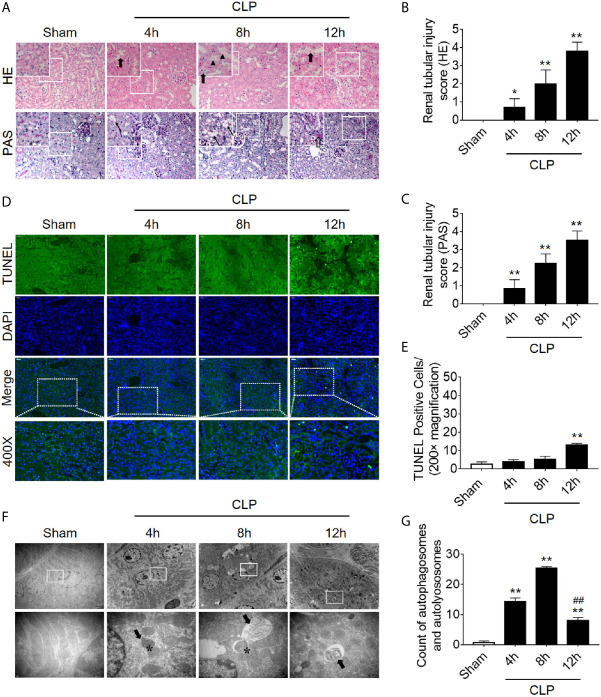
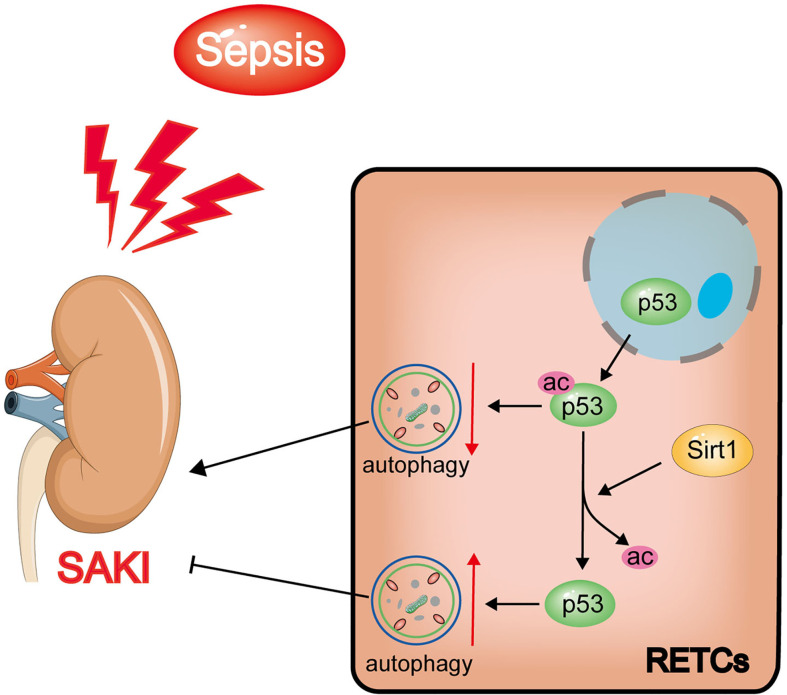
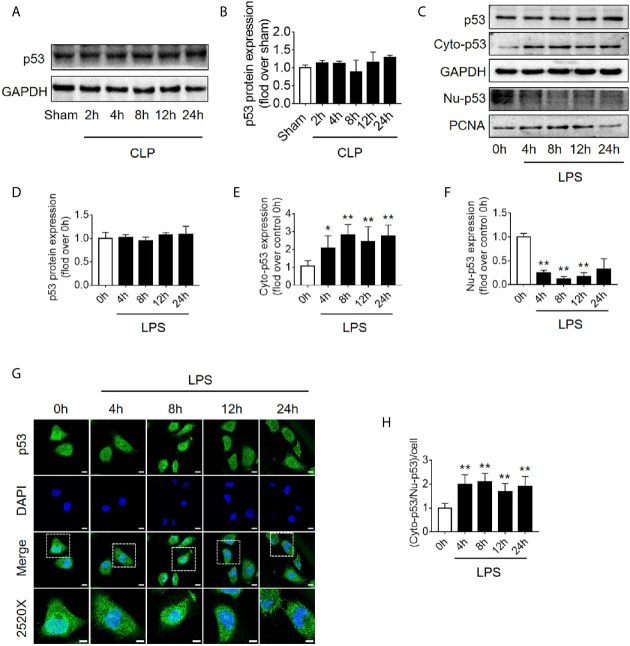
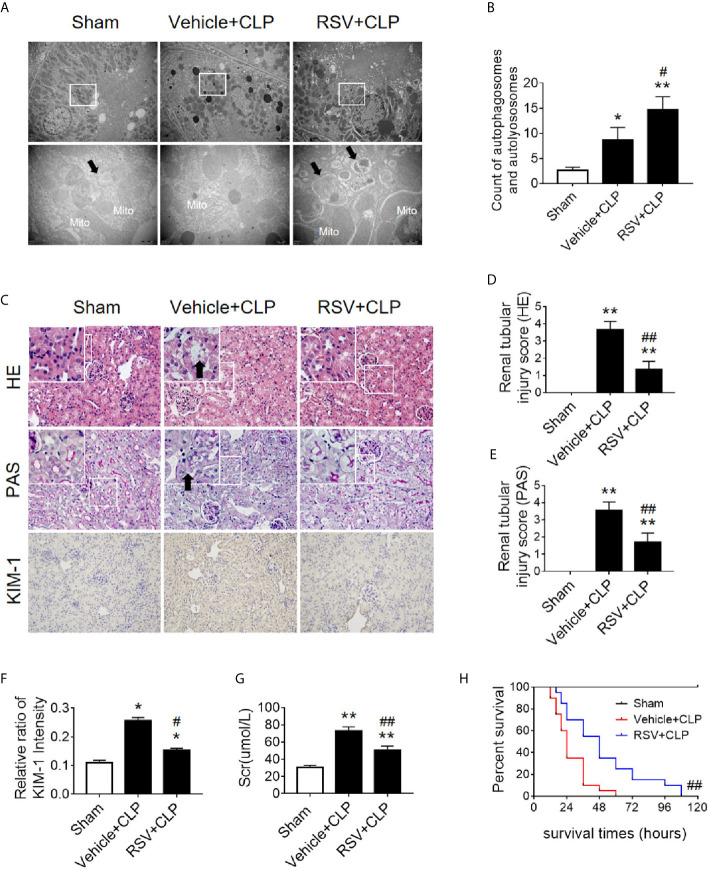
Recent studies have shown that autophagy upregulation can attenuate sepsis-induced acute kidney injury (SAKI). The tumor suppressor p53 has emerged as an autophagy regulator in various forms of acute kidney injury (AKI). Our previous studies showed that p53 acetylation exacerbated hemorrhagic shock-induced AKI and lipopolysaccharide (LPS)-induced endothelial barrier dysfunction. However, the role of p53-regulated autophagy in SAKI has not been examined and requires clarification. In this study, we observed the dynamic changes of autophagy in renal tubular epithelial cells (RTECs) and verified the protective effects of autophagy activation on SAKI. We also examined the changes in the protein expression, intracellular distribution (nuclear and cytoplasmic), and acetylation/deacetylation levels of p53 during SAKI following cecal ligation and puncture (CLP) or LPS treatment in mice and in a LPS-challenged human RTEC cell line (HK-2 cells). After sepsis stimulation, the autophagy levels of RTECs increased temporarily, followed by a sharp decrease. Autophagy inhibition was accompanied by an increased renal tubular injury score. By contrast, autophagy agonists could reduce renal tubular damage following sepsis. Surprisingly, the expression of p53 protein in both the renal cortex and HK-2 cells did not significantly change following sepsis stimulation. However, the translocation of p53 from the nucleus to the cytoplasm increased, and the acetylation of p53 was enhanced. In the mechanistic study, we found that the induction of p53 deacetylation, due to either the resveratrol/quercetin -induced activation of the deacetylase Sirtuin 1 (Sirt1) or the mutation of the acetylated lysine site in p53, promoted RTEC autophagy and alleviated SAKI. In addition, we found that acetylated p53 was easier to bind with Beclin1 and accelerated its ubiquitination-mediated degradation. Our study underscores the importance of deacetylated p53-mediated RTEC autophagy in future SAKI treatments.
最近的研究表明,自噬上调可以减轻脓毒症引起的急性肾损伤(SAKI)。肿瘤抑制因子 p53 已成为各种形式急性肾损伤(AKI)的自噬调节剂。我们之前的研究表明,p53 乙酰化加剧了出血性休克引起的 AKI 和脂多糖(LPS)诱导的内皮屏障功能障碍。然而,p53 调节的自噬在 SAKI 中的作用尚未被研究,需要澄清。在这项研究中,我们观察了自噬在肾小管上皮细胞(RTECs)中的动态变化,并验证了自噬激活对 SAKI 的保护作用。我们还检查了在盲肠结扎和穿刺(CLP)或 LPS 处理后脓毒症小鼠和 LPS 刺激的人 RTEC 细胞系(HK-2 细胞)中 p53 的蛋白表达、细胞内分布(核和细胞质)和乙酰化/去乙酰化水平的变化。脓毒症刺激后,RTECs 的自噬水平暂时增加,随后急剧下降。自噬抑制伴随着肾小管损伤评分的增加。相比之下,自噬激动剂可以减轻脓毒症后的肾小管损伤。令人惊讶的是,在脓毒症刺激后,肾皮质和 HK-2 细胞中 p53 蛋白的表达并没有显著变化。然而,p53 从核到细胞质的易位增加,p53 的乙酰化增强。在机制研究中,我们发现,由于白藜芦醇/槲皮素诱导的去乙酰化酶 Sirtuin 1(Sirt1)的激活或 p53 乙酰化赖氨酸位点的突变,p53 的去乙酰化诱导促进了 RTEC 的自噬并减轻了 SAKI。此外,我们发现乙酰化的 p53 更容易与 Beclin1 结合,并加速其泛素化介导的降解。我们的研究强调了去乙酰化 p53 介导的 RTEC 自噬在未来 SAKI 治疗中的重要性。