Department of Psychology, Queen's University, Ontario, Kingston, Canada.
Department of Economics, Queen's University, Ontario, Kingston, Canada.
Wiley Interdiscip Rev Cogn Sci. 2021 Nov;12(6):e1571. doi: 10.1002/wcs.1571. Epub 2021 Aug 2.
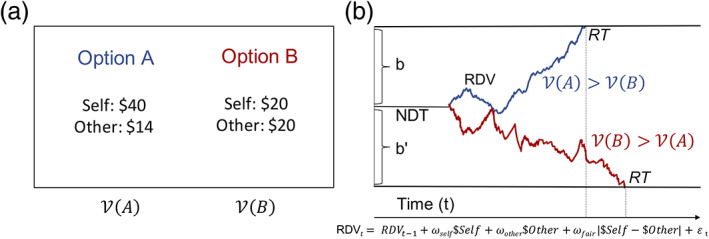
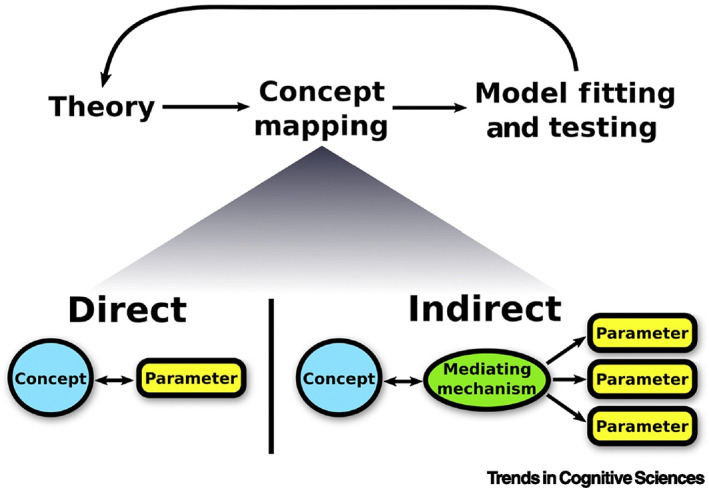
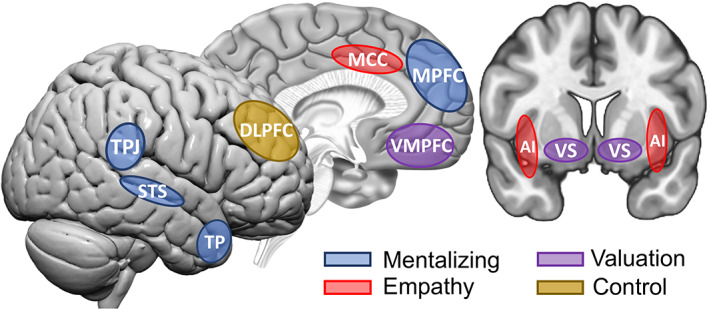
This article discusses insights from computational models and social neuroscience into motivations, precursors, and mechanisms of altruistic decision-making and other-regard. We introduce theoretical and methodological tools for researchers who wish to adopt a multilevel, computational approach to study behaviors that promote others' welfare. Using examples from recent studies, we outline multiple mental and neural processes relevant to altruism. To this end, we integrate evidence from neuroimaging, psychology, economics, and formalized mathematical models. We introduce basic mechanisms-pertinent to a broad range of value-based decisions-and social emotions and cognitions commonly recruited when our decisions involve other people. Regarding the latter, we discuss how decomposing distinct facets of social processes can advance altruistic models and the development of novel, targeted interventions. We propose that an accelerated synthesis of computational approaches and social neuroscience represents a critical step towards a more comprehensive understanding of altruistic decision-making. We discuss the utility of this approach to study lifespan differences in social preference in late adulthood, a crucial future direction in aging global populations. Finally, we review potential pitfalls and recommendations for researchers interested in applying a computational approach to their research. This article is categorized under: Economics > Interactive Decision-Making Psychology > Emotion and Motivation Neuroscience > Cognition Economics > Individual Decision-Making.
本文讨论了计算模型和社会神经科学对利他决策和其他关注的动机、前兆和机制的见解。我们为希望采用多层次、计算方法研究促进他人福利的行为的研究人员介绍了理论和方法工具。我们使用最近研究的例子,概述了与利他主义相关的多个心理和神经过程。为此,我们整合了神经影像学、心理学、经济学和形式化数学模型的证据。我们介绍了基本机制——与广泛的基于价值的决策有关——以及当我们的决策涉及他人时通常会涉及的社会情绪和认知。关于后者,我们讨论了如何分解社会过程的不同方面可以推进利他主义模型和新的、有针对性的干预措施的发展。我们提出,计算方法和社会神经科学的加速综合代表了朝着更全面理解利他决策迈出的关键一步。我们讨论了这种方法在研究晚年社会偏好的寿命差异方面的效用,这是老龄化全球人口的一个重要未来方向。最后,我们回顾了对有兴趣将计算方法应用于其研究的研究人员的潜在陷阱和建议。本文属于以下类别:经济学>互动决策心理学>情绪与动机神经科学>认知经济学>个人决策。