West China School of Medicine/West China School of Nursing, Sichuan University, Chengdu, 610041, China.
Department of Thoracic Oncology, West China Hospital, Sichuan University, No. 37, Chengdu, 610041, China.
BMC Public Health. 2021 Aug 3;21(1):1499. doi: 10.1186/s12889-021-11550-w.
As a major virus outbreak in the twenty-first century, the coronavirus disease 2019 (COVID-19) pandemic has caused unprecedented hazards to mental health globally.
We performed a cross-sectional study based on the results of an online survey. The survey was conducted 1 month after the outbreak (February 18-29, 2020) and repeated at the time of resuming activity (April 8-14, 2020). The 15-item Death Anxiety Scale (T-DAS) was used to assess the degree of death anxiety, and the Chinese version of PTSD checklist-civilian version (PCL-C), for PTSD symptom clusters. Through convenient sampling, a total of 7678 cases were collected.
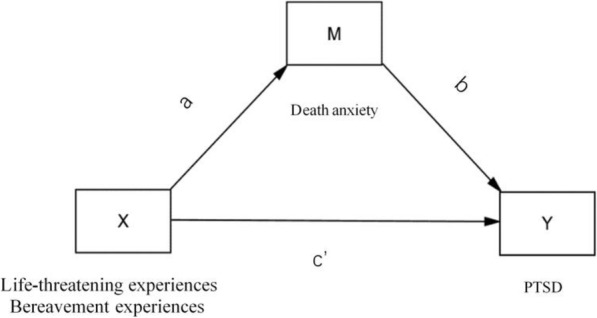
Our findings showed that even after the lockdown was lifted, the prevalence of the symptoms of post-traumatic stress disorder (PTSD) and death anxiety remained significantly high in the general population affected by the outbreak. Regression model analysis showed that PTSD was significantly associated with age > 50 years, contact history/living community, poor health status of participants, past traumatic experience (PTE), and medical occupation. Moreover, death anxiety mediated the relationship between life-threatening PTE and PTSD, indicating that reducing death anxiety could buffer the negative effects of PTE on PTSD.
Despite the lifting of the lockdown, long-term adverse psychological effects remain in the affected general population. The management of mental health after major public health events is important, and high-risk groups such as the elderly and healthcare workers should receive targeted interventions. In addition, the study suggests that methods for alleviating death anxiety must be included in plans to manage the psychological impact of public health emergencies.
作为 21 世纪的一次重大病毒爆发,新冠肺炎疫情给全球的心理健康带来了前所未有的危害。
我们进行了一项基于在线调查结果的横断面研究。该调查于疫情爆发后一个月(2020 年 2 月 18 日至 29 日)进行,并在恢复活动时(2020 年 4 月 8 日至 14 日)重复进行。使用 15 项死亡焦虑量表(T-DAS)评估死亡焦虑程度,使用创伤后应激障碍检查表-平民版(PCL-C)评估创伤后应激障碍症状群。通过便利抽样,共收集了 7678 例病例。
我们的研究结果表明,即使在封锁解除后,受疫情影响的普通人群中,创伤后应激障碍(PTSD)症状和死亡焦虑的患病率仍然明显较高。回归模型分析表明,PTSD 与年龄>50 岁、接触史/居住社区、参与者健康状况差、既往创伤经历(PTE)和医疗职业显著相关。此外,死亡焦虑介导了危及生命的 PTE 与 PTSD 之间的关系,表明降低死亡焦虑可以缓冲 PTE 对 PTSD 的负面影响。
尽管封锁已经解除,但受影响的普通人群仍存在长期的不良心理影响。重大公共卫生事件后心理健康的管理非常重要,应针对老年人和医护人员等高危人群进行针对性干预。此外,该研究表明,缓解死亡焦虑的方法必须纳入公共卫生应急心理影响管理计划。