Pediatrics, Post Graduate Institute of Medical Education and Research, Chandigarh, India.
Pediatrics, Post Graduate Institute of Medical Education and Research, Chandigarh, India
BMJ Open Qual. 2021 Jul;10(Suppl 1). doi: 10.1136/bmjoq-2021-001365.
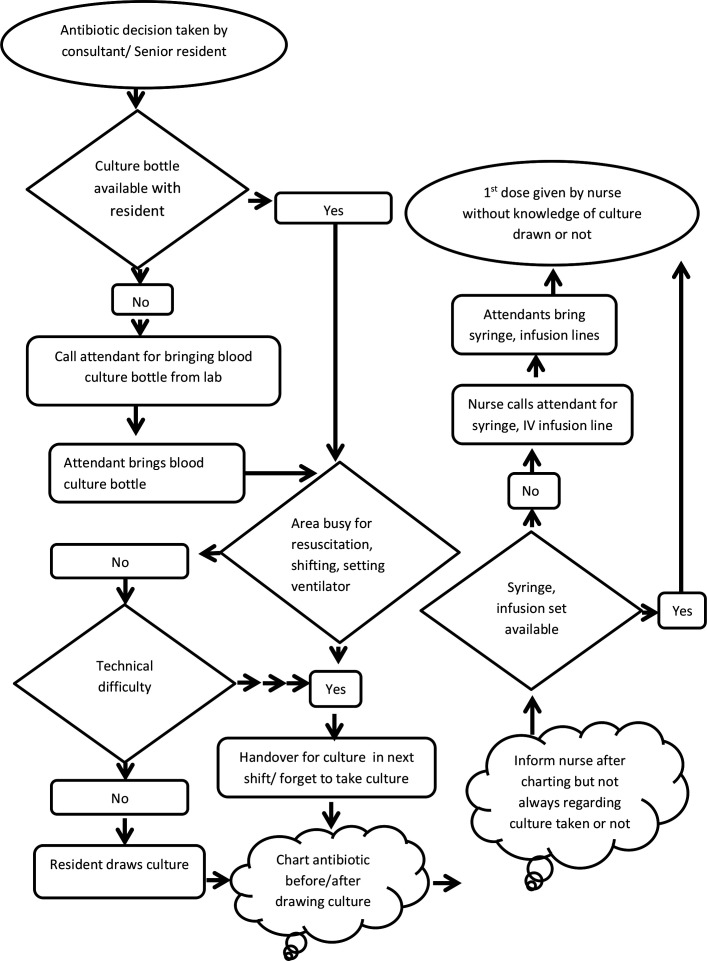
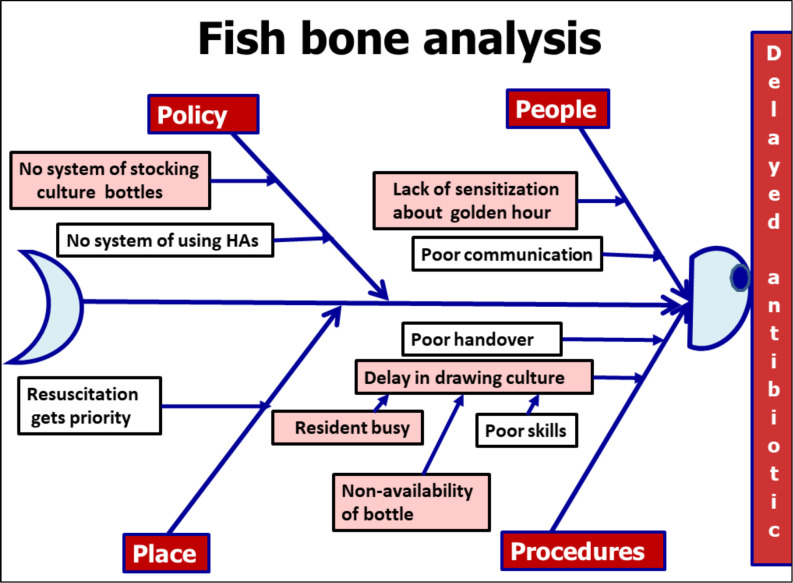
Administration of first dose of antibiotics within the golden hour in infants with sepsis is critical. Delays can increase mortality. During our observations as part of antibiotic stewardship programme in inborn neonatal unit, we found a significant delay in the administration of first dose of antibiotics from the decision time. We set up a quality improvement team to improve the proportion of neonates with sepsis, who received first dose of antibiotics within 1 hour of decision, from 0% to 80% over 2 months.We included inborn neonates requiring initiation or upgradation of antibiotics for a diagnosis of sepsis, from 1 May to 30 November 2018. We assessed the root causes behind delayed administration and found the lack of immediate availability of blood culture bottles, lack of awareness and busy clinical area as the major contributors to the delays in first dose. Various change ideas like ensuring prior availability of blood culture bottles, sensitising nursing staff and resident doctors, utilisation of hospital attendants and sharing responsibility of drawing culture between team members were tested through plan-do-study-act (PDSA) cycles.The proportion of neonates receiving first dose of antibiotics within 1 hour increased from 0% to 91% over the study period and was sustained at 92% after 6 months. There was a significant reduction in median (IQR) time interval between decision and first dose from 120 (100-290) to 45 (30-60) min (p<0.001) and after 6 months, it further decreased to 30 (30-45) min. We achieved significant improvement in administration of first dose of antibiotics within 1 hour of decision, by using system analysis and testing change ideas in sequential PDSA cycles.
在脓毒症婴儿中,抗生素的首剂应在黄金时间内给予。延迟会增加死亡率。在我们作为抗生素管理计划的一部分在先天新生儿病房进行观察期间,我们发现从决定时间开始,抗生素的首剂给药存在显著延迟。我们成立了一个质量改进小组,以在两个月内将接受首剂抗生素的脓毒症新生儿的比例从 0%提高到 80%。我们纳入了需要开始或升级抗生素治疗以诊断为脓毒症的先天新生儿,时间从 2018 年 5 月 1 日至 11 月 30 日。我们评估了延迟给药的根本原因,发现缺乏即时可用的血培养瓶、缺乏意识以及繁忙的临床区域是导致首剂延迟的主要因素。通过计划-执行-研究-行动(PDSA)循环,我们测试了各种变更思路,如确保事先备有血培养瓶、提高护理人员和住院医师的意识、利用医院勤杂工以及让团队成员共同负责抽取培养物。在研究期间,接受首剂抗生素的新生儿比例从 0%增加到 91%,并在 6 个月后维持在 92%。决策与首剂之间的中位(IQR)时间间隔从 120(100-290)减少到 45(30-60)分钟(p<0.001),6 个月后进一步减少到 30(30-45)分钟。通过系统分析和在连续的 PDSA 循环中测试变更思路,我们在决策后 1 小时内实现了抗生素首剂给药的显著改善。